Tag: Mars
-
Earth’s Axial Tilt – Its Significance and Impact
Earth’s Axial Tilt is one of the most intriguing and fundamentally important aspects of our planet, affecting everything from the changing seasons to the development of human civilizations. Also known as obliquity, Earth’s axial tilt is the angle between the planet’s rotational axis and its orbital plane. Currently, this angle is approximately 23.5 degrees, and… …read more

-
Deep Dive into Astronomy Facts
Astronomy is one of the oldest sciences, with its roots stretching back to ancient civilizations that gazed at the stars in wonder. Today, our understanding of the universe has grown tremendously, uncovering facts that they could only dream of. Through centuries of observations and advancements in technology, our comprehension of cosmic phenomena has become more… …read more
-
Celestial Objects
The universe is a vast tapestry woven with countless celestial objects, each playing its unique role in the grand cosmic drama. From the fiery surface of our Sun to the mysterious black holes lurking in the depths of space, these entities offer a glimpse into the awe-inspiring complexity and beauty of the cosmos. This article… …read more
-
Understanding the Profession of an Astronomer
Astronomy, often regarded as one of the oldest and most fascinating fields of study, deals with the exploration of celestial bodies and the vast universe that houses them. At the heart of this intriguing domain is the astronomer – a dedicated scientist committed to unraveling the mysteries of the cosmos. This article explores the life,… …read more
-
What Is Our Cosmic Address?
In the vast expanse of the universe, humanity’s place may seem incredibly small and insignificant. Yet, understanding our position within this cosmic tapestry is crucial for comprehending our origins, our place in the cosmos, and ultimately the fate of our universe. This leads us to the question: “What is our Cosmic Address?” Unpacking this question… …read more
-
The Big Bang
The “Big Bang” theory stands as one of the most profound and robust models explaining the inception of the universe. From an astronomical viewpoint, it is the cornerstone of cosmology, offering insights into the universe’s earliest moments and its subsequent evolution. This comprehensive article delves deep into the concept of the Big Bang, exploring its… …read more
-
Moons – the Celestial Companions of Planets
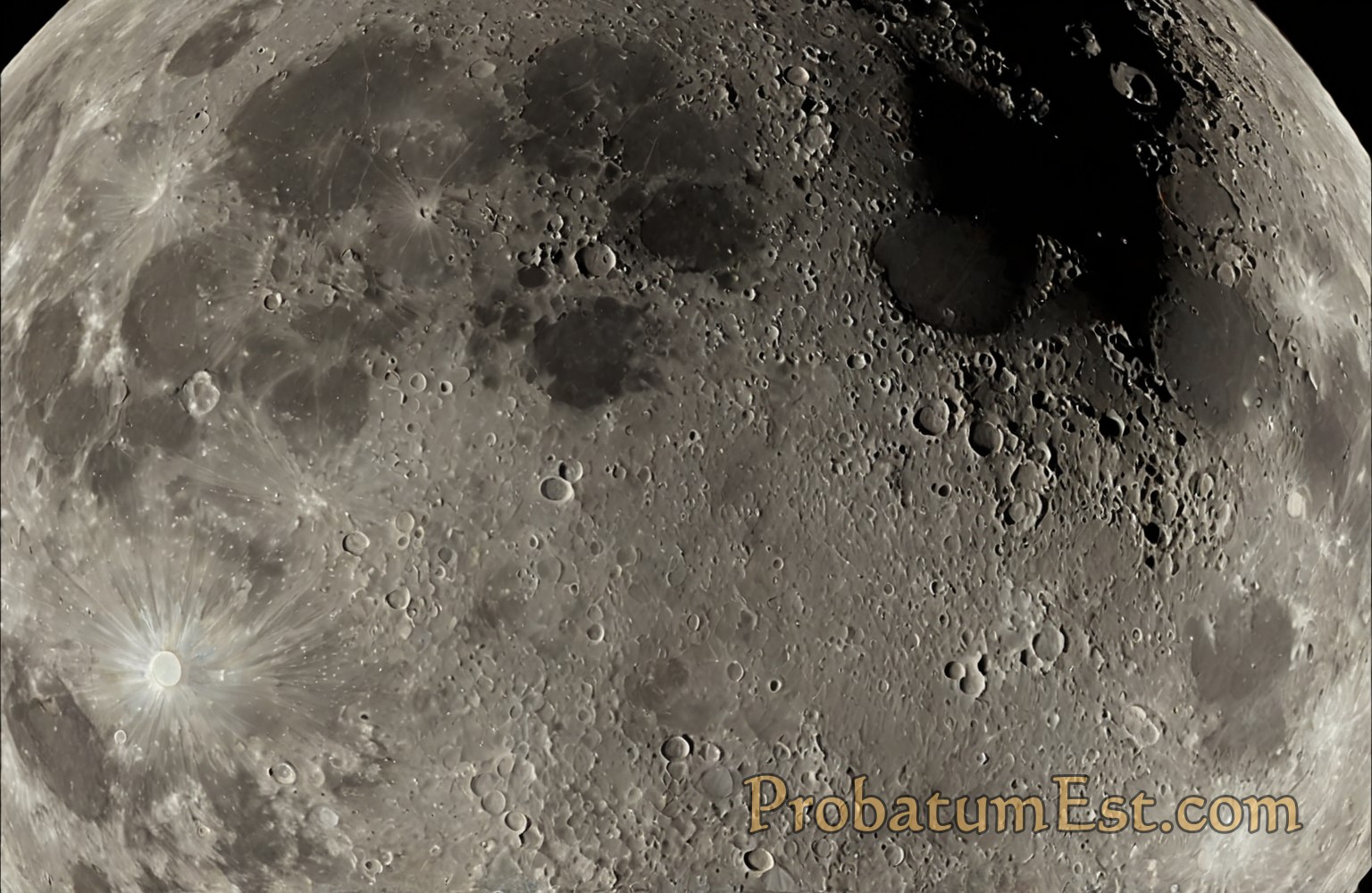
Moons, also known as natural satellites, are celestial bodies that orbit planets and some of the dwarf planets in our solar system and beyond. These fascinating objects come in various sizes, compositions, and orbital behaviors, providing astronomers with rich insights into the dynamics of planetary systems. This article delves into the multifaceted nature of moons… …read more
-
The Cosmos
The cosmos, often synonymous with the universe, represents everything that exists: from the tiniest subatomic particles to the vast expanse of galaxies. This term is derived from the Greek word “kosmos,” which means order, reflecting the intricate and structured nature of the universe. From an astronomical perspective, understanding the cosmos involves investigating its origins, structure,… …read more
-
What Is Astronomy?
What is Astronomy? Astronomy is the scientific study of celestial objects, space, and the physical universe as a whole. Derived from the Greek words “astron,” meaning star, and “nomos,” meaning law, astronomy seeks to understand the cosmos on both macro and micro scales — from the expansive sweep of galaxies to the intricate details of… …read more
-
Planets
From the skies of ancient Greece to the high-tech telescopes of the modern world, humanity has shared an enduring fascination with the celestial bodies scattered throughout the cosmos, known to us as the planets. Astronomy, the science dedicated to studying celestial objects in the cosmos beyond the Earth‘s atmosphere, has evolved exponentially. With this evolution… …read more