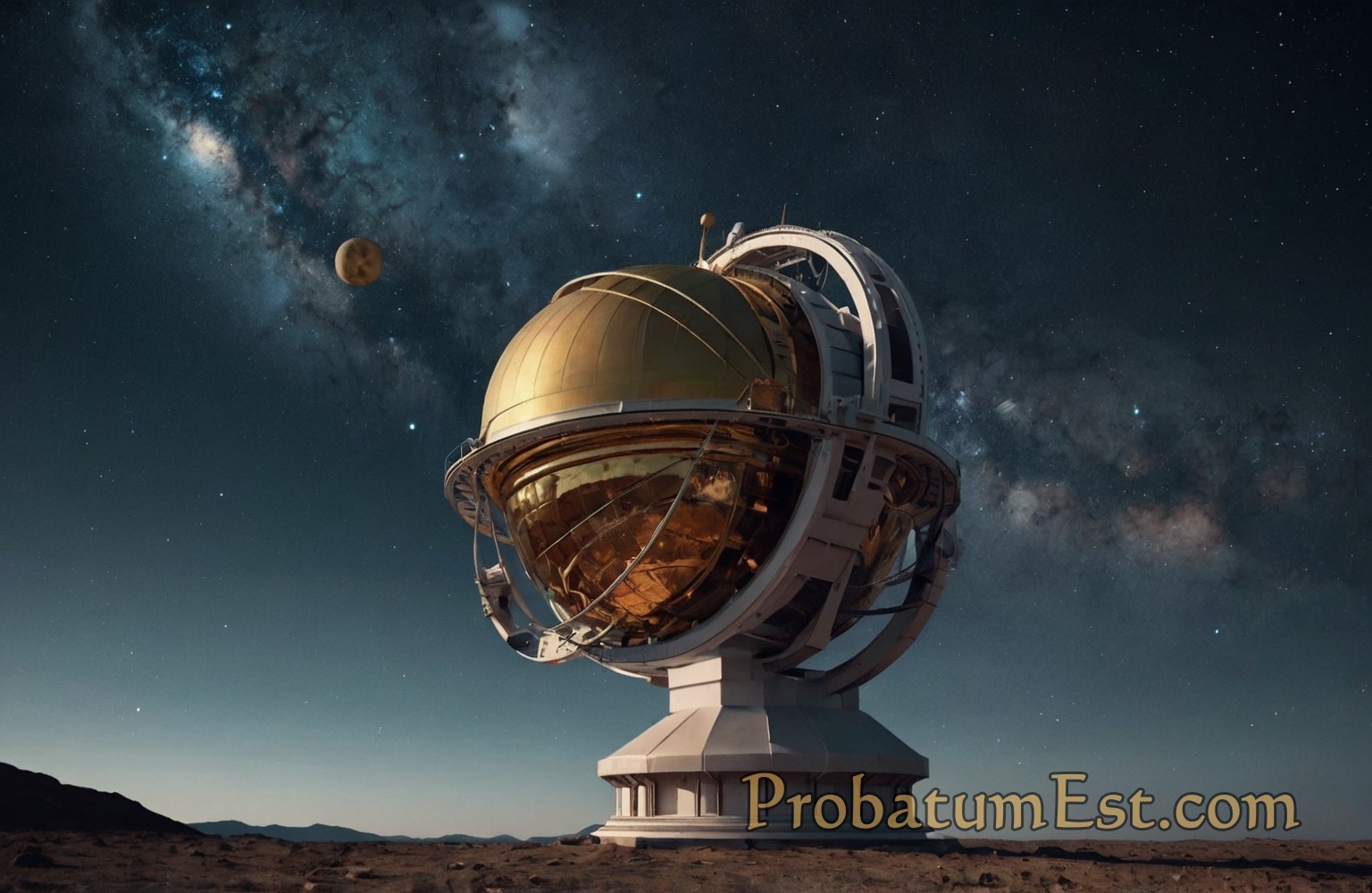
Astronomy is one of the oldest sciences, with its roots stretching back to ancient civilizations that gazed at the stars in wonder. Today, our understanding of the universe has grown tremendously, uncovering facts that they could only dream of. Through centuries of observations and advancements in technology, our comprehension of cosmic phenomena has become more profound and intricate. This article delves into the fascinating and scientifically confirmed facts about astronomy, showcasing the marvels of our universe.
The Basics of Celestial Bodies
1. Stars:
- Composition and Lifecycle: Stars, including our sun, are massive spheres of plasma primarily composed of hydrogen, which they fuse into helium through nuclear fusion at their cores, releasing vast amounts of energy. This process is what makes stars shine. A star’s life cycle typically progresses from a proto-star to main sequence, and depending on the mass, they evolve into giants or supergiants, and eventually end as white dwarfs, neutron stars, or black holes.
- Classification: Stars are classified by their spectra and temperature. The spectral classes are O, B, A, F, G, K, and M, with O being the hottest and bluest, and M being the coolest and reddest.
2. Planets and Exoplanets:
- Planetary Composition: Planets are generally categorized into terrestrial (rocky) and gas giants. Terrestrial planets, like Earth, have solid surfaces, whereas gas giants, like Jupiter, are composed predominantly of hydrogen and helium.
- Exoplanets: As of current knowledge, thousands of exoplanets have been confirmed, ranging from Earth-like to gas giants like our solar system’s Jupiter. The discovery of exoplanets has expanded our understanding of planetary systems and their diversity.
3. Moons and Other Satellites:
- Various planets have natural satellites, or moons, which vary widely in size and composition. For instance, Europa (one of Jupiter’s moons) has a subsurface ocean that may harbor microbial life.
4. Dwarf Planets:
- Pluto is famously known as the prototype of dwarf planets. These are celestial bodies that orbit the Sun and are round due to their own gravity but have not cleared their orbital path of other debris.
The Architecture of Our Solar System
- Heliocentric Model: Our solar system comprises eight planets orbiting the Sun, the central star that provides the gravitational anchor for the system.
- The Kuiper Belt and Oort Cloud: Beyond Neptune lies the Kuiper Belt, a region filled with icy bodies, including dwarf planets. Farther out, the hypothetical Oort Cloud is believed to be a vast spherical shell of icy objects.
Galaxies and the Universe
1. Milky Way Galaxy:
- Our home galaxy is a barred spiral galaxy composed of 100–400 billion stars. It houses not only our solar system but also numerous other star systems, nebulae, and cosmic structures.
2. Types of Galaxies:
- Galaxies are categorized into various types: spiral, elliptical, and irregular. Each type has distinct features and formation histories.
3. Dark Matter and Dark Energy:
- Dark Matter: This invisible component does not emit light or energy but exerts gravitational effects, shaping the structure of galaxies and the universe.
- Dark Energy: It is a mysterious force that is driving the accelerated expansion of the universe, making up roughly 68% of the universe’s total energy content.
Phenomenal Cosmic Events and Structures
1. Black Holes:
- Black holes are regions in space where gravity is so strong that nothing, not even light, can escape. They can form from the remnants of massive stars after a supernova.
2. Quasars and Pulsars:
- Quasars: These are intensely bright centers of distant galaxies, powered by supermassive black holes consuming surrounding material.
- Pulsars: These are rapidly rotating neutron stars emitting beams of electromagnetic radiation observed as pulses.
3. Nebulae:
- Nebulae are vast clouds of gas and dust where new stars are born. The Orion Nebula is a notable example.
4. Supernovae:
- A supernova is a colossal explosion marking the death of a massive star, often resulting in the creation of neutron stars or black holes.
Gravitational Waves and the Fabric of Space-Time
- The prediction and subsequent detection of gravitational waves are among the significant triumphs of modern astrophysics. These ripples in space-time, first predicted by Einstein’s General Theory of Relativity, provide a new way to observe the universe and study cosmic phenomena such as colliding black holes and neutron stars.
The Big Bang and Cosmic Background Radiation
- The Big Bang Theory: This is the prevailing cosmological model explaining the early development of the universe, which began as an extremely hot and dense point approximately 13.8 billion years ago.
- Cosmic Microwave Background (CMB): The CMB is the thermal radiation left over from the Big Bang and is a critical piece of evidence supporting the theory.
The Search for Extraterrestrial Life
- Modern astronomy and space exploration include the ongoing search for extraterrestrial life, focusing on finding bio-signatures on planets and moons within our solar system and beyond. Missions like the Mars rovers and telescopic observations of exoplanets continue to search for conditions that might support life.
Astronomy in Cultural and Historical Context
- Throughout history, astronomy has played a crucial role in the development of calendars, navigation, and understanding seasons. Ancient civilizations like the Babylonians, Egyptians, and Mayans were skilled astronomers who used celestial observations for practical purposes and to construct elaborate cosmic mythologies.
Conclusion
The universe is an awe-inspiring expanse, rich with a multitude of phenomena that both challenge and deepen our understanding of physics and cosmology. Every new discovery opens further questions, making astronomy a continually evolving science. From the smallest microbial life potentially thriving on distant moons to galaxies billions of light-years away, the field of astronomy invites us to ponder our place in the cosmos, encouraging exploration and curiosity about the vast universe that we are a part of.




Leave a Reply