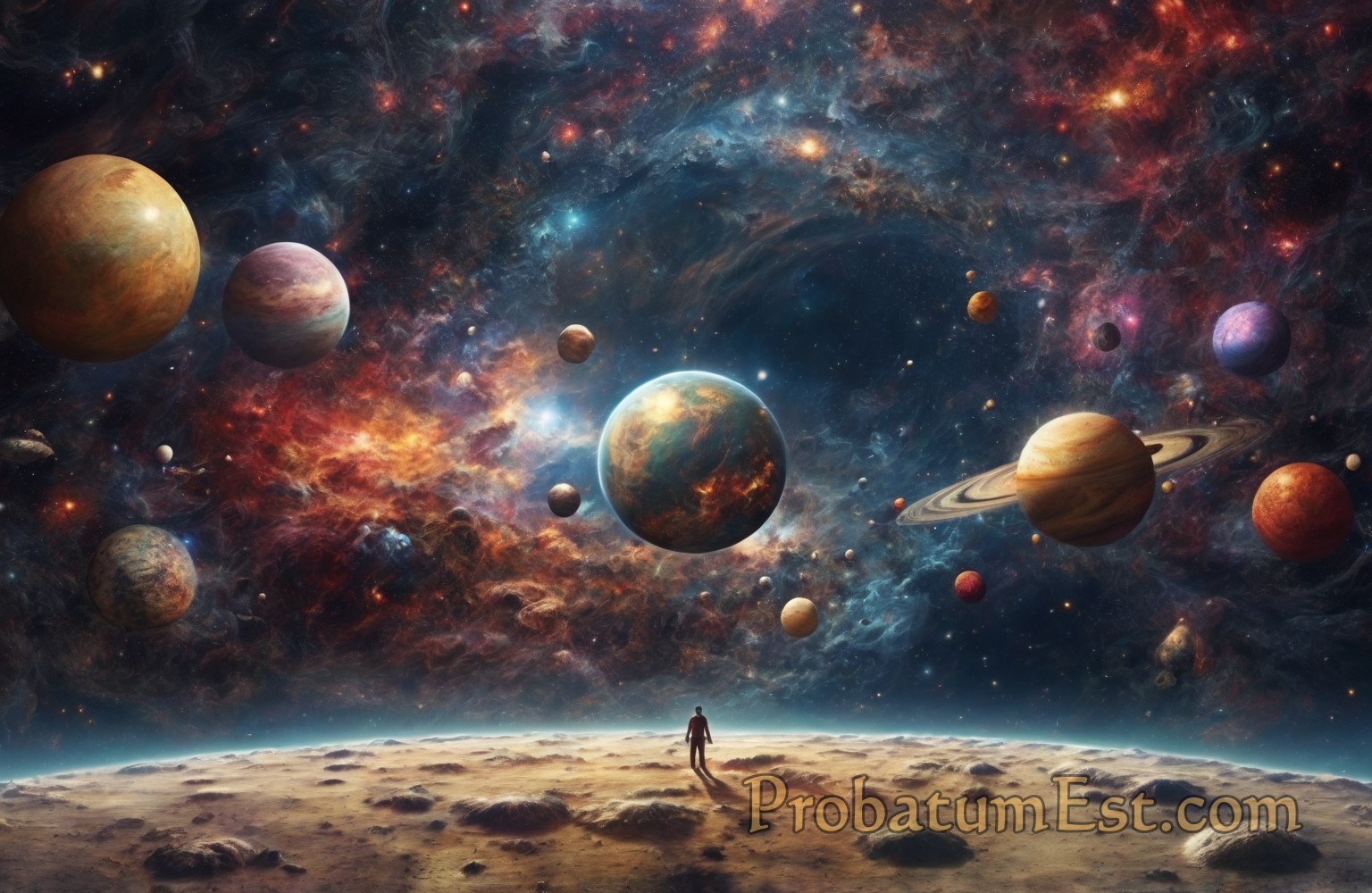
What is Astronomy? Astronomy is the scientific study of celestial objects, space, and the physical universe as a whole. Derived from the Greek words “astron,” meaning star, and “nomos,” meaning law, astronomy seeks to understand the cosmos on both macro and micro scales — from the expansive sweep of galaxies to the intricate details of subatomic particles. This exploration of the universe encompasses various branches and employs a myriad of scientific disciplines to deepen our understanding of the heavens.
Definition and Scope
At its core, astronomy involves observing and analyzing celestial phenomena beyond Earth‘s atmosphere. This vast field can be categorized into several key components: observational astronomy, theoretical astronomy, and space science. Observational astronomy focuses on data acquisition through telescopes and other instruments, while theoretical astronomy involves developing models and simulations to explain astronomical phenomena. Space science generally pertains to the study of space environments and often overlaps with both observational and theoretical approaches.
Historical Context
Astronomy is one of the oldest sciences, with roots tracing back to ancient civilizations that meticulously charted the night sky. The Babylonians, Egyptians, Chinese, and Greeks made significant early contributions, using their observations to develop calendars and predict celestial events such as eclipses. The invention of the telescope in the early 17th century marked a pivotal moment, enabling astronomers like Galileo Galilei to observe celestial objects in unprecedented detail, leading to groundbreaking discoveries.
Major Branches
- Astrophysics: Often used interchangeably with astronomy, astrophysics applies the principles of physics and chemistry to understand the life cycles, properties, and interactions of celestial bodies. Topics of interest include the behavior of stars and galaxies, the nature of dark matter and dark energy, and the fundamental forces shaping the universe.
- Planetary Science: This branch focuses on the study of planets, moons, and planetary systems, including those beyond our own Solar System. It encompasses the examination of terrestrial and gas giant planets, their atmospheres, and their potential to support life.
- Cosmology: Cosmology delves into the universe’s origins, structure, evolution, and eventual fate. It tackles profound questions about the Big Bang, cosmic background radiation, and the overall geometry of the universe, drawing heavily on theoretical models and observational data.
- Stellar Astronomy: This area explores the birth, evolution, and death of stars. Understanding stellar phenomena helps astronomers grasp the processes that govern the lifecycle of matter in the universe, including supernovae, neutron stars, and black holes.
- Galactic Astronomy: Also known as Galaxy Astronomy, this field investigates the nature and dynamics of galaxies, including our own Milky Way. It examines galaxy formation, structure, interaction, and evolution over billions of years.
- Extragalactic Astronomy: This branch examines objects and phenomena outside our galaxy, focusing on the vast array of galaxies that populate the universe. It aims to understand the diversity of galactic structures and the large-scale distribution of matter across cosmic scales.
Technological Advancements
The progress of astronomy has been catalyzed by technological advancements. Telescopic technology, both ground-based and space-borne, has evolved remarkably, allowing for clearer and more detailed observations across the electromagnetic spectrum. From radio waves to gamma rays, each band offers unique insights into different astronomical phenomena. Notable observatories like the Hubble Space Telescope, the Very Large Array, and the Atacama Large Millimeter/submillimeter Array have been instrumental in numerous discoveries.
Digital advancements and computational power have empowered astronomers to process vast amounts of data and simulate complex cosmic events, pushing the boundaries of what’s known about the universe. Additionally, the advent of gravitational wave astronomy and neutrino observatories has introduced revolutionary methods to probe the cosmos.
Impact and Relevance
Astronomy extends beyond the pursuit of knowledge, tangibly impacting various fields and our daily lives. Technological advancements driven by astronomical research frequently translate into practical applications in telecommunications, medicine, and environmental monitoring. The scientific method and analytical skills honed in astronomy contribute to the overall progress of science and technology.
Moreover, astronomy plays a culturally significant role, provoking existential questions and a sense of wonder about our place in the universe. By exploring the cosmos, humanity gains a broader perspective, fostering global collaboration and a shared curiosity for the unknown.
Challenges and the Future
While astronomy has made substantial strides, it faces challenges, such as light pollution, which hampers observations from Earth. Financial constraints on large-scale projects and the vast nature of the universe, which means many phenomena occur on incredibly long timescales or at enormous distances, also pose significant hurdles.
The future of astronomy is promising, with developments like the James Webb Space Telescope, set to deepen our understanding of the early universe and the search for life beyond Earth. Furthermore, initiatives like the Square Kilometre Array and next-generation gravitational wave detectors are poised to shed new light on the cosmos.
In conclusion – “What Is Astronomy?” Astronomy is a dynamic and continually evolving science that seeks to unravel the mysteries of the universe. Through the lens of celestial phenomena, it challenges humanity to expand its horizons, both literally and metaphorically, and inspires a timeless quest for knowledge.




Leave a Reply