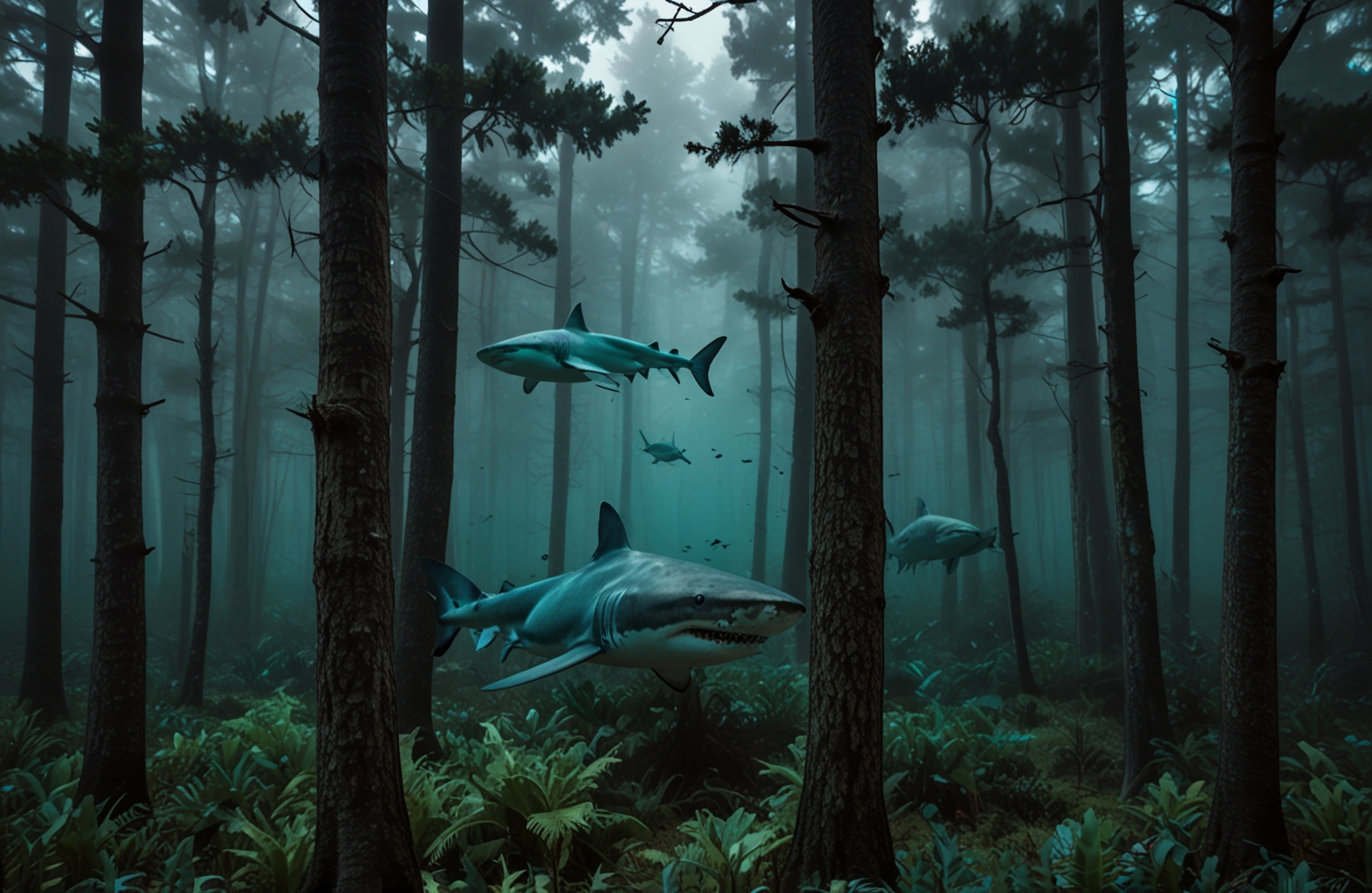
“Are sharks older than trees?” is a question that often sounds more like a riddle than a scientific inquiry. After all, we typically think of sharks as fearsome predators patrolling the world’s oceans and of trees as some of the planet’s most ancient and stalwart life forms on land. Surprisingly, the fossil record and paleontological evidence indicate that sharks have existed far longer than any species of tree, predating them by tens of millions of years. Below is a comprehensive look at the evidence, expert insights, and fascinating details behind this extraordinary fact.
Sharks in the Geological Timeline
Fossil evidence places the earliest shark-like creatures at around 450 million years ago. Though not identical to modern species, these ancestors still possessed many characteristics we associate with sharks today — a streamlined shape and a cartilage-based skeleton, for example. According to the Florida Museum of Natural History, sharks belong to the class Chondrichthyes (cartilaginous fishes), which also includes rays and skates. This class’s defining feature is the lack of ossified (bony) skeletons. Instead, sharks have skeletons made of calcified cartilage.
The first definitive shark fossils — mainly consisting of teeth, cartilage fragments, and scales — date to the late Ordovician or early Silurian periods, more than 400 million years ago. Over time, sharks would diversify significantly through various geologic eras, adapting to massive shifts in the conditions of the oceans and continuing to survive large-scale extinction events that wiped out countless other groups of animals.
When Did Trees Emerge?
While there were land plants prior to the advent of true trees, the most widely accepted fossil evidence of the earliest genuine tree species dates to around 385 million years ago, in the middle of the Devonian Period. One of the oldest known tree forms is Wattieza, an ancient fern-like plant that grew to heights exceeding 20 feet and sported a trunk and crown structure typical of modern trees.
Therefore, if one considers roughly 385 million years as the point of the first true trees, sharks had already been swimming in Earth’s waters for approximately 65 million years before trees appeared on land.
Why Are Sharks Older Than Trees?
Sharks emerged and thrived in Earth’s oceans during a time when marine ecosystems were already becoming complex and diverse, supported by earlier oceanic life-forms. In contrast, it took land ecosystems longer to develop the sorts of conditions that could support large, woody plants. The very idea of tree-like growth with secondary thickening (wood) evolved after smaller land plants had already become established. By the time trees finally arose, sharks had already become top or near-top predators in various marine food webs.
The Shark’s Success Story
To understand why sharks have managed to outlast so many other ancient species, consider some of their key traits and survival strategies:
- Cartilaginous Skeleton: The lighter skeleton composed of cartilage (rather than bone) grants sharks greater buoyancy and agility in the water, aiding their hunting and migratory behaviors.
- Highly Developed Senses: Sharks possess an extraordinary sense of smell, excellent low-light vision, and the ability to detect electrical fields produced by other organisms. These adaptations have enabled them to become formidable predators.
- Adaptability and Variation: There are more than 500 recognized shark species, ranging from the tiny dwarf lanternshark (about the size of your hand) to the colossal whale shark that can exceed 40 feet in length. This diversity helps the overall shark lineage survive environmental changes through specialized niches.
- Reproductive Strategies: Some shark species lay eggs (oviparous), while others give birth to live young (viviparous). In both cases, sharks often produce fewer offspring compared to many fish but invest more in each embryo’s development. This strategy can help the resulting young survive better in competitive marine environments.
Anecdotes and Case Studies
- Greenland Shark’s Impressive Lifespan: One species that showcases how sharks have endured over the ages is the Greenland shark. Found mostly in the cold, deep waters of the North Atlantic, individual Greenland sharks can live up to 400 years, according to research published in the journal Science. This extraordinary lifespan reflects just how resilient some shark species can be, further underscoring sharks’ remarkable place in Earth’s history.
- Megalodon Myths and Fossils: Megalodon, a giant prehistoric shark reaching lengths of up to 50 feet or more, roamed the oceans long after trees had taken hold on land. Although Megalodon is now extinct, fossil remains — primarily in the form of massive teeth — demonstrate the success and scale of some extinct shark species.
Expert Opinions and Scientific Research
- Florentino Villegas, a paleontologist who specializes in chondrichthyan (cartilaginous fish) evolution, notes that “sharks have changed relatively little structurally over hundreds of millions of years. Their successful design and adaptability have enabled them to persist through multiple mass extinction events.”
- The Florida Museum of Natural History emphasizes that sharks today are the product of an incredibly ancient lineage. Their database of chondrichthyan fossil records helps confirm the group’s presence in the fossil record dating back more than 400 million years.
- Studies published in the Journal of Paleontology have highlighted that identifying specific traits in fossilized shark remains, such as the distinctive shape of dermal denticles (skin teeth) or the microscopic structure of cartilage, consistently points to an early Silurian or possibly Ordovician origin for shark-like creatures.
Conclusion
So, are sharks older than trees? The overwhelming consensus from paleontological and geological records is a definitive yes. Sharks have cruised through the oceans, adapting, diversifying, and surviving for around 450 million years — outlasting prehistoric plants, dinosaurs, and numerous other life forms that have come and gone throughout Earth’s history. Meanwhile, the first true trees only appeared about 385 million years ago. This astonishing fact highlights the incredible resilience and longevity of sharks and continues to captivate scientists, marine enthusiasts, and the general public alike.
Far from a mere piece of trivia, the knowledge that sharks predate trees by roughly 65 million years underscores the importance of understanding and preserving these ancient creatures. Their survival through eons of planetary change is a reminder of nature’s capacity for innovation and the interconnectedness of life’s timelines — and it all started long before the first trees ever graced the land.




Leave a Reply