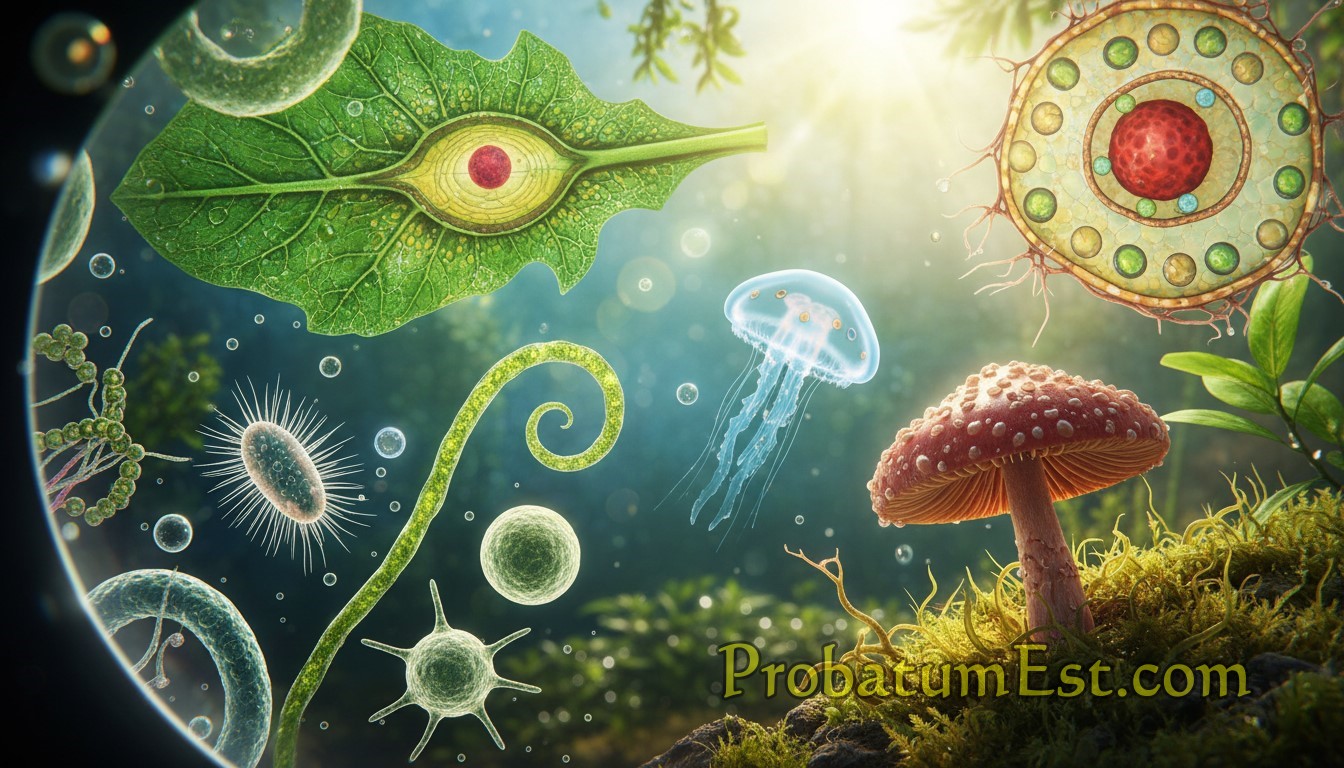
For decades, biology students and researchers alike have recognized that all living cells can be broadly classified into two types: prokaryotes and eukaryotes. Prokaryotes include organisms such as bacteria and archaea. Eukaryotes, on the other hand, encompass everything from single-celled protists to complex multicellular organisms like plants and animals. While the differences between these two cell types (such as the presence or absence of a nucleus) are often emphasized, a fascinating — and incredibly important — question remains: What do prokaryotes and eukaryotes have in common? Below, we delve into the essential similarities that unite these foundational forms of life.
1. DNA as Genetic Material
One of the most well-established similarities is that both prokaryotes and eukaryotes use DNA as their genetic blueprint. In both groups, DNA carries instructions for the development, functioning, and reproduction of the organism. This concept has been widely affirmed by studies in molecular biology: a 2011 report in the journal Cell & Bioscience noted that DNA serves as the fundamental “repository of genetic information” in all known cell-based life forms (Smith et al., Cell & Bioscience, 2011).
- Organization differences aside (with prokaryotes lacking a membrane-bound nucleus and eukaryotes housing DNA within a nucleus), the core function remains.
- Both sets of organisms rely on the universality of the genetic code, wherein nucleotides form codons that specify amino acids.
2. The Cell (Plasma) Membrane as a Protective Barrier
Every cell, regardless of whether it is prokaryotic or eukaryotic, is enclosed by a cell membrane (also referred to as the plasma membrane). This membrane also has a strikingly similar foundational structure in both cell types:
- It is formed primarily of a phospholipid bilayer, providing a flexible yet robust boundary that separates the cell’s interior from the external environment.
- Embedded proteins in this membrane regulate the transport of molecules such as nutrients, ions, and waste products, maintaining the cell’s internal balance (also called homeostasis).
- This shared membrane structure underscores a fundamental commonality in the way all cells protect themselves and interact with their environment.
3. Cytoplasm and the Need for Internal Organization
Beyond the cell membrane lies the cytoplasm, the gel-like substance that fills the cell. In both prokaryotes and eukaryotes, the cytoplasm:
- Serves as the stage for metabolic reactions — from the breakdown of nutrients to the detoxification of harmful byproducts.
- Contains key structures, including ribosomes and other molecules vital for the cell’s survival and growth.
Although eukaryotes commonly have specialized compartments called organelles (like mitochondria and chloroplasts) enclosed within membranes, and prokaryotes typically do not, the overarching function — to facilitate chemical reactions crucial for survival — remains a unifying feature in both groups.
4. Ribosomes and Protein Synthesis
Whether you are talking about a single-celled bacterium living in the depths of the ocean or a cell in the leaf of an immense oak tree, protein synthesis is an essential process powered by structures called ribosomes. From a molecular perspective:
- Ribosomes in both prokaryotes and eukaryotes are made of ribosomal RNA (rRNA) and proteins that come together to create polypeptide chains (proteins).
- The primary function — translating genetic instructions from mRNA into proteins — is universally conserved.
Data from a 2015 study published in Molecular Biology Reports indicates that the ribosomal core sequence (critical for the ribosome’s function) retains strong similarities across a wide range of species, reinforcing that prokaryotes and eukaryotes rely on the same cellular machinery to produce proteins (Chen et al., Molecular Biology Reports, 2015).
5. Metabolic Pathways and Energy Use
Though prokaryotes often excel at extracting energy under diverse and even extreme conditions, and eukaryotes frequently rely on more specialized organelles like mitochondria for energy conversion, the underlying biochemistry of producing and consuming energy overlaps significantly. For example, both prokaryotes and eukaryotes:
- Carry out glycolysis, the multi-step pathway that breaks down glucose to produce ATP (adenosine triphosphate), often called the “energy currency” of the cell.
- Employ enzymes to catalyze metabolic reactions, illustrating that the fundamental chemistry of life does not drastically change between cell types.
In fact, the National Center for Biotechnology Information (NCBI) database contains numerous genome-wide studies that highlight the shared presence of these metabolic genes, verifying that ATP synthesis remains a core similarity across the biological spectrum (NCBI Genome Database).
6. The Capacity to Grow and Reproduce
Growth and replication remain central to the concept of life. Both prokaryotes and eukaryotes achieve these functions in ways that, while structurally different, are founded on a single principle: accurately duplicating and passing on genetic information.
- Prokaryotes typically use binary fission, a form of asexual reproduction where the cell divides into two genetically identical “daughter” cells.
- Eukaryotes can also reproduce asexually (through mitosis) to produce identical cells. In many multicellular eukaryotes, sexual reproduction adds greater genetic variation, but the principle of passing down the information coded in DNA remains.
7. Shared Applications: A Case Study in Biotechnology
In biotechnology research and applications, the fundamental similarities between prokaryotic and eukaryotic cells often come into play. A notable example is the use of bacteria (prokaryotes) to manufacture proteins of interest — such as insulin — used by humans (eukaryotes).
Case in Point: Insulin Production
- In a well-known process originally pioneered in the 1970s and early 1980s, scientists insert the human insulin gene into a bacterium like Escherichia coli.
- The bacterium’s ribosomes then read the genetic information and produce insulin, demonstrating how the shared basics of the genetic code and protein synthesis transcend the boundary between prokaryotic and eukaryotic cells.
- According to the American Diabetes Association, synthetic insulin derived from bacteria has transformed diabetes management worldwide, improving the quality of life for millions of people.
8. Expert Insights and Conclusions
Experts in molecular biology emphasize that while the structural differences between these two cell types can be dramatic, the fundamental processes of life — DNA storage, protein synthesis, and regulated energy use — are remarkably consistent (Alberts et al., Molecular Biology of the Cell, 6th Edition, Garland Science).
Dr. Maria Nguyen, a cell biologist at a top research university, notes that “no matter how diverse life appears on the outside, the universal genetic code and the core biochemical pathways point to profound unifying principles among all cell-based organisms.”
Ultimately, examining what prokaryotes and eukaryotes have in common often proves as revealing as studying their differences. It underscores the elegant simplicity at the heart of biology, where the essence of life is consistent across the broad swath of organisms inhabiting our planet.
References & Further Reading
- Alberts B., Johnson A., Lewis J., et al. Molecular Biology of the Cell. 6th ed. Garland Science; 2014.
- Chen L., et al. “Evolutionary Traces of Bacterial Ribosomes.” Molecular Biology Reports, vol. 42, no. 3, 2015, pp. 505–510.
- National Center for Biotechnology Information (NCBI). Genome Database.
- Smith M., et al. “DNA as the Repository of Genetic Information in All Known Cell Types.” Cell & Bioscience, vol. 1, no. 2, 2011, pp. 89–97.
Concluding Thoughts
Whether one is newly introduced to biology or has spent a lifetime in a laboratory, understanding the shared features of prokaryotes and eukaryotes provides a window into the universal principles that govern living systems. These commonalities — DNA as genetic material, cell membranes, cytoplasm, ribosomes, metabolism, and reproduction — bind the diversity of life into a coherent tapestry. While variations in complexity and scale can be dramatic, prokaryotes and eukaryotes alike remind us that at the cellular level, life shares far more similarities than differences.



Leave a Reply