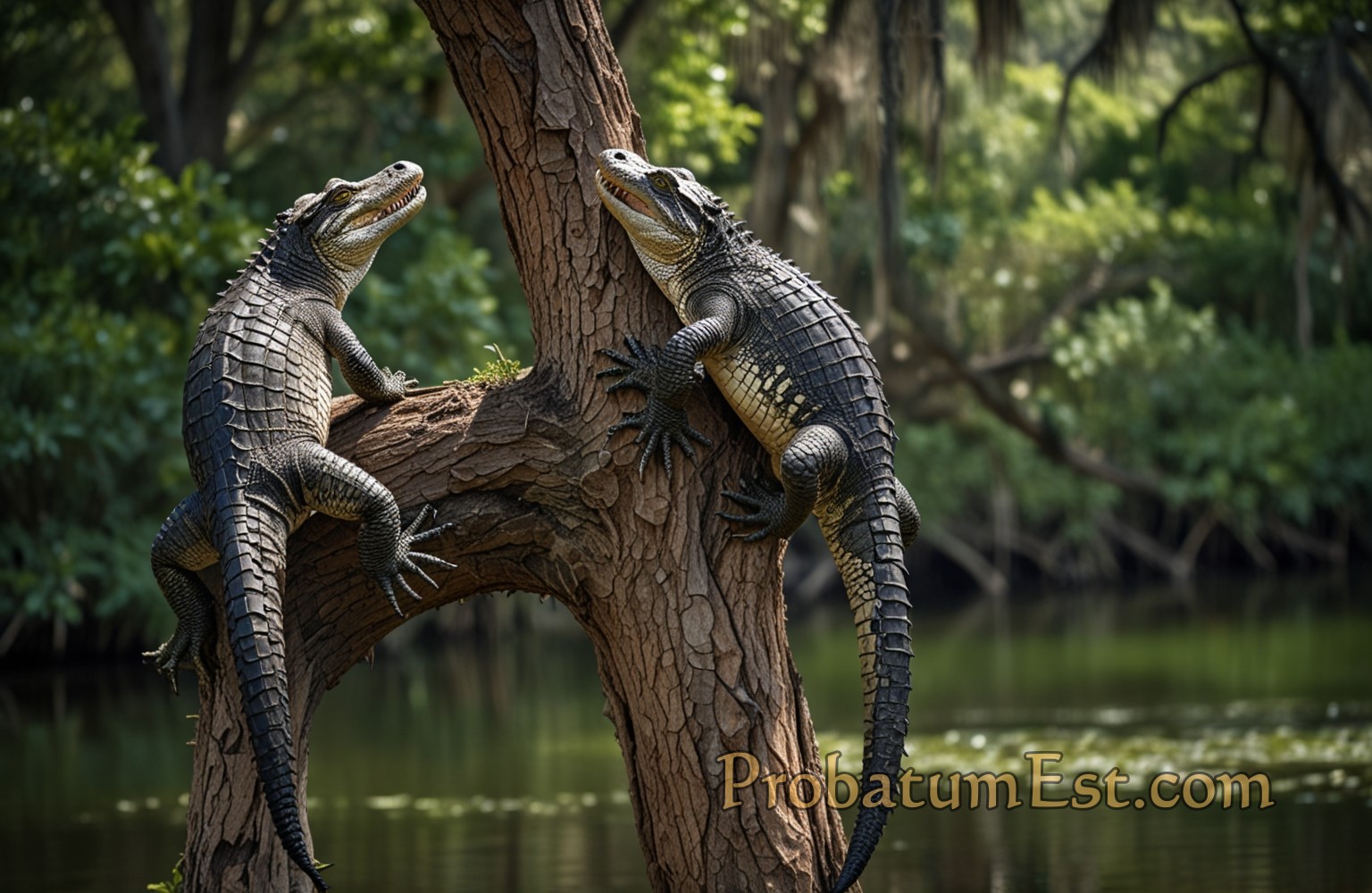
For many people, the image of an alligator conjures up scenes of a large reptile basking by the water’s edge or stealthily swimming in a swamp. The question that sparks curiosity among wildlife enthusiasts and casual observers alike is whether these formidable creatures can climb trees. Contrary to some expectations, there is a growing body of evidence indicating that tree-climbing in certain crocodilian species — including alligators — may be more common than once believed. In this article, we delve into the anatomy, behavior, and real-life reports that shed light on this intriguing topic.
Alligator Anatomy and Locomotion
Alligators (Alligator mississippiensis), like other crocodilians, are primarily adapted for life in or near the water. Their powerful tails and robust bodies are ideal for swimming, while their short, strong legs help them navigate both aquatic and terrestrial environments. However, because alligators lack the specialized foot structures typically associated with arboreal animals (such as zygodactyl feet or sharp claws for gripping tree bark), it was long assumed they were entirely ground-dwelling reptiles.
Recent observations suggest otherwise, especially for younger or smaller alligators, which appear more agile and capable of climbing low-inclined or partially submerged tree trunks and stumps. Their muscular limbs allow them to propel upward, and their long claws, though not as sharp as some other tree-climbing reptiles, provide enough traction when surfaces have ridges or grooves.
Documented Sightings and Research
- Field Observations: For decades, anecdotal accounts have circulated among locals in regions like Florida and Louisiana, suggesting that alligators can sometimes be found perched on logs or leaning tree trunks overhanging the water. These stories were often dismissed as rare anomalies — until wildlife scientists began systematically documenting such instances.
- Research Findings: A 2014 study published in the journal Southeastern Naturalist by Vladimir Dinets and colleagues reported observations of crocodilian species (including the American alligator) climbing onto logs, stumps, and low branches. Although these reptiles generally did not ascend to impressive heights, the study showed that they occasionally scaled inclined surfaces several feet above ground or water level. This research brought attention to tree-climbing and basking behavior in alligators and other closely related species.
- Photography and Citizen Science: With the rise of citizen science platforms, nature enthusiasts have shared photographs and videos capturing alligators resting on substantial horizontal limbs or partially submerged stumps. These visual records align with the published research, reinforcing that while such behavior may be sporadic, it is indeed possible.
Reasons Behind Tree-Climbing Behavior
- Thermoregulation: Alligators are ectothermic (cold-blooded), relying on external heat sources to regulate their body temperature. Climbing onto logs or leaning trunks in sunny areas can help them bask more effectively, absorbing warmth from both sun and surroundings. This is particularly beneficial in cooler months or during parts of the day when the water temperature is low.
- Vigilance: Elevating themselves slightly above the swampy environment may offer a vantage point. From a higher spot, an alligator can keep an eye out for potential threats or prey, including smaller animals near the water’s perimeter.
- Territory and Dominance: In habitats where multiple alligators compete for resources, taking a position that is elevated — even by a few feet — could serve as a territorial display. By occupying a conspicuous spot, a relatively dominant alligator might deter competitors from entering its immediate space.
- Curiosity and Exploration: Juvenile alligators, in particular, exhibit higher levels of exploratory behavior. While adult alligators may grow too heavy to climb beyond inclined structures, smaller ones can be observed venturing onto narrow branches or partially fallen trees to investigate new territory.
Limitations on Tree-Climbing Potential
It is important to clarify that there are distinct limitations to an alligator’s ability to climb. Unlike arboreal lizards or mammals with specialized limbs and gripping claws, alligators must rely on strength and body positioning to ascend. This restricts them mostly to inclined trunks, half-submerged logs, and horizontal branches that are relatively close to the ground or water. Observations of alligators climbing truly vertical trunks are exceedingly rare, and most credible accounts involve young or mid-sized individuals rather than large, fully grown adults.
Notable Examples and Anecdotes
- Louisiana Swamp Tours: Some tour guides in swamp regions recount stories of spotting small to medium-sized alligators perched on protruding cypress roots or leaning logs. In many of these instances, the reptiles appear to be basking in the sun or keeping watch over potential prey in the water below.
- Florida Wildlife Reserves: Park rangers and photographers in Florida have shared images showing curious young alligators on fallen trees. One widely circulated photo captured a group of juvenile alligators stacked on a partially submerged log, demonstrating their comfort on an elevated surface.
Expert Opinions
- Herpetologists and Wildlife Biologists: Experts generally agree that while tree climbing in alligators is not as pronounced as in true arboreal reptiles, it is both feasible and increasingly documented. According to herpetologist Dr. Kent Vliet of the University of Florida, “Alligators possess enough muscular strength and persistence to climb onto low-inclined structures, and we have evidence to confirm such behavior in the wild.”
- State Conservation Agencies: Organizations like the Florida Fish and Wildlife Conservation Commission (FWC) advise local residents and visitors that alligators can sometimes be found in unexpected places, both on land and above water. While stressing that these reptiles seldom climb high, FWC officials underscore the importance of staying mindful of one’s surroundings, especially near bodies of water.
Conclusion
So, can alligators climb trees? To an extent, yes. Although they are far from expert climbers, alligators do have documented capabilities to ascend sloping tree trunks, logs, and partially submerged branches — especially smaller individuals seeking warmth, protection, or advantageous viewpoints. These behaviors, while not universally observed or extremely common, highlight the adaptability and resourcefulness of these fascinating reptiles.
From anecdotal accounts in the southeastern United States to peer-reviewed research papers, the evidence demonstrates that alligators are more versatile in their environment than they first appear. As our understanding of wildlife continues to evolve, so too does our appreciation for the nuanced and sometimes surprising capabilities of these iconic reptiles.




Leave a Reply