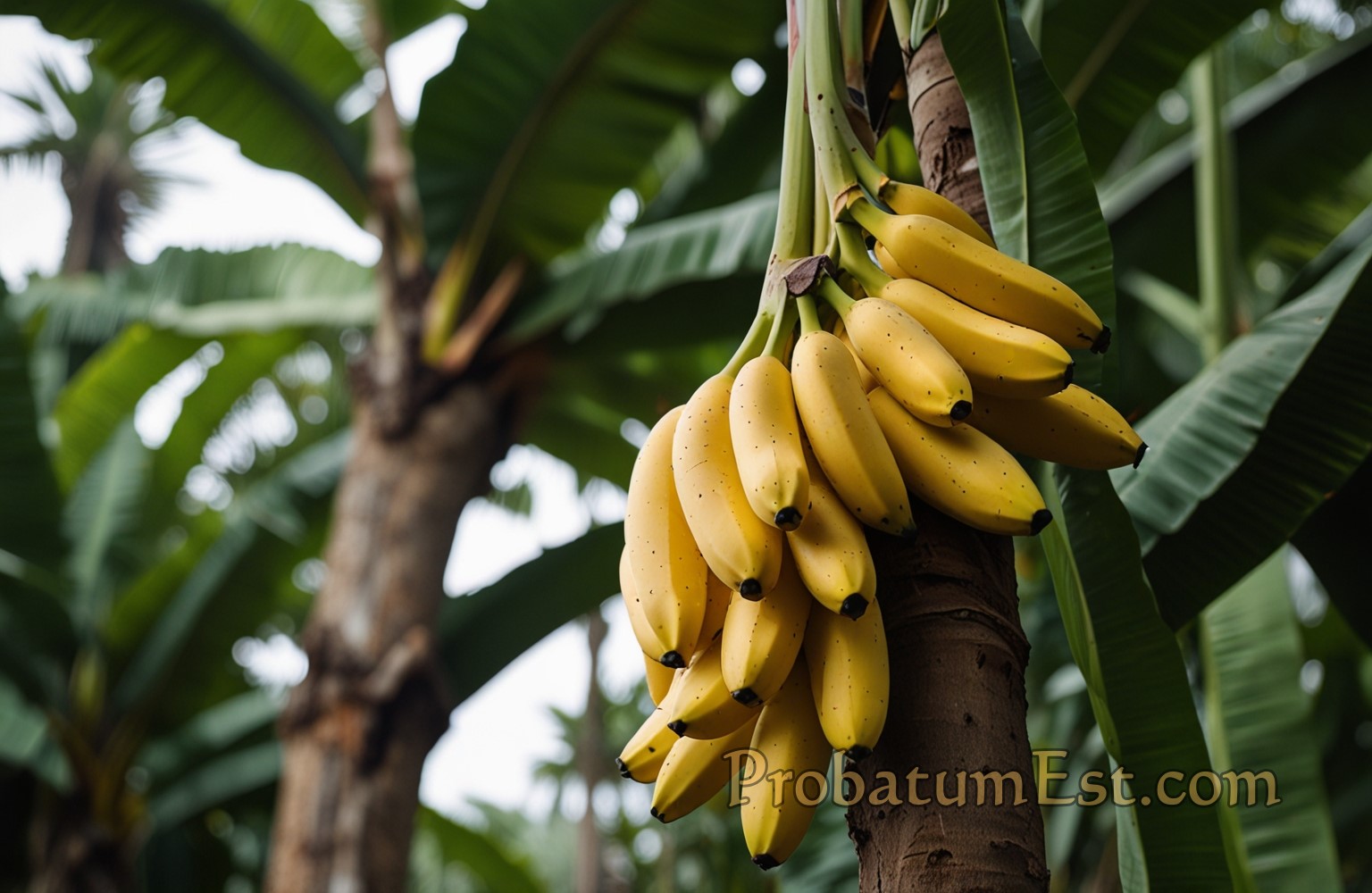
Bananas rank among the most consumed fruits globally and form a vital part of diets in many regions. Their familiar elongated shape and sweet taste often inspire questions about how, and on what, they grow — do bananas actually grow on trees? This article explores that intriguing question in depth, going beyond the simple “yes or no” to explain the unique botanical classification of bananas, delve into worldwide cultivation practices, and share expert insights.
1. The Botanical Reality: Bananas Grow on a Giant Herb, Not on a True Tree
Contrary to what many believe, banana plants are not trees in the strict botanical sense. A “true tree” typically possesses a woody trunk that grows thicker over time. Meanwhile, a banana plant belongs to the genus Musa and is classified as a large herb. Instead of having a woody trunk, it features a “pseudostem” composed of overlapping leaf sheaths.
- The Pseudostem Explained: The banana plant’s trunk-like structure is built when tightly wrapped leaf stems form a sturdy cylinder. After the plant produces fruit, the pseudostem typically stops growing and new shoots (called “suckers”) emerge from an underground rhizome to form the next generation of plants.
- A Brief Botanical Note: Because bananas lack woody tissues, horticulturists prefer calling them “banana plants” or “banana herbs,” although it is common in everyday language to refer to them as “banana trees.”
2. Global Significance and Production Statistics
Bananas are a staple crop in many tropical and subtropical regions. According to the Food and Agriculture Organization (FAO), over 116 million metric tons of bananas are produced worldwide each year.
- Leading Producers: India and China are consistently among the largest banana-producing countries, followed by Indonesia, Brazil, and Ecuador, among others.
- Export Markets: Ecuador, Costa Rica, and Colombia are key exporters, supplying global markets with large quantities of bananas. In many regions, bananas are grown not only for external markets but also to meet local food needs.
These figures underline the importance of bananas in international trade and local livelihoods, with millions of people around the world depending on them for food security and income.
3. Banana Cultivation: Climate, Soil, and Growing Conditions
Bananas thrive in warm, humid climates where temperatures generally stay between 20°C and 30°C (68°F to 86°F). They also need adequate rainfall — often more than 100 millimeters (4 inches) per month — and well-draining, nutrient-rich soil. These conditions allow banana plants to complete their life cycle effectively and produce large, marketable fruit clusters.
- Planting and Propagation: Commercial banana plants are typically grown by planting suckers (young offshoots) or tissue-cultured plantlets. The most commonly cultivated variety is the Cavendish banana, prized for its sweet flavor, consistent size, and resilience in certain environments.
- Nutrient Needs: Banana plants are heavy feeders and require crucial nutrients such as nitrogen, phosphorus, and potassium. Farmers often use organic matter (e.g., compost) to keep soils fertile, alongside balanced fertilization programs.
4. The Banana Life Cycle: From Flowering to Fruit
The distinct life cycle of the banana plant helps illuminate why it is considered an herb rather than a tree:
- Vegetative Growth: Initially, leaves form around each other, creating the pseudostem.
- Flower Emergence: As the banana plant matures, the flower spike (inflorescence) appears at the top.
- Fruit Cluster Development: The female flowers develop into bananas, forming clusters commonly called “hands.” Several hands together create a full bunch, which can weigh anywhere from 10 to 50 kilograms (about 22 to 110 pounds), depending on the variety and cultivation technique.
- Harvest: Bananas are harvested when mature but still green, allowing for controlled ripening during transport or storage.
- Plant Renewal: After fruiting, the main pseudostem dies back, while new shoots from the underground rhizome continue the growth cycle for the next harvest.
5. Common Myths and Misconceptions
- “Bananas Grow on Banana Trees”: Despite being colloquially referred to as banana trees, they are indeed giant herbs.
- “Bananas Grow in Cold Climates”: While certain ornamental banana varieties can withstand mild frost, the edible varieties typically require tropical or subtropical warmth.
- “One Banana Plant Lives and Produces for Years”: Each individual pseudostem produces fruit only once, making bananas effectively monocarpic. However, the plant perpetuates through new suckers.
6. Anecdotes and Observations from Banana Farmers
Many banana cultivators share personal stories about seeing the pseudostems wither after harvest and new shoots taking their place — an occurrence that can surprise those expecting a single trunk to survive indefinitely. Some farmers compare the sight of a banana field full of tall, leafy “trees” to a lush forest, even though they realize the plants don’t have any woody structure. These anecdotal experiences match scientific understanding: what appears to be a tree is actually a huge herb operating on a continuous renewal cycle.
7. Expert Opinions and Research Highlights
- Horticultural Perspective: Experts at the Royal Horticultural Society emphasize that bananas (Musa spp.) are among the largest herbaceous plants, highlighting the pseudostem’s role in supporting the heavy fruit clusters.
- Yield and Quality Studies: Agricultural research stations worldwide study banana cultivation methods, seeking ways to improve yield, disease resistance, and fruit quality. Although there is a broad consensus that climate, irrigation, and soil fertility are pivotal factors, exact methods can vary based on regional conditions.
- Consumer Demand: Market research firms report that bananas hold a top position among frequently purchased fruits in supermarkets. Their affordability, convenience, and nutritional profile keep them popular across diverse cultures.
8. Nutritional Profile and Culinary Uses
Bananas serve as a convenient source of carbohydrates, dietary fiber, vitamins, and minerals. They are often recommended as a quick energy booster and are used in a variety of culinary settings:
- Snacks and Smoothies: The sweet flesh makes bananas a favorite in shakes, smoothies, and on-the-go snacks.
- Baking: Mashed ripe bananas add natural sweetness and moisture to breads, muffins, and cakes.
- Cooking Bananas (Plantains): Many regions grow cooking bananas until they are mature. Rich in starch, these bananas are typically prepared by boiling, frying, or baking.
9. Conclusion: More Than Meets the Eye
So, do bananas grow on trees? The short answer is no — despite appearing tree-like, bananas grow on giant herbs called banana plants. This distinction helps gardeners and consumers alike appreciate the fascinating botanical structure behind each fruit-laden “trunk.” Cultivated worldwide and cherished for their sweet, nutritious fruit, bananas demonstrate nature’s ingenuity in delivering one of the most recognizable and widely eaten foods around the globe.
In sum, the banana plant’s rugged pseudostem and rapid generation of suckers make it a continuously renewing crop. For farmers, this means investing in specialized care and optimal conditions to produce abundant yields. For consumers, it means a consistent supply of one of the world’s favorite fruits. Together, these insights reveal that the banana plant — an herb, not a tree — powers an industry and nourishes billions, underscoring its importance on both local and global scales.
References & Further Reading
- Food and Agriculture Organization of the United Nations (FAO) – Crop Production Data
- Royal Horticultural Society (RHS) – Growing Bananas Indoors and Outdoors
- American Society for Horticultural Science (ASHS) – Banana Plant Research Studies
By understanding the botanical classification, life cycle, and global significance of bananas, readers gain a clearer perspective on one of nature’s most remarkable herbaceous plants — and why, in spite of their towering form, bananas do not actually grow on trees.



Leave a Reply