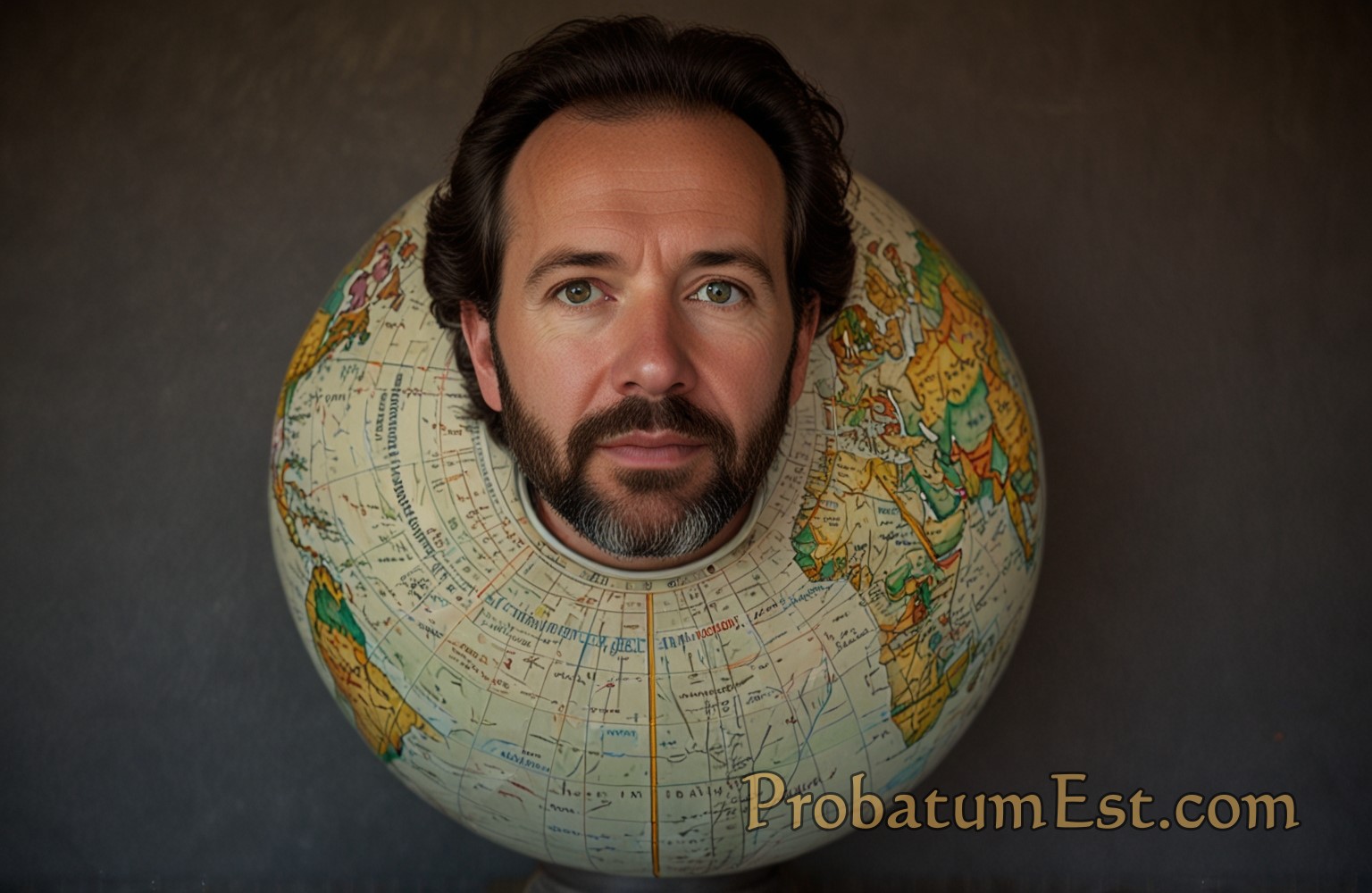
The Prime Meridian is a pivotal concept in the realms of geography, navigation, and timekeeping that has played a significant role in the shaping of our modern world. It serves as the starting point for the system of longitude, establishing a zero-degree line from which east and west are demarcated. Here, we delve deep into the history, significance, and impact of the Prime Meridian, exploring its scientific, historical, and cultural facets.
Understanding Meridians
Meridians are imaginary lines that run from the North Pole to the South Pole. Unlike parallels of latitude that are equidistant apart, meridians converge at the poles. Each meridian is defined by its angle relative to the Prime Meridian. While the Earth can theoretically have an infinite number of meridians, only one is designated as the Prime Meridian.
A Historical Overview
The Selection of a Prime Meridian
- Ancient and Medieval Concepts: Historically, different cultures had their own meridians. The Greeks, for instance, considered the meridian passing through Alexandria as a reference. In medieval times, the Canary Islands meridian was commonly used.
- The Greenwich Meridian: The Prime Meridian we used to recognize emerged out of necessity during the age of exploration and navigation. By the 18th and 19th centuries, there was a need for a standard reference point to facilitate global navigation and trade.
- International Meridian Conference 1884: It was not until the International Meridian Conference held in Washington, D.C., in 1884, that the Greenwich meridian became the universal reference point. Delegates from 25 nations voted to adopt the meridian that ran through the Royal Observatory in Greenwich, England, based on its extensive use in British nautical charts.
- IERS Reference Meridian: The IERS Reference Meridian was designated as the Prime Meridian in 1998 by the International Earth Rotation and Reference Systems Service (IERS) to enhance precision in global navigation and geolocation. This change was prompted by advancements in technology and the need for a stable reference, as the original Greenwich Prime Meridian had limitations due to Earth’s rotational variations. The IERS Reference Meridian, based on satellite data and astronomical observations, provides a more accurate standard for scientific research and international collaboration.
Why Greenwich?
- Scientific Advances: Greenwich was at the forefront of astronomical study during the 17th and 18th centuries. The Royal Observatory, commissioned by King Charles II in 1675, became a center for stellar observations that contributed to more accurate navigation.
- Practical Considerations: The vast spread of the British Empire meant that British charts and navigation systems were widely used. The selection of Greenwich reflected both scientific prominence and geopolitical influence.
Significance of the Prime Meridian
Geographic Significance
- Zero Longitude: The Prime Meridian marks zero degrees longitude. It serves as the starting point for calculating longitude and setting time zones across the globe.
Timekeeping
- Greenwich Mean Time (GMT): GMT was established based on the Prime Meridian. It became the world standard for timekeeping, a role it played up until the establishment of Coordinated Universal Time (UTC), which is still based on laws defining time zones by dividing the globe into 24 longitudinal segments.
- Impact on Daily Life: The establishment of standardized time influenced countless aspects of daily life, from transport schedules to the synchronization of economic markets globally.
Navigational Importance
- Loxodromes and Rhumb Lines: Navigation, especially nautical navigation, heavily relies on the concept of loxodromes or rhumb lines, which are easier to plot on a chart compared to great circle paths. These lines are navigated using a consistent compass bearing, helping with plotting courses over the sea.
- GPS and Modern Navigation: Modern GPS systems still use longitudes and latitudes derived from the Prime Meridian as core components for providing accurate location data.
The Prime Meridian Today
Technological and Cultural Significance
- Global Positioning Systems: Modern technology, such as GPS, still fundamentally relies on the principles established by the Prime Meridian system for alignment and location tracking.
- Cultural Landmark: The line at Greenwich holds symbolic significance and has become a tourist attraction, where visitors can stand with one foot in the eastern hemisphere and one in the western.
Challenges and Changes
- Shifts in the Meridian Line: Due to changes in technology and tectonic activities, there’s been recognition that the actual prime meridian doesn’t perfectly align with the historical line at Greenwich. Scientific advancements also call attention to continental drift, altering precise measurement slightly over time.
The IERS Reference Meridian
The IERS Reference Meridian was designated as the Prime Meridian in 1998 by the International Earth Rotation and Reference Systems Service (IERS) to provide a more precise and stable reference for global navigation and geolocation. This decision was driven by advancements in technology and the need for a consistent frame of reference, as the original Greenwich Prime Meridian, as mentioned above, had limitations due to variations in the Earth’s rotation and changes in geographical features. The IERS Reference Meridian is based on a combination of satellite data and astronomical observations, ensuring that it accurately represents the Earth’s rotation axis, and thus provides an updated and reliable standard for both scientific research and international collaboration.
Conclusion
The Prime Meridian, while an imaginary line, is a symbol of human effort to bring order and structure to our understanding of the world. Its establishment was not a mere scientific endeavor but a milestone in international cooperation and standardization. Today, it underpins the very frameworks of geography and time, enduring as a testament to the quest for knowledge, precision, and unity. As technology continues to evolve, the principles laid out through the establishment of the Prime Meridian persist, guiding humanity’s journey across the globe.



Leave a Reply