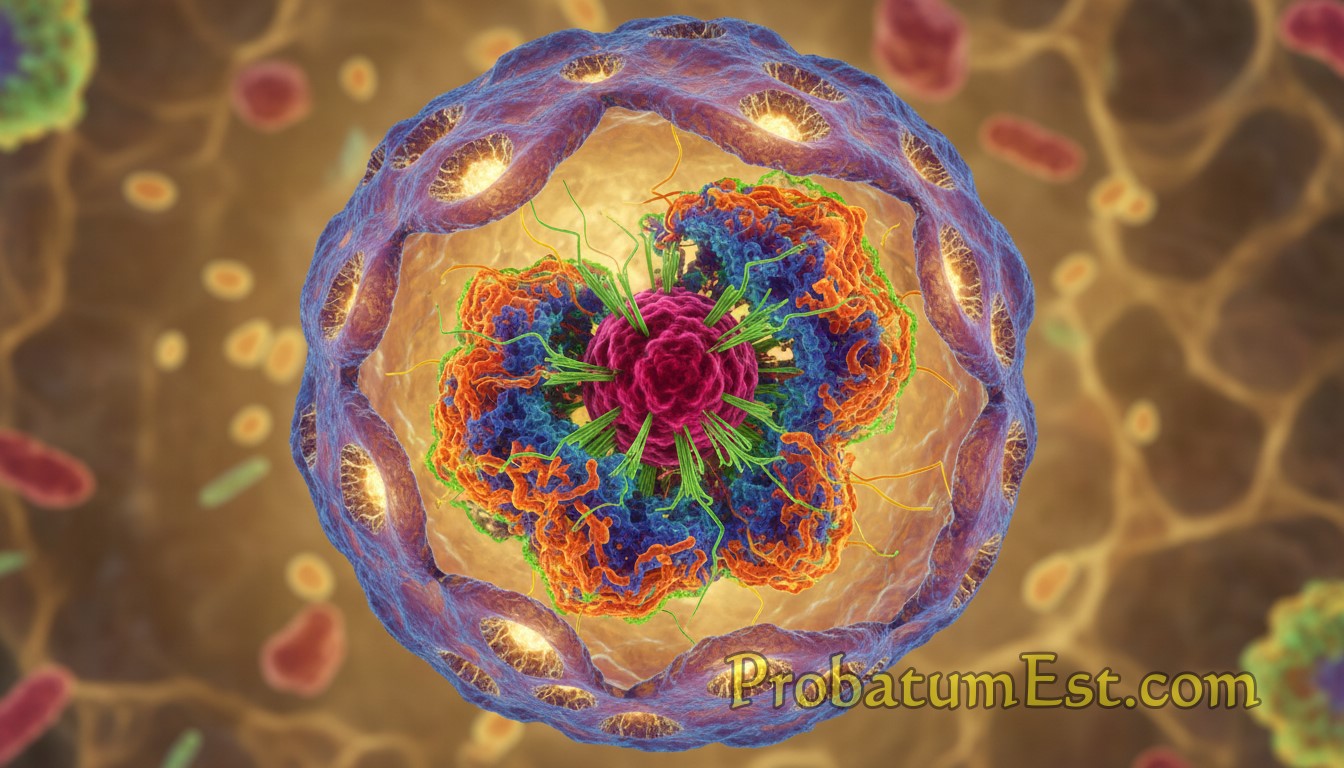
The cell nucleus is a defining feature of most eukaryotic cells, serving as the command center where the genetic code is stored and processed. First described in 1831 by botanist Robert Brown, the nucleus derives its name from the Latin word for “kernel” or “nut,” underscoring its central importance to cell function. Today, our understanding of the nucleus has expanded considerably thanks to advances in microscopy, molecular biology, and structural biology. This article provides a comprehensive overview of the cell nucleus — its architecture, roles in gene regulation, medical significance, and latest research insights — supported by data and expert perspectives from reputable sources.
1. Historical Perspective and Basic Overview
- Discovery: Robert Brown’s early observations of the “nucleus” in orchid cells marked a turning point in cell biology, providing the foundation for further exploration.
- Defining Feature of Eukaryotic Cells: The presence of a true nucleus (as opposed to diffuse genetic material) distinguishes eukaryotes from other life forms. Within this specialized compartment, the genetic material — organized into chromosomes — is safeguarded and regulated.
- Size and Variability: In many mammalian cells, the nucleus typically measures between 5 and 10 micrometers in diameter. The size can vary depending on cell type, species, and physiological conditions.
2. Structure of the Cell Nucleus
The nucleus is not merely a membrane-bound bag of DNA; it is a complex organelle with substructures and molecular components meticulously arranged to optimize cellular function.
2.1 Nuclear Envelope
- Dual Membrane System: The nuclear envelope, composed of an inner and an outer membrane, encloses the nucleus. The inner membrane often associates with a network of proteins known as the nuclear lamina, which provides structural support.
- Nuclear Lamina: Comprised primarily of intermediate filament proteins called lamins, the lamina helps maintain nuclear shape and also mediates interactions between chromatin (DNA-protein complexes) and the nuclear envelope. Disruptions in lamins have been linked to several genetic conditions such as certain types of muscular dystrophy.
- Outer Membrane Continuity: The outer membrane is continuous with the endoplasmic reticulum (ER), signifying the close functional relationship between the nucleus and other membrane-bound organelles in the cell.
2.2 Nuclear Pores and Transport
- Nuclear Pore Complex (NPC): These large multiprotein channels punctuate the nuclear envelope, regulating the transport of molecules between the nucleus and cytoplasm. Each NPC is composed of roughly 30 different proteins called nucleoporins.
- Selective Traffic: Small molecules can diffuse through the NPC, while larger molecules—such as proteins and RNAs require specific transport mechanisms involving importins, exportins, and distinct signaling sequences.
- Quantitative Importance: A typical mammalian cell nucleus contains thousands of nuclear pores. The rate of mRNA export through NPCs and protein import can be crucial for rapid cellular responses, such as those related to cell growth or specialized functions (Alberts et al., “Molecular Biology of the Cell”).
2.3 Chromatin Organization
- Chromosomes: The genetic material in the nucleus is organized into chromosomes — linear DNA molecules wrapped around histone proteins. In humans, 23 pairs of chromosomes reside in the nucleus of each somatic cell.
- Chromatin Structure: Chromatin can be broadly categorized into euchromatin (less condensed, transcriptionally active regions) and heterochromatin (highly condensed, transcriptionally silent regions). The dynamic rearrangement of chromatin influences gene expression and cellular identity.
- Nuclear Bodies: Aside from chromosomes, the nucleus contains sub-nuclear compartments known as nuclear bodies, which include structures like Cajal bodies and speckles. These structures facilitate specific nuclear processes, such as modification of RNA or assembly of splicing components.
2.4 Nucleolus: Site of Ribosome Synthesis
- Ribosome Factory: The nucleolus is the largest and most prominent of the nuclear bodies. It is the site of ribosomal RNA (rRNA) transcription and ribosomal subunit assembly, critical steps in the formation of the cell’s protein-synthesizing machinery.
- Key Role in Cellular Physiology: Because protein synthesis is fundamental to all cells, malfunction of the nucleolus can lead to defects in cell growth and proliferation.
3. Functions of the Cell Nucleus
The cell nucleus is vital for life’s fundamental processes, coordinating an array of cellular activities that hinge on the integrity of the genetic material.
3.1 Gene Regulation and Expression
- Transcriptional Control: Within the nucleus, DNA is transcribed into mRNA, which then moves to the cytoplasm for translation. The compartmentalization ensures that transcription and translation occur in separate, optimized environments.
- Epigenetic Modifications: Chemical tags — such as DNA methylation and histone modifications — regulate gene accessibility. These modifications can be influenced by developmental cues, environmental factors, and other signals.
- Regulatory Proteins: Transcription factors and chromatin remodelers shuttle in and out of the nucleus, binding to regulatory regions on the DNA. Their controlled movement and interaction with DNA are essential for fine-tuning gene expression patterns.
3.2 DNA Replication and Cell Division
- Replication Licensing: DNA replication is carefully orchestrated in the nucleus. When conditions are right, replication origins are “licensed,” ensuring the entire genome is copied once and only once prior to cell division.
- Cell Cycle Control: Progression through the cell cycle is regulated by cyclins and cyclin-dependent kinases (Cdks), many of which function within or interact with the nucleus. The precise coordination of replication, transcription, and chromosome segregation is essential to avoid genetic damage.
3.3 Genome Integrity and Repair
- Nuclear Surveillance: The nucleus houses numerous DNA repair mechanisms, including nucleotide excision repair, base excision repair, and double-strand break repair.
- Maintaining Stability: Mutations and genomic rearrangements threaten cell viability. The presence of dedicated repair pathways within the nucleus highlights its role as the gatekeeper of genetic stability (Pollard & Earnshaw, “Cell Biology”).
4. The Cell Nucleus in Health and Disease
Disruptions in nuclear structure or function can contribute to a variety of human disorders, underscoring the medical significance of a properly maintained nucleus.
4.1 Laminopathies and Nuclear Envelope Disorders
- Mutations in Lamins: Errors in lamin proteins can lead to conditions such as Emery-Dreifuss muscular dystrophy, featuring progressive muscle weakness and cardiac complications.
- Premature Aging Syndromes: Certain defects in nuclear envelope proteins have been associated with accelerated aging features, highlighting the importance of the structural integrity of the nucleus in normal cell physiology.
4.2 Cancer and Nuclear Architecture
- Aberrant Gene Expression: In many tumor cells, nuclear shape and chromatin organization appear markedly altered. Researchers have used nuclear morphology as a diagnostic criterion in histopathology for decades.
- Research Insights: Studies published in top journals like Cell and Nature have shown that nuclear architecture influences gene expression patterns critical for cancer cell proliferation and metastasis. Efforts to develop therapies targeting nuclear functions are ongoing, with promising preclinical data suggesting a link between nuclear reorganization and drug sensitivity (Nature Reviews Molecular Cell Biology).
5. Technological Advances in Nuclear Research
Recent breakthroughs in imaging techniques and molecular biology have revolutionized our view of the cell nucleus, allowing researchers to probe its structure and functions more precisely.
5.1 Super-Resolution Microscopy
Super-resolution fluorescence microscopy techniques — such as STED (Stimulated Emission Depletion) and PALM (Photoactivated Localization Microscopy) — provide images of nuclear structures at near-molecular resolution. This has illuminated sub-nuclear compartments that were previously elusive under conventional light microscopy.
5.2 Chromosome Conformation Capture (3C) and Derivatives
Techniques like 3C, Hi-C, and related methods allow scientists to investigate how parts of the genome physically interact within the three-dimensional space of the nucleus. These interactions can profoundly affect gene expression and are at the forefront of studies on nuclear organization.
5.3 Bioinformatics and Computational Models
Modern computational tools integrate experimental data (e.g., large-scale sequencing) with 3D imaging to create in silico models of nuclear architecture. Such models can predict how changes in chromosome folding might impact gene regulation.
6. Future Directions and Expert Perspectives
Experts in cell biology suggest that the nucleus is more intricate than once believed, acting as a dynamic hub for signaling, metabolic coordination, and memory storage of regulatory pathways. Some leading researchers propose that unveiling the full complexity of nuclear organization — down to individual molecules — will be key to understanding diseases related to dysfunctional gene expression and chromosome organization.
Conclusion
The cell nucleus remains an endlessly fascinating organelle, brimming with complexity and vital to virtually every process in a eukaryotic cell. From the nuclear envelope that demarcates its boundary to the chromatin dynamics that regulate gene expression, the nucleus orchestrates life at the cellular level. Ongoing discoveries, powered by state-of-the-art microscopy, molecular tools, and computational approaches, continue to deepen our understanding of how the nucleus operates and how its disruption can lead to disease. With these insights, scientists and clinicians alike can better appreciate the nucleus not merely as a repository for DNA but as a dynamic, responsive command center essential for health and development.
References (Selected)
- Alberts, B. et al. “Molecular Biology of the Cell.” Garland Science.
- Pollard, T.D. and Earnshaw, W.C. “Cell Biology.” Saunders.
- Nature Reviews Molecular Cell Biology, various articles on nuclear architecture and gene regulation.
- Cell, various articles on chromatin dynamics and nuclear pore complex.
By delving deeper into the cell nucleus — through careful study of its structures, functions, and links to disease — researchers continue to unveil the complexities and nuances that underscore its critical role in biology.



Leave a Reply