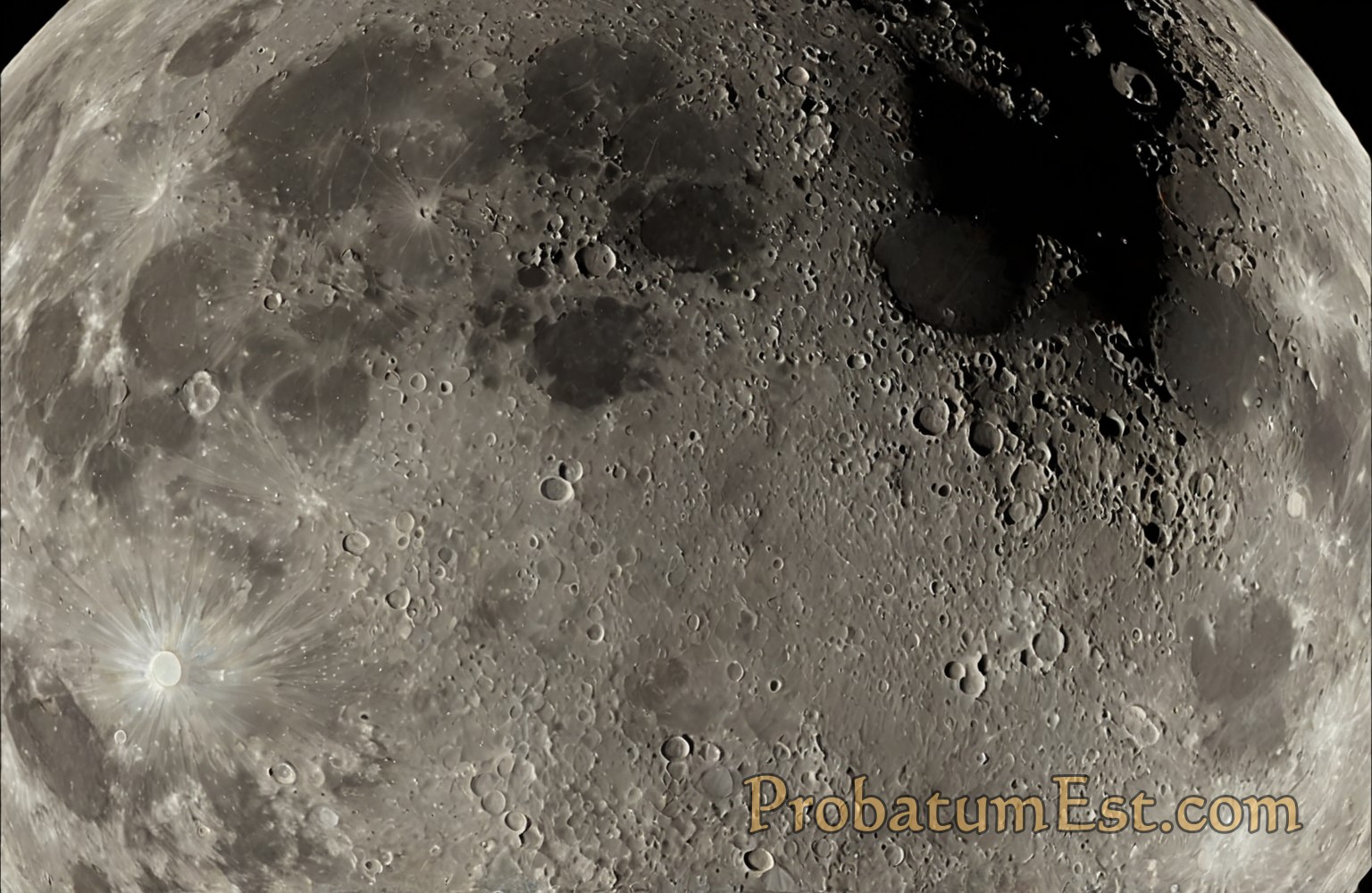
Moons, also known as natural satellites, are celestial bodies that orbit planets and some of the dwarf planets in our solar system and beyond. These fascinating objects come in various sizes, compositions, and orbital behaviors, providing astronomers with rich insights into the dynamics of planetary systems. This article delves into the multifaceted nature of moons from an astronomical perspective, exploring their formation, types, and the intriguing phenomena associated with them.
Formation of Moons
The formation of moons is a complex process that can occur through multiple mechanisms:
- Co-formation: Many moons form from the same protoplanetary disk of dust and gas that surrounds a young planet. This process, similar to planetary formation, allows moons to accrete material and grow in size over time. The Galilean moons of Jupiter—Io, Europa, Ganymede, and Callisto—are believed to have formed through this method.
- Capture: Some moons are originally asteroids or Kuiper Belt objects captured by the gravitational field of a planet. Capturing a moon typically requires a change in its velocity, which can occur through collisions or gravitational interactions. Neptune’s moon Triton is a prime example of a captured moon, evidenced by its retrograde orbit.
- Giant Impacts: A massive collision between a planet and another celestial body can eject debris into orbit, which can coalesce to form a moon. Earth’s Moon is thought to have originated from such a catastrophic impact with a Mars-sized body called Theia.
- Fission: In rare cases, a rapidly spinning young planet may eject material due to centrifugal forces, which later forms a moon. However, this hypothesis has fallen out of favor as a primary formation mechanism.
Characteristics and Types of Moons
Moons exhibit a wide array of characteristics and can be categorized based on their size, composition, orbits, and other factors:
- Size and Mass: Moons vary significantly in size, from small asteroid-like bodies a few kilometers across to massive moons like Ganymede of Jupiter, which is larger than the planet Mercury. This variation influences their gravitational pull and surface geology.
- Composition: The composition of moons can range from rocky, metallic bodies to icy worlds with subsurface oceans. Europa, for example, is an ice-covered moon with a potential ocean beneath its surface, raising intriguing possibilities for extraterrestrial life.
- Orbital Configurations: Moons can have diverse orbits — some are nearly circular, while others are highly elliptical. They can orbit in the same direction as their planet’s rotation (prograde) or the opposite direction (retrograde). Additionally, moons can be found at various orbital inclinations and distances from their host planet.
- Tidal Forces and Resonances: Gravitational interactions between moons and their planets can lead to tidal forces that heat the moon’s interior. This is seen in Io, which experiences intense volcanic activity due to tidal heating. Moons can also enter orbital resonances, where their gravitational influence helps maintain stable orbits over long periods.
Notable Moons in our Solar System
- The Moon: Earth’s only natural satellite, known simply as the Moon, plays a significant role in regulating our planet’s climate and tides. Its surface is marked by impact craters and maria—vast basaltic plains formed by ancient volcanic activity.
- strong>Galilean Moons: Jupiter’s four largest moons—Io, Europa, Ganymede, and Callisto—were the first moons discovered by Galileo Galilei. These moons exhibit unique characteristics: Io’s volcanism, Europa’s potential ocean, Ganymede’s magnetic field, and Callisto’s ancient, heavily cratered surface.
- Titan: Saturn’s largest moon, Titan, is shrouded in a thick atmosphere rich in nitrogen. It features lakes and rivers of liquid methane and ethane, offering a glimpse into atmospheric and hydrological processes in extreme environments.
- Enceladus: Another of Saturn’s intriguing moons, Enceladus, has geysers that eject water vapor and ice particles, suggesting a subsurface ocean. This moon has sparked interest in astrobiological studies due to its potential habitability.
- Triton: Neptune’s largest moon, Triton, features a retrograde orbit, indicating it was likely captured by the planet. It has geysers that spew nitrogen gas, hinting at active geological processes.
Exomoons
Beyond our solar system, astronomers are on the hunt for exomoons — moons orbiting exoplanets. The discovery of exomoons would provide new insights into the formation and evolution of planetary systems. While none have been definitively confirmed as of yet, candidates have been spotted, promising an exciting frontier for future astronomical research.
Moons and the Study of Life
Moons play a pivotal role in astrobiology, the study of life beyond Earth. Moons like Europa and Enceladus, with their subsurface oceans, serve as natural laboratories for testing hypotheses about the conditions suitable for life. Spectroscopic analysis and future missions aim to unravel the mysteries of these enigmatic environments, deepening our understanding of life’s potential in the universe.
Conclusion
Moons, in their myriad forms, are not just celestial companions of planets but also key players in the theatrical cosmic dance of our solar system and beyond. Their varied formations, compositions, and behaviors offer vital clues to the past and present processes governing planetary systems. As technology advances and our observational capabilities grow, the study of moons promises to illuminate further insights into the origins and diversity of our universe.




Leave a Reply