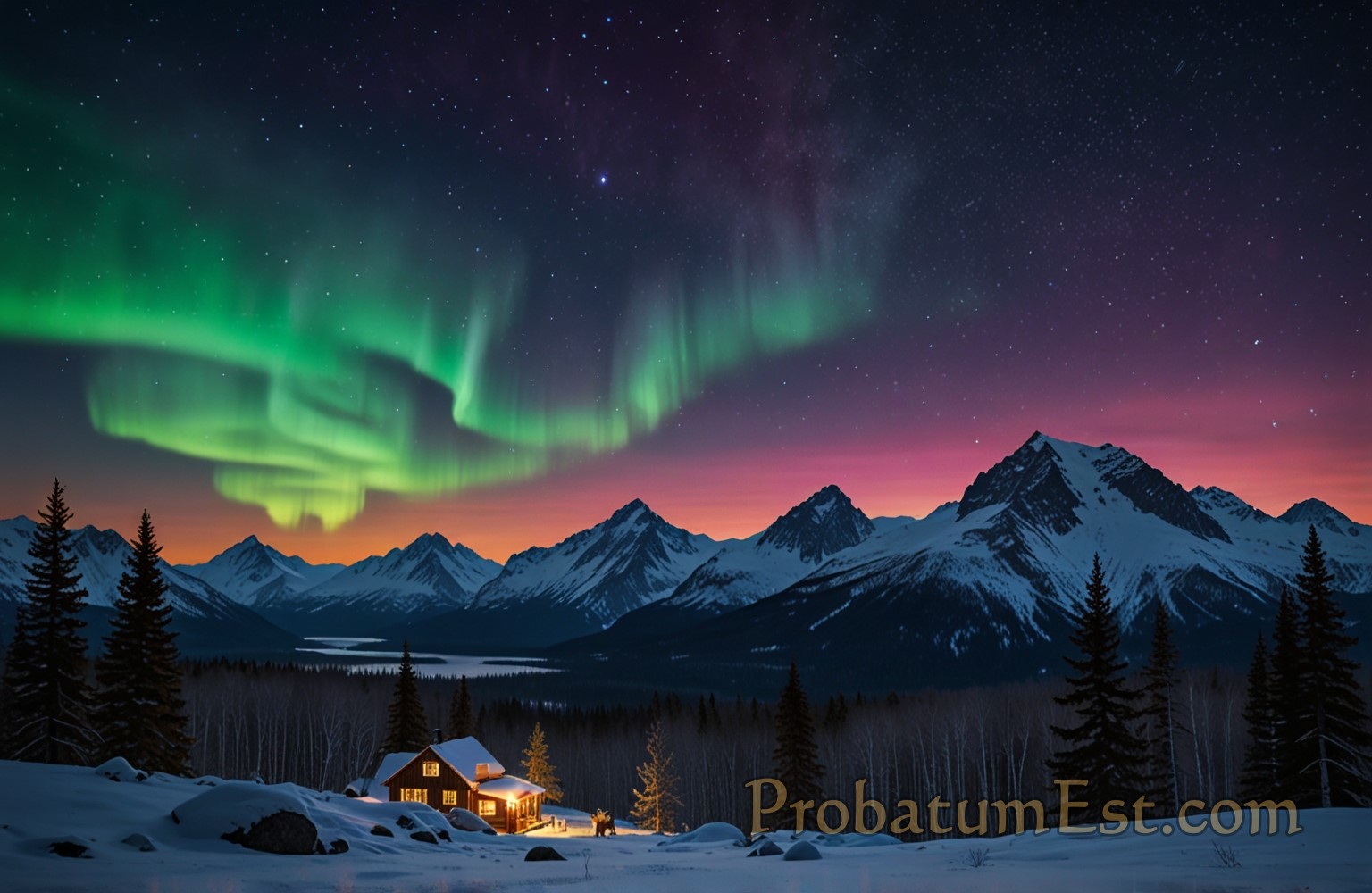
Aurora Borealis, commonly known as the Northern Lights, is one of the most mesmerizing natural phenomena observable from Earth. This breathtaking display of vivid colors dancing across the night sky has captivated humans for millennia, leading to a rich tapestry of myths, scientific curiosity, and artistic inspiration.
The Science Behind the Aurora Borealis
The Northern Lights are primarily a result of interactions between solar winds and Earth’s magnetic field. Here’s a deeper look into the science that underpins this phenomenon:
1. Solar Winds and Earth’s Magnetic Field:
The Sun is constantly emitting a stream of charged particles known as the solar wind. These particles mostly consist of electrons and protons. When these charged particles reach Earth, most are deflected by the planet’s magnetosphere, a protective magnetic field that encircles the globe. However, some particles become trapped and are funneled towards the poles by the magnetic field lines.
2. Collision with Atmospheric Gases:
As these solar particles enter the Earth’s upper atmosphere, they collide with gas atoms and molecules, such as nitrogen and oxygen. These collisions excite the atmospheric gases, prompting the release of photons, which are particles of light. This emission of light results in the spectacular colors of the aurora.
3. Color Variations:
The specific colors observed during an aurora depend on the type of gas involved in the collisions and the altitude at which these interactions occur:
- Green: The most common color, produced when solar particles collide with oxygen at altitudes between 60 to 150 miles.
- Red: A rarer occurrence resulting from oxygen molecules at higher altitudes above 150 miles.
- Blue and Purple: Caused by interactions with nitrogen, visible in the lower altitudes.
4. Auroral Oval:
The aurora typically forms in an area called the “auroral oval,” which is centered around the magnetic poles. The location and intensity of this oval can shift based on the strength of solar wind activity.
Mythology and Cultural Significance
Historically, the Northern Lights have played a significant role in various cultures and mythologies. Here are some insights:
1. Norse Mythology:
In Norse legends, the aurora was thought to be the reflections from the shields and armor of the Valkyries, warrior maidens who would lead fallen warriors to Valhalla.
2. Indigenous Cultures:
Many indigenous cultures of the Arctic, such as the Sami of Scandinavia and Inuit of North America, have rich stories and beliefs about the Northern Lights. They range from viewing them as spirits playing in the sky to omens about weather changes.
3. Scientific Exploration:
The scientific study of auroras began in earnest with the advent of astronomical research in the 17th and 18th centuries. Notable figures such as Galileo Galilei, who named the phenomena “aurora borealis” after the Roman goddess of dawn, Aurora, and the Greek name for north wind, Boreas, contributed to early understanding.
Where and When to Observe
To witness the Aurora Borealis, you must be located in regions close to the Arctic Circle. Some of the best places to observe include:
- Norway: Areas such as Tromsø and the Lofoten Islands offer stunning views.
- Iceland: With its wide open spaces and low light pollution, Iceland provides excellent opportunities.
- Canada: The Yukon, Northwest Territories, and Manitoba are popular locations.
- Alaska: Fairbanks is renowned for its aurora viewing.
The best time to see the Northern Lights is during the winter months, from late September to early April when the nights are longest and the skies are darkest. Solar activity plays a critical role, so observing during periods of high solar activity increases the chances of witnessing a vibrant display.
The Impact of Solar Cycles
The frequency and intensity of the Aurora Borealis are influenced by the solar cycle, which lasts approximately 11 years. During the solar maximum, when the Sun’s activity is at its peak, solar winds are more intense, often resulting in more frequent and vivid auroral displays. Conversely, during the solar minimum, the lights tend to be less frequent and less intense.
The Technological Impact
While auroras are beautiful, they also highlight the interaction between solar activity and technological systems. Intense solar storms, which produce the most vivid auroras, can disrupt satellite communications, GPS systems, and even power grids. Understanding these interactions is vital for managing technological systems in our increasingly digitized world.
Conclusion
The Aurora Borealis remains one of nature‘s most awe-inspiring spectacles. A product of complex interactions between Earth and our sun, the Northern Lights captivate the imagination, inspire cultures, and challenge scientific understanding. Whether you view them as a scientific wonder, a canvas for artistic expression, or a mythological marvel, the Northern Lights continue to dance across our skies, reminding us of the intricate beauty of our universe.



Leave a Reply