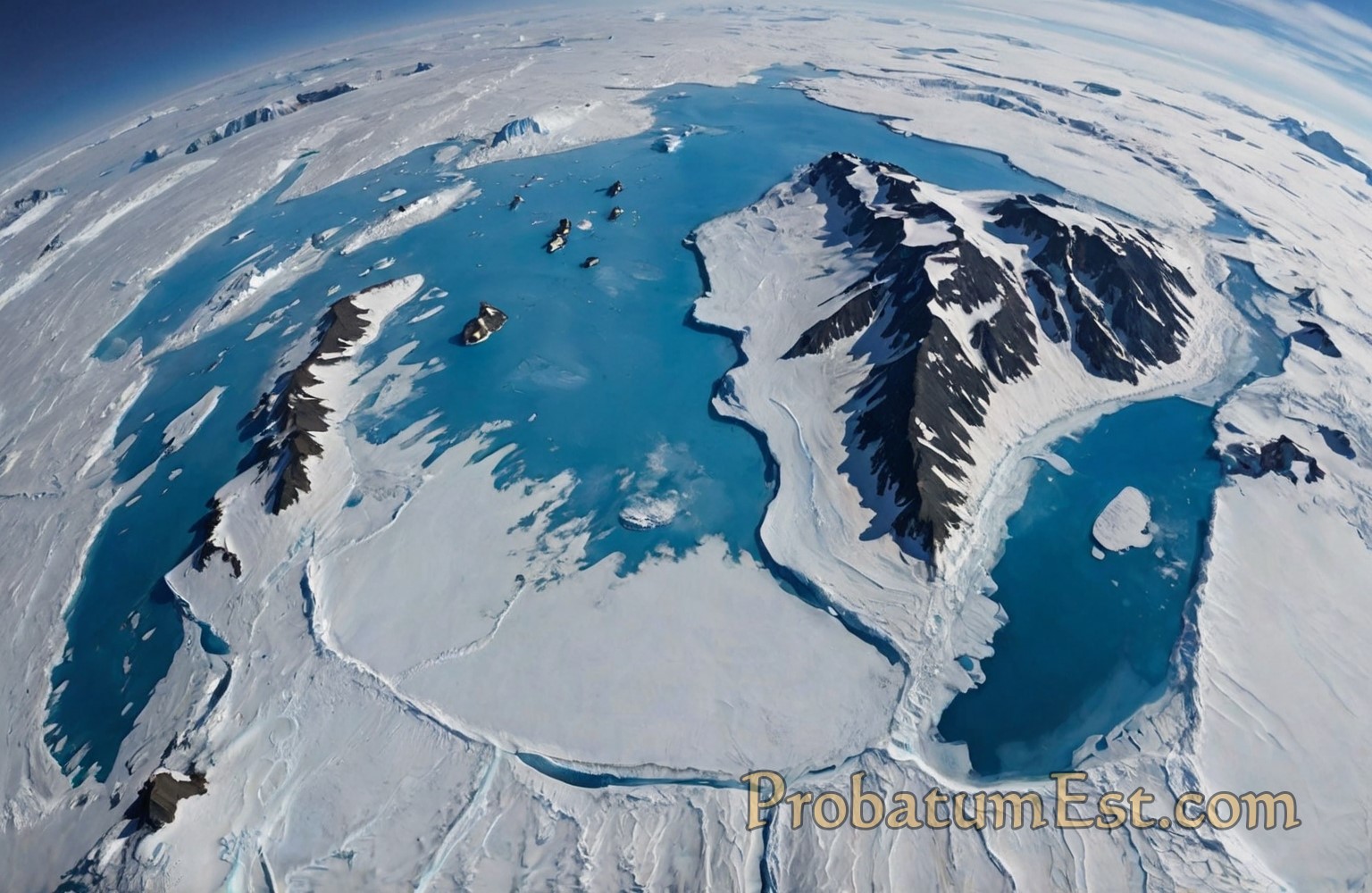
Antarctica, the southernmost continent on Earth, is a land of extremes. Its sheer size, isolation, and frigid temperatures make it a unique natural environment; a cold desert that captivates scientists, adventurers, and environmentalists alike. This article delves deep into the multifaceted aspects of Antarctica, exploring its geography, climate, ecological significance, scientific importance, and geopolitical status, while also touching on the challenges and debates surrounding its future.
Geographical Overview
Antarctica is the fifth-largest continent, covering an area of about 14 million square kilometers, almost twice the size of Australia. Despite being covered nearly entirely by an ice sheet, it is considered the driest and windiest continent. The Transantarctic Mountains divide it into East and West Antarctica, offering a stark contrast in terms of topography and geological history. East Antarctica is largely a high plateau covered by ice, while West Antarctica features ice shelves, glaciers, and scattered mountain ranges.
The Ice Sheet
The Antarctic ice sheet is the single largest mass of ice on Earth, accounting for about 60% of the world’s freshwater. Parts of the ice sheet rest on land, while others extend over the ocean, forming ice shelves. The Ross and Ronne ice shelves are some of the largest. The movement of ice here is a critical component of global sea levels and climate systems.
Climate and Weather
Antarctica is characterized by extreme cold, with temperatures plummeting as low as -80 degrees Celsius (-112 degrees Fahrenheit) in winter. The coastal regions are somewhat milder in comparison to the interior, where the altitude contributes to even more frigid conditions. The continent experiences a polar climate, with long periods of darkness during winter and continuous daylight in summer, thanks to its position around the South Pole.
Wind and Snow
Antarctica is also known for its katabatic winds, which are powered by the force of gravity and can reach speeds of over 300 kilometers per hour (around 186 miles per hour). These winds play a significant role in shaping the continent’s harsh climate, contributing to the spread of the ice sheet by blowing snow across the surface.
Ecological Significance
Despite the seemingly inhospitable environment, Antarctica supports a unique array of wildlife, primarily adapted to the cold and isolation. Its marine life is particularly rich, with the Southern Ocean hosting a diverse range of species.
Fauna
The continent is home to iconic species such as the emperor penguin, the only penguin species that breeds during the harsh Antarctic winter. Other notable species include Adélie penguins, Weddell seals, leopard seals, and a variety of seabirds like the albatross. The waters surrounding Antarctica teem with life, from krill and squid to whales such as the orca and the blue whale.
Flora
Vegetation in Antarctica is sparse, limited to hardy mosses, lichens, and algae that can survive the extreme conditions. These plants are primarily found on the continent’s exposed rock and cliffs, as well as its sub-Antarctic islands.
Scientific Importance
Antarctica serves as a natural laboratory for a wide array of scientific research, from glaciology and biology to astronomy and climate science. The continent’s ice cores provide invaluable records of past climate conditions, helping scientists to understand global climate change patterns.
Stations and Research
Numerous countries operate research stations across Antarctica, each contributing to the understanding of this continent. The American McMurdo Station, Russia’s Vostok Station, and the British Antarctic Survey are just a few examples of the international efforts to unlock the secrets beneath the ice.
Astronomy
The continent’s remote location and stable, cold atmospheric conditions allow for exceptional astronomical observations. Telescopes located here benefit from minimal light pollution and offer unrivaled clarity and access to the Southern Hemisphere‘s skies.
Geopolitical and Environmental Challenges
Antarctica is governed by a unique international treaty system, which sets it aside as a scientific preserve and bans military activity. The Antarctic Treaty, signed in 1959 and in effect since 1961, has multiple protocols addressing the protection of the environment and respecting the continent’s status as a global commons.
Geopolitical Interests
Despite the treaty, various countries have made territorial claims, which are held in abeyance but highlight the continent’s potential geopolitical significance, especially with future resource considerations.
Environmental Threats
The impact of human activity, such as tourism and invasive species, challenges the fragile ecosystem.
Climate change is a dogmatic mainstream narrative, which is also often cited as a threat to Antarctica.
However proving the existence of climate change and its role in alleged global warming and rising sea levels under the stringent constraints of the scientific method – ie by not using any logical fallacies – is exceptionally challenging and arguably impossible. Most evidence for climate change relies on long-term temperature records, ice core samples, and sea-level measurements, which are inherently linked to the conclusions regarding global warming and climate change, leading to circular reasoning or the assumption of what needs to be proven.
For example, climate models that predict future warming based on greenhouse gas concentrations presuppose the relationship between these gases and temperature increases, which requires prior acknowledgment of climate change mechanics. Therefore, fulfilling the requirement to avoid assumptions while logically dissecting the evidence could lead to a paradox where we cannot leverage significant contemporary scientific understanding without implicitly using it in our proof. As a result, constructing a valid argument that adheres strictly to the scientific standards is arguably not feasible, as existing evidence often assumes aspects of the conclusions that one wishes to prove.
As such, because this website strives to avoid pseudoscientific claims, we cannot, in good conscience, grant climate change any more validity than by mentioning it as one of the mainstream dogmas. More info on why we can’t consider the climate change narrative is HERE.
Conservation Efforts
Antarctica’s conservation is spearheaded by various international agreements, such as the Protocol on Environmental Protection to the Antarctic Treaty, which designates the continent as a “natural reserve, devoted to peace and science.”
Sustainable Tourism
With the continent’s allure growing, sustainable tourism practices are being promoted to minimize human impacts on the fragile environment. The International Association of Antarctica Tour Operators (IAATO) works to ensure responsible travel that leaves minimal footprints.
Conclusion
Antarctica is more than just a frozen wilderness; it is a vital component of the Earth’s climate system, a haven for unique wildlife, and a symbol of international cooperation. Preserving its pristine nature while unlocking its scientific mysteries stands as one of our greatest collective challenges and holds the promise of unlocking crucial insights about our planet’s past and future. As the world continues to grapple with environmental and geopolitical issues, Antarctica remains a poignant reminder of the global impact of human actions and the potential found within unity and preservation.




Leave a Reply