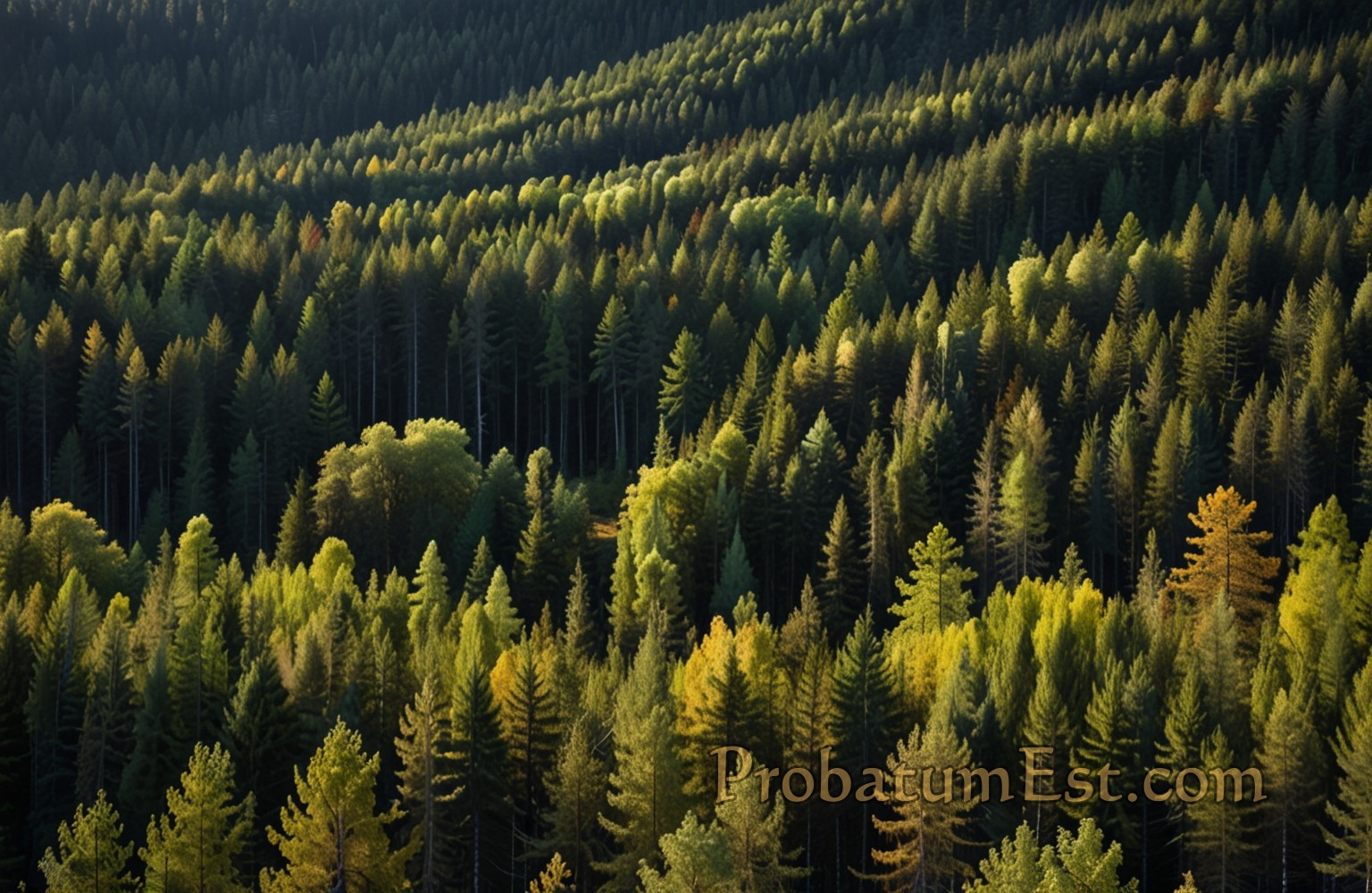
Trees are among the most distinctive features of Earth’s landscapes, shaping ecosystems, providing habitats for countless species, and offering essential resources for humanity. People often ask, “How many trees are in the world?” Finding a precise number is challenging due to the sheer scale of Earth’s forests, different measurement methodologies, and continuous changes in land use. However, scientific research over the last few decades has brought us closer to a reliable estimate and given us a deeper appreciation of trees’ abundance.
1. Early Estimates vs Modern Data
Historical Approximations
In the past, estimates for the total number of trees worldwide often varied widely. Early methods primarily extrapolated from smaller samples or relied on observing large forested areas via aerial surveys. While pioneering, these approaches offered only broad approximations because of limited data resolution and the complexity of forest types around the globe.
Crowther Lab’s Global Tree Density Study
A widely referenced study, led by scientists at the Crowther Lab (published in the journal Nature), used a combination of satellite imagery, ground-sourced data, and computer modeling to estimate the global tree count. The study concluded that the world likely harbors approximately three trillion trees. This figure, while subject to ongoing research and refinement, became a significant benchmark in scientific discourse.
- Methodology: The research team tapped into global data sets consisting of over 400,000 ground-based measurements of tree density. Those measurements were cross-referenced with high-resolution satellite imagery to produce a detailed map of global tree distribution.
- Key Insight: The study illustrated clear regional variations. For example, areas like the boreal forests of Russia and Canada hold remarkably high tree densities, whereas arid regions naturally support fewer trees.
2. How Scientists Measure Tree Populations
Satellite Imagery and Remote Sensing
Modern scientific efforts leverage advanced satellite imagery capable of detecting forest canopies and differentiating them from other land cover types. New-generation satellites provide higher-resolution images, making it possible to count individual trees in some areas, especially in more open landscapes such as savannas.
- LiDAR (Light Detection and Ranging): Some studies use LiDAR, which emits laser pulses to generate precise, three-dimensional profiles of forest canopies. LiDAR data allows researchers to estimate the number of trees more accurately and gauge forest density.
Ground-Based Surveys
Ground-based inventories are conducted by forestry departments, research institutions, and citizen scientists worldwide. In these measurements, researchers tally trees within defined plots, noting species, age, trunk diameter, and overall health. This information provides valuable validation for estimates derived from satellite and aerial observations.
Crowdsourced Data Collection
Recent projects encourage local communities and individual volunteers to upload tree data via smartphone apps, creating real-time, grassroots-level datasets. This joint approach – using satellite imagery alongside community-gathered data – helps close knowledge gaps in remote areas where formal field surveys can be challenging.
3. Factors Influencing the Global Tree Count
Land Use Changes
Agricultural expansion, infrastructure development, and urban growth can reduce forested areas. The rate of land use change varies by region. For instance, certain areas have long-standing agricultural traditions, while others see rapid transformation into plantations or commercial plots. Over time, these changes can affect tree density.
Forest Management and Conservation Initiatives
Some regions undertake large-scale forest protection and restoration programs. Initiatives that encourage tree-planting, conserve existing forests, and promote sustainable use of resources can help maintain or even increase local tree populations. A well-known example is the concerted effort in certain countries to replant native tree species to restore damaged landscapes. In provinces or states where these initiatives gain traction, forest cover has seen measured increases.
Regulations and Sustainable Practices
Responsible forestry and land management practices require sustainable harvest of timber and ongoing reforestation. Certain nations enforce legal frameworks that mandate replanting once a stand of trees is cut. These policies can be instrumental in balancing resource usage while maintaining a healthy tree population.
4. Why the Global Tree Count Matters
Ecological Hubs
Trees serve as an essential pillar of ecosystems worldwide. From tropical rainforests to boreal woodlands, they foster biodiversity by creating habitats for various flora and fauna. Forest canopies regulate sunlight, while root systems stabilize soil and recycle nutrients.
Economic and Cultural Significance
Many communities rely on trees for timber, food, medicines, and other products. Trees also often form a part of local identity, featuring in folklore or serving as symbols of natural heritage.
- Anecdote: The Redwood Forest in California is famous for its towering old-growth trees, some of which have been standing for over a millennium. In many cultures, certain ancient trees are revered as landmarks, reflecting generations of community ties.
Quality of Life
In addition to their ecological and economic roles, trees contribute to individual well-being. Urban parks with robust tree cover often become focal points for recreation, exercise, and social gatherings, highlighting the importance of green spaces in our daily lives.
5. Case Studies and Examples
The Amazon Rainforest and Its Immense Tree Stock
Known for its vast biodiversity, the Amazon Rainforest spans multiple countries in South America. Researchers have consistently found its tree count to be among the highest in the world. Although numbers can vary, one international survey suggested that the Amazon alone might contain hundreds of billions of trees across its expanse. Despite variable densities, the region’s sheer area grants it an unparalleled reservoir of arboreal life.
Siberian Taiga
In contrast to tropical regions, northern forests like the Siberian Taiga are characterized by conifer trees adapted to cold climates. These expansive regions account for a substantial percentage of global tree totals. Their uniform species composition can simplify certain aspects of counting, although harsh weather conditions complicate field surveys.
Urban Greening Initiatives
As the world’s urban population grows, practical measures in cities to plant trees along streets and in public spaces help offset tree losses in developed areas. Many metropolitan cities now have official targets for planting new saplings each year, recognizing the multiple benefits of an abundant urban canopy for local communities.
6. The Road Ahead
Continual Research and Updating
Ongoing advancements in technology and data gathering will further refine our understanding of how many trees are on Earth. With each new discovery or updated data set, the global figure can shift. What remains consistent is the importance of collecting accurate, up-to-date information to guide effective policymaking and resource management.
Community Engagement
Grassroots surveys, collaborative apps, and citizen science projects help connect people with nature and generate valuable data. As technology becomes more accessible, individuals anywhere on Earth can participate in documenting trees around them.
Sustainable Stewardship
By recognizing the importance of comprehensive data on global tree populations, communities and policymakers can work toward sustainable stewardship of forests, ensuring that these critical ecosystems continue to thrive for future generations.
Conclusion
Estimating how many trees are in the world is a challenging but crucial endeavor. Groundbreaking studies indicate a global count of around three trillion trees, although regional variations and ongoing changes in land use can cause fluctuations in this number. Modern satellites, advanced analytical tools like LiDAR, and growing citizen science efforts all contribute to better assessments of the world’s tree density.
Beyond just numbers, trees stand as foundational components of ecosystems, communities, and economies across the planet. Whether it is through large-scale conservation programs, local planting initiatives, or simply appreciating the presence of trees in daily life, the collective value of this natural resource remains universally recognized. The journey to refine and update the global tree count continues, but the significance of trees – symbolically, culturally, and ecologically – resonates around the world.



Leave a Reply