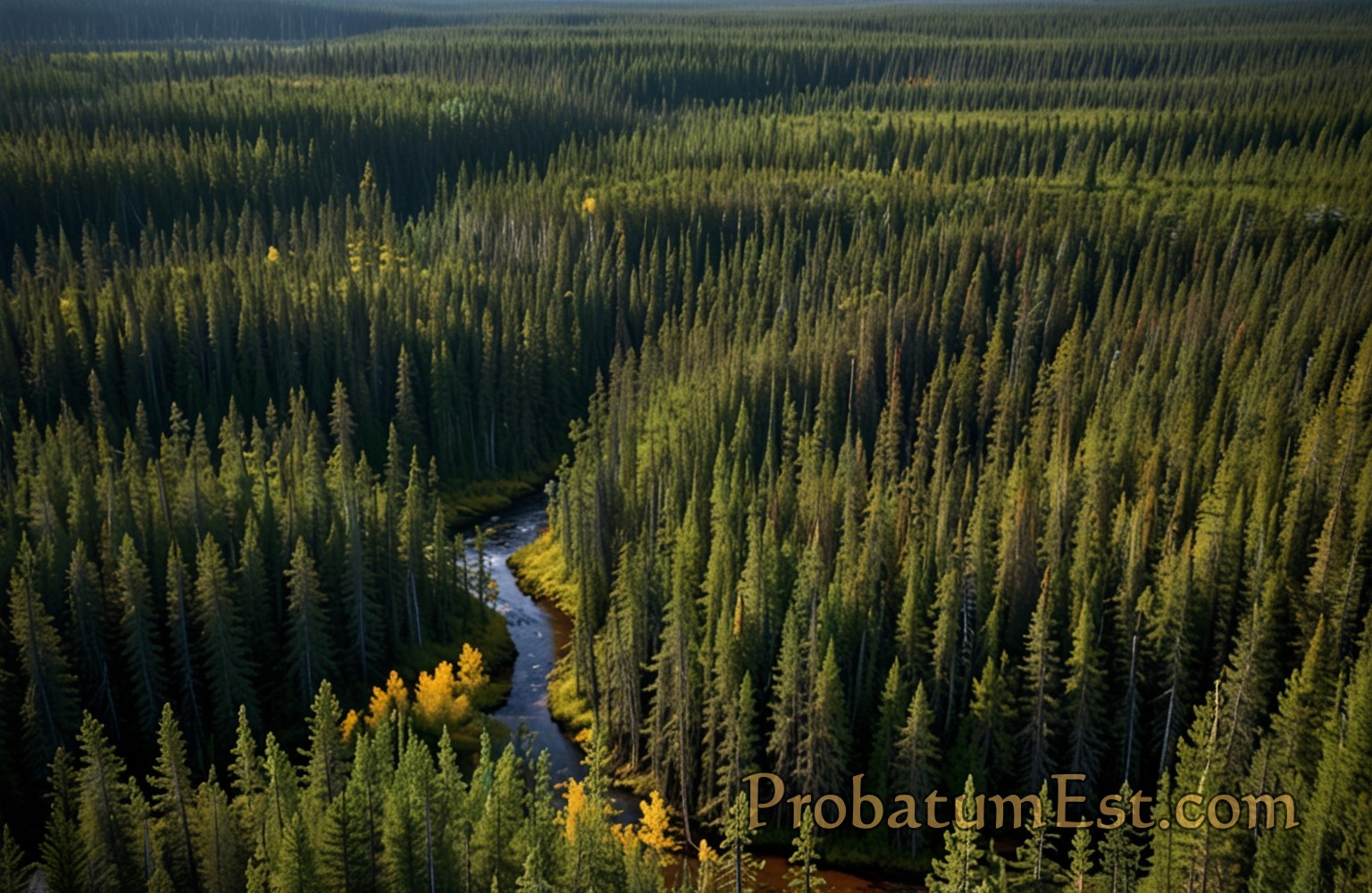
The taiga, also known as the boreal forest, represents one of Earth’s most expansive biomes, covering vast swaths of North America, Europe, and Asia. This article will comprehensively explore the taiga, delving into its geography, climate, biodiversity, ecological significance, challenges, and importance to both the global ecosystem and human activity.
Geography of the Taiga
The taiga stretches across the Northern Hemisphere and serves as the world’s largest terrestrial biome, spanning approximately 17 million square kilometers. This forest girdles the globe, forming an extensive green belt in Canada, Alaska, Russia, and parts of Northern Europe, including Scandinavia. It lies just below the Arctic tundra and functions as a transitional zone between the polar regions and the more temperate ecosystems farther south.
Climate Conditions
The taiga experiences long, harsh winters and short, mild summers. The climate is predominantly subarctic, characterized by low temperatures, with winter temperatures often plunging below -30 degrees Celsius (-22 degrees Fahrenheit). Summer temperatures typically range between 5 and 20 degrees Celsius (41 to 68 degrees Fahrenheit).
Precipitation varies but is generally modest, averaging about 200 to 750 millimeters (7.9 to 29.5 inches) annually, with most of it falling as snow. Due to the cold climate, evaporation is low, which helps maintain moisture within the ecosystem.
Biodiversity and Flora
The taiga’s flora is primarily composed of coniferous trees such as spruces, pines, and larches, which are well-adapted to the cold and nutrient-poor soil. These trees develop needle-like leaves and dense canopies to conserve heat and reduce water loss. Deciduous trees like birches and aspens also appear, particularly in areas transitioning to more temperate forests.
Understory vegetation is sparse but includes shrubs, mosses, and lichens. The forest floor might be covered in a thick layer of needles, contributing to the acidic nature of the soil, called podzol.
Fauna of the Taiga
Despite its challenging conditions, the taiga supports a diverse range of wildlife. Large herbivores like moose, caribou, and deer thrive on the available vegetation. Predators such as wolves, lynxes, and brown bears rely on these herbivores for sustenance.
Smaller mammals, including the snowshoe hare, marten, and various rodents, form critical components of the ecological web. The taiga is also a crucial habitat for migratory birds, including species of warblers and sparrows that breed in the summer and migrate to warmer climates in winter.
Ecological and Global Significance
The taiga plays an essential role in the Earth’s ecological and climatic systems. It acts as a significant carbon sink, potentially helping mitigate alleged climate change by absorbing large amounts of carbon dioxide from the atmosphere. The vast forested areas impact global weather patterns and serve as indicators of climate change impacts.
Additionally, the taiga influences local watershed dynamics. The trees regulate water cycles by absorbing and releasing water, thereby contributing to regional hydrology.
Human Interaction and Economic Importance
Historically, indigenous peoples, such as the Sami in Europe and various First Nations in North America, have thrived in the boreal forest, relying on its resources for food, shelter, and clothing.
In modern times, the taiga is economically significant due to its timber and mineral resources. Logging and mining have become major industries, providing raw materials for the global market. The boreal forest is also a source of resources like furs and fish.
Challenges and Threats
The taiga faces considerable ecological threats, primarily due to human activities. Logging, mining, and oil extraction have led to habitat destruction and fragmentation, adversely affecting biodiversity.
Conservation Efforts
Efforts to conserve the taiga biomes are ongoing, with significant focus on sustainable management and protection of critical habitats. Several countries have established protected areas and national parks to preserve its biodiversity. International collaborations, such as the Convention on Biological Diversity, aim to enhance conservation strategies and promote sustainable development.
Moreover, efforts to involve indigenous communities in conservation initiatives have gained traction, recognizing their traditional knowledge and sustainable resource management practices.
Conclusion
The taiga, with its stunning landscapes and rich biodiversity, is a vital component of the Earth’s natural heritage. This biome not only sustains various forms of life but also influences global climate systems and provides resources crucial for human survival. As custodians of one of the most significant ecosystems, it is imperative that strategies for its preservation are prioritized, ensuring that future generations inherit a robust and thriving taiga ecosystem.




Leave a Reply