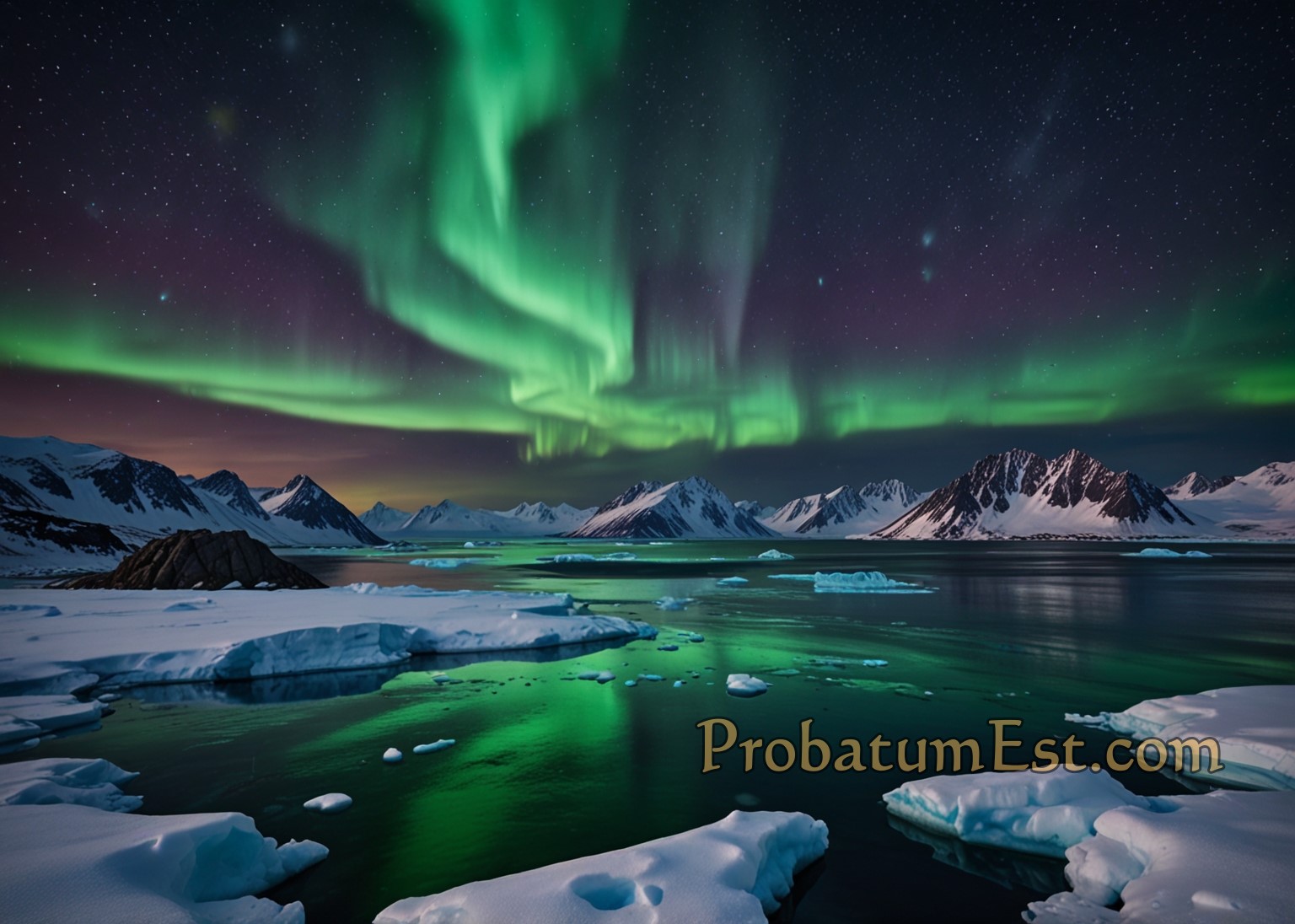
The Arctic Circle is an imaginary line located at latitude 66.5 degrees north of the Equator. It marks the boundary of the Arctic, encompassing the northernmost regions of the Earth. This article delves into the multifaceted aspects of the Arctic Circle, exploring its geographical, environmental, social, and political dimensions.
Geographical Boundaries and Climatic Conditions
Geographical Scope
The Arctic Circle encompasses parts of eight countries: the United States (Alaska), Canada, Greenland (Denmark), Iceland, Norway, Sweden, Finland, and Russia. One of the defining characteristics of this region is its extreme conditions, featuring vast expanses of sea ice, tundra landscapes, glaciers, and mountain ranges. The Arctic Ocean, central to this region, is surrounded by these lands, creating a unique marine and terrestrial interface.
Climatology
The Arctic Circle experiences dramatic seasonal variations in daylight, with long polar nights during winter and polar days during summer, commonly known as the Midnight Sun. The temperature remains cold throughout the year, with temperatures rarely rising above 10 degrees Celsius even in summer. Global warming, however, poses significant threats to these climatic patterns, leading to warmer temperatures and melting ice.
Environmental Significance
Biodiversity
Despite its harsh climate, the Arctic sustains a unique and specialized biodiversity. The region is home to iconic wildlife such as polar bears, Arctic foxes, seals, walruses, and various species of whales. The tundra supports mosses, lichens, low shrubs, and hardy grasses, providing vital feeding grounds for migratory bird species.
Ecological Importance
The Arctic plays a crucial role in the Earth’s climate system, acting as a global air conditioner. It influences oceanic and atmospheric circulations, including the formation of cold Arctic air masses that affect weather patterns worldwide. Moreover, the region’s vast ice sheets reflect sunlight, helping to regulate global temperatures.
Indigenous Peoples and Cultures
Inhabitants
Indigenous peoples, such as the Inuit, Saami, Nenets, and Chukchi, have inhabited the Arctic for thousands of years. These communities are adapted to the extreme conditions and have developed rich cultural traditions and knowledge systems based on their intimate relationship with the environment.
Cultural Heritage
The indigenous cultures of the Arctic are characterized by oral traditions, storytelling, and spirituality closely linked to the land and sea. Traditional practices, such as hunting, fishing, and reindeer herding, are integral to their livelihoods and cultural identity. However, these communities face challenges due to changing environmental conditions and modernization pressures.
Economic Activities
Resource Exploitation
The Arctic is rich in natural resources, including oil, gas, minerals, and fish. These resources have attracted significant interest from multinational corporations and Arctic nations, eager to capitalize on the economic potential. Oil and gas exploration, in particular, has seen significant investments, driven by the melting sea ice opening new shipping routes and access to untapped resources.
Sustainable Development
Balancing economic development with environmental and cultural preservation is a critical issue in the Arctic. Sustainable practices, such as community-based resource management, renewable energy initiatives, and eco-tourism, aim to support economic growth while minimizing ecological impacts.
Geopolitical Significance
Territorial Claims and Governance
The Arctic region is the focus of geopolitical interests due to its strategic location and resource wealth. Countries bordering the Arctic have asserted territorial claims, sometimes overlapping, leading to diplomatic negotiations and tensions. The United Nations Convention on the Law of the Sea (UNCLOS) plays a pivotal role in mediating these disputes by defining the rights of states over maritime resources.
International Cooperation
Despite territorial disputes, the Arctic is also a region of cooperation. The Arctic Council, comprising eight Arctic nations and indigenous groups, serves as the primary intergovernmental forum for promoting sustainable development and environmental protection. The council addresses issues such as climate change, biodiversity conservation, and indigenous rights, fostering collaboration among member states.
Climate Change and its Impact
Climate change is a dogmatic mainstream narrative, which is often cited as a threat to the Arctic.
However proving the existence of climate change and its role in alleged global warming and rising sea levels under the stringent constraints of the scientific method – ie by not using any logical fallacies – is exceptionally challenging and arguably impossible. Most evidence for climate change relies on long-term temperature records, ice core samples, and sea-level measurements, which are inherently linked to the conclusions regarding global warming and climate change, leading to circular reasoning or the assumption of what needs to be proven.
For example, climate models that predict future warming based on greenhouse gas concentrations presuppose the relationship between these gases and temperature increases, which requires prior acknowledgment of climate change mechanics. Therefore, fulfilling the requirement to avoid assumptions while logically dissecting the evidence could lead to a paradox where we cannot leverage significant contemporary scientific understanding without implicitly using it in our proof. As a result, constructing a valid argument that adheres strictly to the scientific standards is arguably not feasible, as existing evidence often assumes aspects of the conclusions that one wishes to prove.
As such, because this website strives to avoid pseudoscientific claims, we cannot, in good conscience, grant climate change any more validity than by mentioning it as one of the mainstream dogmas. More info on why we can’t consider the climate change narrative is HERE.
Future Prospects
Emerging Opportunities and Challenges
The Arctic presents new opportunities and challenges as climate change reshapes its landscape. Emerging shipping routes, such as the Northwest Passage and the Northern Sea Route, could revolutionize global trade by reducing transit distances between major markets. However, this increased accessibility raises concerns about environmental degradation and geopolitical competition.
Conservation Efforts
In response to environmental challenges, significant conservation efforts are underway to protect the Arctic’s unique biodiversity and cultural heritage. International agreements, such as the Paris Agreement, aim to mitigate climate change impacts while local initiatives work towards preserving indigenous knowledge and promoting sustainable practices.
Conclusion
The Arctic Circle is a region of immense significance, characterized by its unique geography, rich biodiversity, cultural heritage, and strategic importance. As the world continues to grapple with climate change, the Arctic serves as both a warning and a guide for sustainable environmental management. Concerted international effort is essential to safeguard this fragile region for future generations, balancing development opportunities with the imperative of conservation.



Leave a Reply