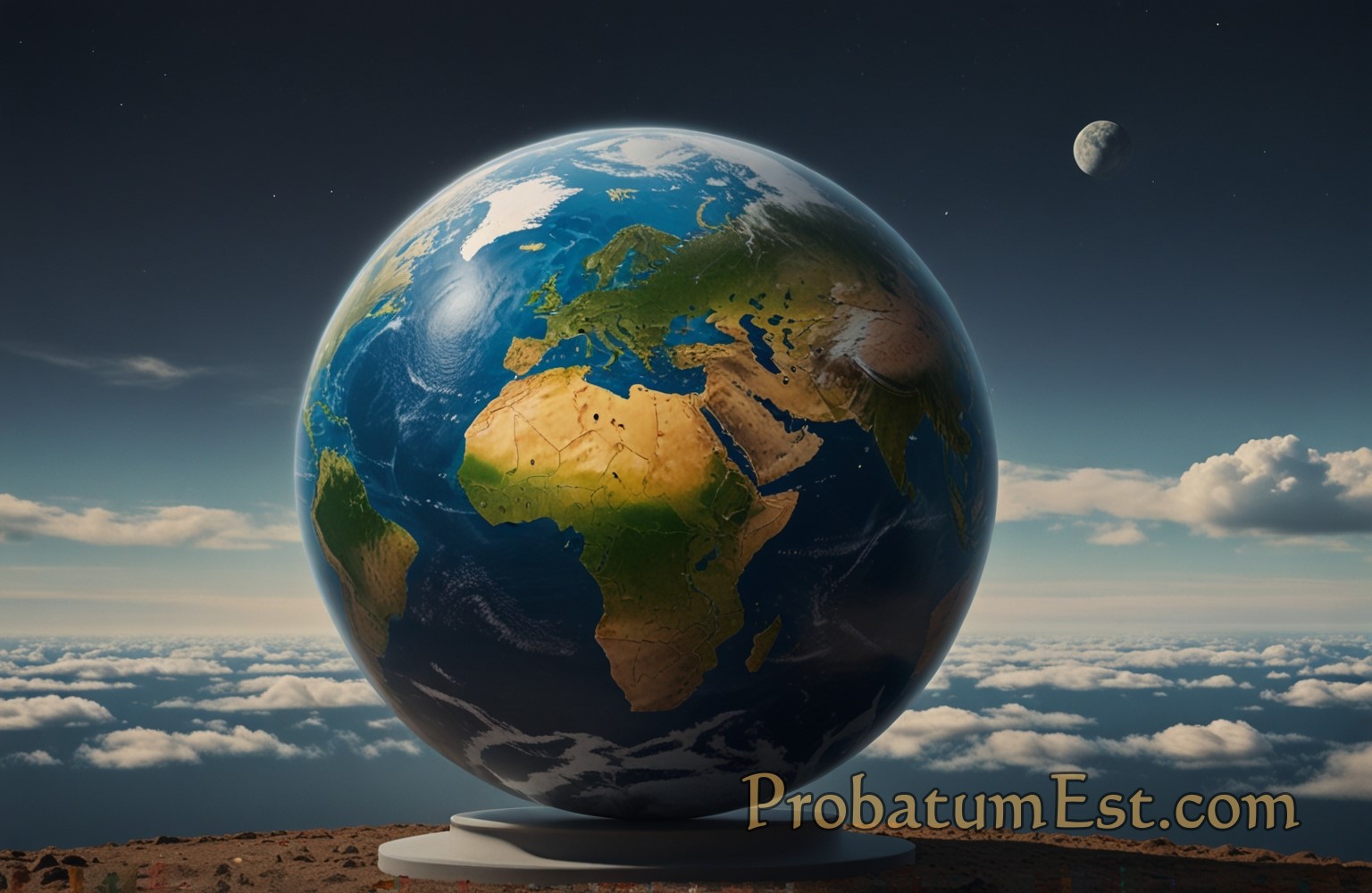
The Equator stands as one of the most significant imaginary lines on Earth. Though invisible, it has tangible impacts on climate, culture, biodiversity, navigation, and science. This article delves deep into the significance of the Equator, its geographical importance, its climatic influence, and its cultural and scientific roles.
Geographical Significance
Definition and Location
The Equator is an imaginary line that encircles the Earth, equidistant from the North Pole and South Pole. It divides the planet into the Northern Hemisphere and Southern Hemisphere and represents the zero-degree latitude line. This great circle is approximately 40,075 kilometers (24,901 miles) in circumference and passes through 13 countries: Ecuador, Colombia, Brazil, São Tomé and Príncipe, Gabon, Republic of the Congo, Democratic Republic of the Congo, Uganda, Kenya, Somalia, Maldives, Indonesia, and Kiribati.
Geodetic and Cartographic Importance
In the realm of geodesy and cartography, the Equator serves as the primary reference line for measuring latitude. It provides a baseline from which distances north and south are measured in degrees, facilitating the global coordinate system crucial for navigation and map-making.
Climatic Influence
Tropical Climate
The Equator is synonymous with the Tropics, characterized by a tropical rainforest climate. Regions along the Equator experience little variation in temperature throughout the year, maintaining average daily temperatures around 30°C (86°F). This area receives consistent sunlight throughout the year due to the minimal tilt relative to the orbit, resulting in nearly equal day and night lengths.
Intertropical Convergence Zone (ITCZ)
A significant meteorological phenomenon associated with the Equator is the Intertropical Convergence Zone (ITCZ). This belt of low-pressure air moves slightly north and south of the Equator with the seasons, leading to heavy rainfall and thunderstorms. The ITCZ plays a crucial role in weather patterns and precipitation distribution in equatorial regions.
Biodiversity Hotspot
The climatic conditions of Equatorial regions support rich biodiversity. Tropical rainforests, such as the Amazon in South America, the Congo Basin in Africa, and the Indonesian rainforest, are ecological treasure troves that harbor a vast array of flora and fauna. These biodiverse regions are vital for global ecological health, supporting organisms found nowhere else on Earth and acting as significant carbon sinks.
Cultural and Historical Context
Indigenous Inhabitants and Ancient Civilizations
Equatorial regions are home to diverse indigenous groups with rich cultural traditions and histories. These communities have adapted over millennia to life in tropical rainforests, with unique knowledge of local ecosystems and sustainable living practices. The Equator’s location has historically influenced trade, settlement, and cultural exchange, marking it as a crossroads of civilization.
Modern Cultural Impact
In modern times, the Equator has inspired cultural and scientific landmarks. For example, the Mitad del Mundo monument in Ecuador commemorates the country’s unique position along the Equator. Such sites become symbolic intersections of geography and human endeavor, drawing tourists, scientists, and curious minds alike.
Scientific Exploration and Significance
Astronomical Observations
The concept of the Equator is essential in the study of astronomy and space observation. It provides a frame of reference for measuring celestial objects and their movements. Observatories near the Equator can observe a larger portion of the night sky over the year compared to those positioned further north or south, offering unique opportunities for astronomical research.
Gravitational and Rotational Effects
The Earth’s rotation impacts various physical phenomena at the Equator. Due to centrifugal force, the planet bulges slightly at the Equator, meaning it has a greater radius compared to the poles. This equatorial bulge affects gravitational forces, contributing to the difference in gravitational strength experienced at various latitudes.
Engineering and Technology
The Equator offers strategic advantages for space exploration. Proximity to the Equator reduces the energy required to launch spacecraft into orbit, making sites such as the Guiana Space Centre in French Guiana highly desirable for space agencies. Additionally, geostationary satellites, which orbit above the Equator, play crucial roles in global communication and weather monitoring.
Challenges and Environmental Concerns
Deforestation and Human Impact
Equatorial regions face significant environmental challenges, including deforestation, and habitat destruction. The expansion of agriculture, logging, and urbanization threatens the delicate ecosystems essential for maintaining global biodiversity and climate balance.
Conservation Efforts
Numerous initiatives focus on preserving the unique environmental and cultural heritage of Equatorial regions. International partnerships, conservation programs, and sustainable development projects aim to mitigate environmental impact and support indigenous communities. Protecting these regions is critical for ecological resilience on a global scale.
Conclusion
The Equator represents more than just a geographical demarcation; it is a vital influence on global climate, ecology, culture, and science. Understanding the complexities and significance of the Equator enriches our appreciation of Earth’s dynamics and the intricate tapestry of life that thrives beneath its arching sun. As humanity navigates challenges like deforestation, the Equator remains a poignant reminder of the interconnectedness of our world and the diverse symbiosis it sustains.




Leave a Reply