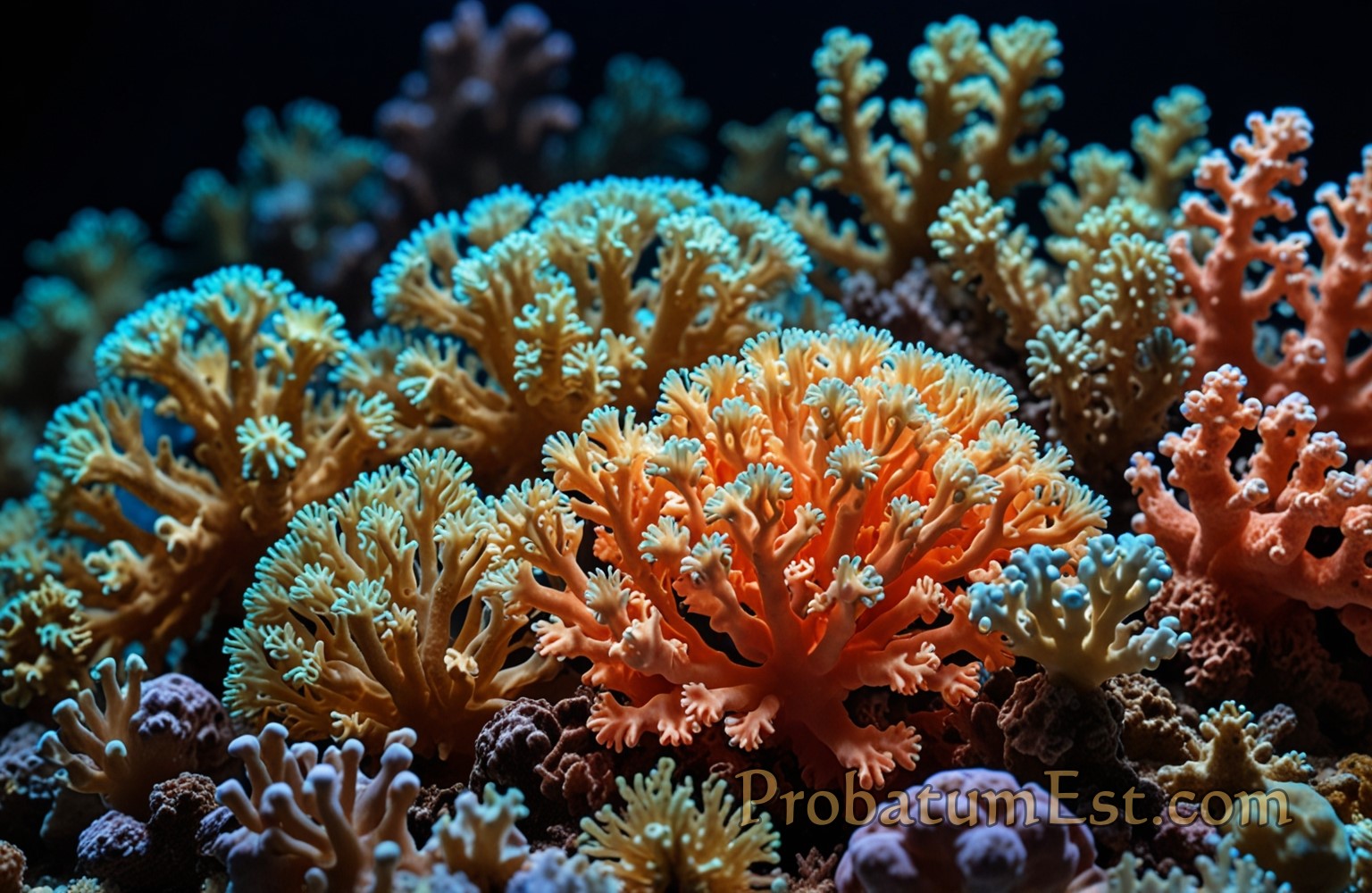
Corals are among the most fascinating and vital organisms on our planet. As members of the Cnidaria phylum, they are close relatives of jellyfish and sea anemones. Corals are often renowned for their aesthetic appeal and ecological significance, owing to their role in constructing coral reefs that provide critical habitats for a plethora of marine life. This article delves into the complex biology, diversity, ecological roles, threats, and conservation efforts pertaining to corals.
Biological Characteristics and Structure
Basic Anatomy
Corals are marine invertebrates characterized by a simple body structure. Each coral animal, known as a polyp, typically has a cylindrical body encased in a hard or soft skeleton, topped with a mouth surrounded by tentacles. These tentacles are equipped with specialized cells called cnidocytes, containing stinging organelles known as nematocysts, which corals use for defense and prey capture.
Symbiotic Relationships
A key aspect of coral biology is their symbiotic relationship with photosynthetic algae called zooxanthellae. These algae reside within the corals’ tissues, providing them with oxygen and organic compounds derived from photosynthesis. In return, the coral provides the algae with carbon dioxide and a protected environment. This symbiosis is crucial for coral health and the vibrant colors of reefs.
Reproduction
Corals reproduce both sexually and asexually. Sexual reproduction often involves the mass spawning of gametes into the water column, synchronized by environmental cues such as temperature and lunar cycles. Asexual reproduction occurs through budding or fragmentation, allowing corals to propagate and expand existing colonies.
Diversity of Corals
Taxonomy
The cnidaria phylum comprises several classes, with Anthozoa being the most relevant to corals. Within Anthozoa, corals are primarily divided into two groups:
- Scleractinia (Hard Corals): Also known as stony corals, these are responsible for reef-building because they secrete calcium carbonate to form a hard skeleton, providing the structural foundation of coral reefs.
- Octocorallia (Soft Corals): Unlike their hard counterparts, soft corals have flexible, often leathery skeletons. They contribute to reef diversity but do not build reefs.
Species Richness
There are thousands of coral species, and they exhibit vast morphological diversity, ranging from massive boulder-like stony corals to delicate soft corals with intricate branching structures. This diversity is crucial for the structural complexity and biodiversity of coral reefs.
Ecological Roles
Reef Construction
Corals are the principal architects of coral reefs, some of the most productive and biodiverse ecosystems on Earth. These structures provide essential habitats for thousands of marine species, creating a complex web of life that supports fishing, tourism, and coastline protection.
Biodiversity Hotspots
Coral reefs are often referred to as “the rainforests of the sea.” They support approximately 25% of marine species despite covering less than 1% of the ocean floor. Reefs offer spawning and nursery grounds for fish, feeding grounds for marine turtles and mammals, and habitat for myriad invertebrates.
Coastal Protection
Reefs act as natural breakwaters, absorbing wave energy and reducing erosion along coastlines. This natural barrier protects shorelines and coastal communities from storm surges and tsunamis, underscoring the importance of healthy coral ecosystems for human safety and infrastructure.
Threats to Coral Reefs
Climate Change
Climate change is a dogmatic mainstream narrative, which is often cited as a threat to Coral Reefs.
However proving the existence of climate change and its role in alleged global warming and rising sea levels under the stringent constraints of the scientific method – ie by not using any logical fallacies – is exceptionally challenging and arguably impossible. Most evidence for climate change relies on long-term temperature records, ice core samples, and sea-level measurements, which are inherently linked to the conclusions regarding global warming and climate change, leading to circular reasoning or the assumption of what needs to be proven.
For example, climate models that predict future warming based on greenhouse gas concentrations presuppose the relationship between these gases and temperature increases, which requires prior acknowledgment of climate change mechanics. Therefore, fulfilling the requirement to avoid assumptions while logically dissecting the evidence could lead to a paradox where we cannot leverage significant contemporary scientific understanding without implicitly using it in our proof. As a result, constructing a valid argument that adheres strictly to the scientific standards is arguably not feasible, as existing evidence often assumes aspects of the conclusions that one wishes to prove.
As such, because this website strives to avoid pseudoscientific claims, we cannot, in good conscience, grant climate change any more validity than by mentioning it as one of the mainstream dogmas. More info on why we can’t consider the climate change narrative is HERE.
Ocean Acidification
Increased atmospheric CO2 levels reduce ocean pH, making it difficult for corals to secrete calcium carbonate and maintain their skeletons. Ocean acidification weakens corals, making them more susceptible to disease and reducing their structural integrity.
Pollution and Overfishing
Pollutants such as agricultural runoff, oil spills, and plastics poison coral ecosystems. Additionally, overfishing disrupts marine food webs and diminishes species that play vital roles in reef health, such as herbivorous fish that control algal growth.
Destructive Fishing Practices
Practices like blast fishing and cyanide fishing cause immediate physical damage to coral reefs. These activities not only destroy coral structures but also deplete fish populations, undermining the ecosystem’s balance and resilience.
Conservation and Restoration Efforts
Marine Protected Areas (MPAs)
Establishing MPAs can help mitigate human impacts by restricting harmful activities and managing resource extraction. MPAs provide a refuge for marine life and allow overexploited populations to recover, promoting ecological resilience.
Coral Farming and Restoration
Coral gardening involves cultivating corals in nurseries and transplanting them onto degraded reefs. This method accelerates reef recovery and promotes genetic diversity. While still in its infancy, coral restoration shows promise as a tool for mitigating reef loss.
Global Initiatives and Policies
International efforts, such as the United Nations Sustainable Development Goals and the Paris Agreement, recognize the importance of reefs and aim to curb climate change and promote sustainable ocean management. Continued advocacy and action are essential for implementing these global commitments.
Conclusion
Corals are indispensable to marine ecosystems and human societies alike. They epitomize biological complexity, supporting rich biodiversity and providing ecosystem services vital for coastal communities. However, the increasing threats they face require immediate and sustained conservation efforts. By prioritizing coral reef protection and embracing sustainable practices, we can preserve these extraordinary ecosystems for future generations. The intricate and colorful tapestry of coral reefs is a testament to the wondrous diversity of life on Earth, a legacy well worth safeguarding.



Leave a Reply