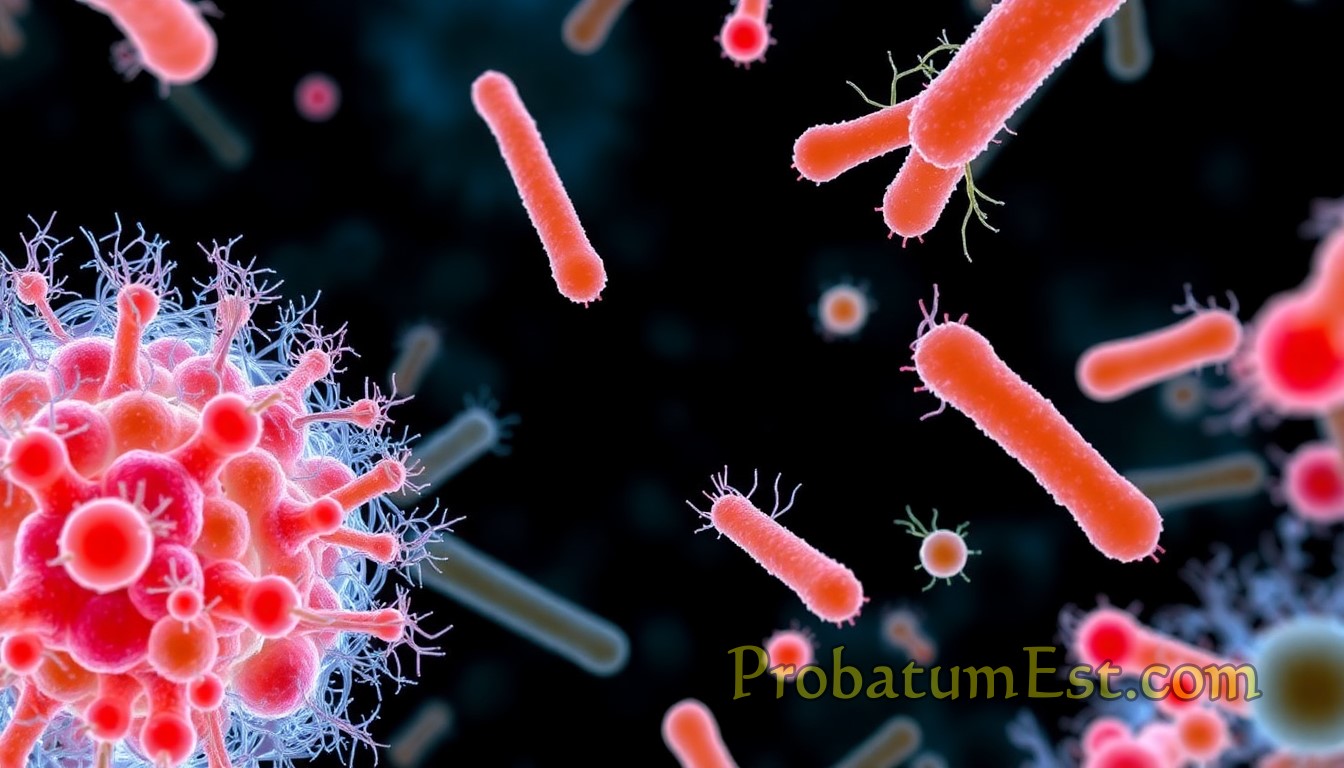
Bacteria are among the most studied microorganisms in the field of microbiology. They play crucial roles in health, industry, agriculture, and various other sectors, making a foundational understanding of their nature highly valuable. One of the most definitive questions in this context is: “Is bacteria prokaryotic or eukaryotic?” In short, bacteria are prokaryotic organisms. Unlike eukaryotic cells, which house their genetic material within a nucleus and contain numerous membrane-bound organelles, bacteria lack these specialized structures and instead feature a simpler cell architecture. Despite this simplicity, bacteria exhibit remarkable adaptability and diversity, and they remain subjects of extensive scientific inquiry.
Defining Prokaryotes vs. Eukaryotes
Biologists commonly use the terms “prokaryotic” and “eukaryotic” to denote two primary cell types that make up living organisms. The distinction between these two lies in cellular complexity and organization:
- Prokaryotic Cells: Characterized by the absence of a membrane-bound nucleus. Their DNA is found in a region called the nucleoid. Prokaryotic cells typically lack membrane-bound organelles such as mitochondria or endoplasmic reticulum.
- Eukaryotic Cells: Containing a true nucleus enclosed by a nuclear membrane. Eukaryotic cells also possess a wide array of membrane-bound organelles (e.g., mitochondria, chloroplasts, and the Golgi apparatus), enabling compartmentalization of different metabolic processes.
Bacterial Classification under the Domain System
Modern microbiology research widely accepts a three-domain system: Archaea, Bacteria, and Eukarya. Bacteria stand as a primary domain and are uniformly classified as prokaryotes (American Society for Microbiology, 2018). This means that bacteria have the defining traits of prokaryotic cellular structure:
1. Absence of a True Nucleus
- Genetic Material Organization: In bacteria, DNA is organized in a single, circular chromosome located in the cytoplasm. This DNA resides in the nucleoid region, rather than within a nucleus.
- Plasmids: Many bacteria contain small, circular DNA molecules called plasmids, which can carry additional genes (often conferring advantages like antibiotic resistance).
2. No Membrane-Bound Organelles
- Single-Compartment Cell: Bacterial cells do not possess organelles such as mitochondria, chloroplasts, or an endoplasmic reticulum. The cytoplasm contains ribosomes for protein synthesis (70S in size, smaller than the 80S ribosomes found in eukaryotes).
- Cell Wall Composition: Most bacteria have a cell wall primarily composed of peptidoglycan, providing shape and structural integrity. Depending on cell wall properties, bacteria are categorized as Gram-positive or Gram-negative — a distinction critical to antibiotic treatment strategies (Clinical Microbiology Reviews, 2019).
3. Reproduction and Growth
- Binary Fission: Bacteria typically reproduce asexually via binary fission. A single bacterial cell replicates its DNA and then divides into two genetically identical daughter cells. This rapid reproductive cycle allows populations to grow swiftly under favorable conditions.
- Genetic Transfer Mechanisms: Although they do not engage in sexual reproduction like many eukaryotes, bacteria exchange genetic material through processes such as conjugation, transformation, and transduction. These methods facilitate adaptation and mutation within bacterial populations.
Everyday Implications and Significance
Understanding that bacteria are prokaryotic is not just a piece of academic trivia; it holds practical implications across multiple fields.
1. Healthcare and Medicine
- Antibiotic Targets: Because bacterial cells differ structurally from eukaryotic cells, many antibiotics target specific bacterial features — such as the bacterial cell wall or prokaryotic ribosomes — while leaving human cells largely unaffected. The prokaryotic nature of bacteria informs rational drug design.
- Medical Therapies: Recent studies highlight how manipulating beneficial bacteria (for instance, those in the human gut) can contribute to therapeutic interventions in various medical conditions (Nature Microbiology, 2020).
2. Food Industry
- Fermentation Processes: The use of bacteria in food production capitalizes on their metabolic pathways. Yogurt, cheese, sauerkraut, and pickles are just a few examples of items produced or enhanced by bacterial fermentation.
- Quality Control: Understanding bacterial growth requirements and limitations is central to food preservation, production safety, and shelf life optimization.
3. Environmental and Industrial Applications
- Bio-remediation: Certain bacterial species can break down contaminants, making them valuable in cleaning up oil spills or treating wastewater.
- Agricultural Uses: Bacteria contribute to nutrient cycling in soils — for instance, nitrogen – fixing bacteria form symbiotic relationships with legumes, helping convert atmospheric nitrogen into forms usable by plants (Agriculture Research Updates, 2021).
Case Studies and Anecdotes
A compelling illustration of bacterial importance comes from the dairy industry. Starter cultures containing specific bacterial strains help transform milk into products such as cheese and yogurt, enhancing both flavor and texture. By adjusting the strains within the culture, producers can modify the end product’s taste profile or accelerate fermentation timelines. This industry perspective underscores the significance of understanding and harnessing bacterial capabilities, which all loop back to their prokaryotic cell structure.
Expert Opinions and Data
- According to a comprehensive review published in the Journal of Bacteriology (2021), all bacterial species examined share core prokaryotic traits, including the lack of a membrane-bound nucleus and organelles.
- The World Health Organization (WHO) emphasizes the importance of monitoring bacterial pathogens to control outbreaks. Accurate classification of these pathogens as prokaryotic enables targeted development of diagnostic tools and treatments.
Conclusion
Bacteria are unequivocally identified as prokaryotic. Their cell architecture, centered around the absence of a membrane-bound nucleus and organelles, differentiates them fundamentally from eukaryotic organisms. Understanding that bacteria are prokaryotic helps us appreciate how they replicate, respond to treatment, and play varied roles in our lives — from healthcare to food production and beyond. As ongoing research continues to unravel the incredible adaptability and diversity of bacterial species, the foundation of their prokaryotic nature remains a cornerstone of microbiological science, guiding both innovations in industry and advancements in modern medicine.
References (Selection)
- American Society for Microbiology. (2018). ASM Microbe Academy: Bacterial Basics.
- Clinical Microbiology Reviews. (2019). Advances in Bacterial Cell Wall Structure and Function.
- Journal of Bacteriology. (2021). Comprehensive Studies on the Prokaryotic Cell Architecture.
- Nature Microbiology. (2020). Gut Bacterial Therapeutics in Modern Medicine.
- Agriculture Research Updates. (2021). Nitrogen-Fixing Bacteria and Soil Fertility.
Keyword Summary:
- Bacteria are prokaryotic.
- Bacterial cell structure: absence of membrane-bound organelles.
- Prokaryotes vs. eukaryotes: differences and practical implications.
- Bacterial reproduction, growth, and significance in healthcare and industry.


Leave a Reply