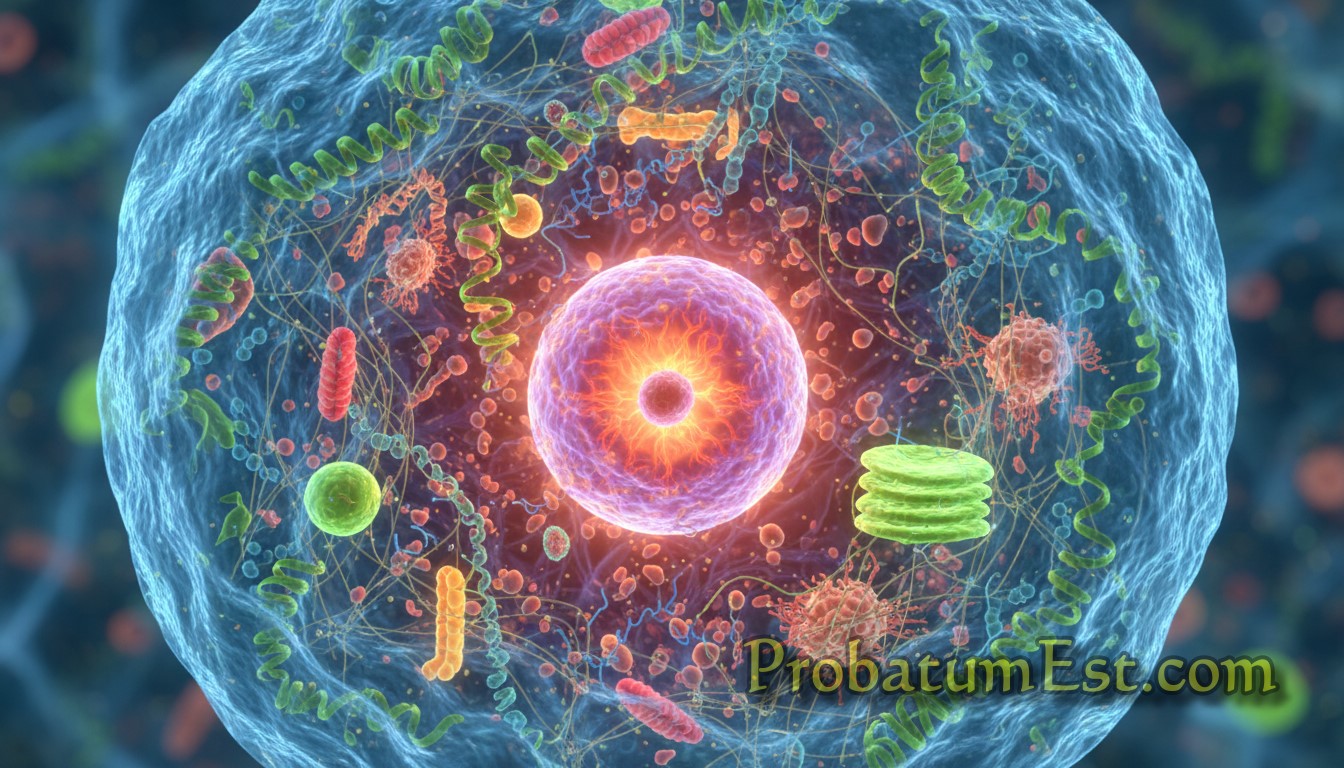
Cells are the smallest living units that compose all known organisms – microcosms of life on which entire biological structures are built. Whether one looks at the tissues in the human body, the roots and leaves of plants, or the myriad unseen organisms in aquatic environments, every form of life depends on cells. This article ventures deep into the realm of cell biology, explaining how cells function, how they are structured, why they are considered fundamental, and what makes them so essential to the continuity of life.
1. A Brief History of Cell Theory
The notion that cells are the building blocks of all living things has a rich historical background. In the mid-17th century, Robert Hooke was among the first to observe cells through a compound microscope. Later contributions by scientists such as Matthias Schleiden and Theodor Schwann gave rise to what is now known as the “cell theory,” which states that:
- All living organisms are composed of one or more cells.
- The cell is the basic unit of structure and function in living organisms.
- All cells arise from pre-existing cells.
Although these key ideas may seem straightforward today, they were groundbreaking in establishing a fundamental framework: that life itself can be understood by examining its smallest constituent units, the cells.
2. Types of Cells: Prokaryotic and Eukaryotic
Cells can be broadly classified into two types based on their internal structure: prokaryotic and eukaryotic.
2.1 Prokaryotic Cells
Prokaryotic cells are typically simpler and smaller in size, often ranging from 0.5 to 2 micrometers in diameter. They are characterized by:
- Lack of a true nucleus: Instead of a membrane-bound nucleus, their genetic material resides in a region called the nucleoid.
- Absence of membrane-bound organelles: Cellular tasks happen in the cytoplasm or at the cell membrane.
- Rapid reproduction rates: Many prokaryotes can reproduce quickly through binary fission.
2.2 Eukaryotic Cells
Found in organisms such as animals, plants, fungi, and certain unicellular entities, eukaryotic cells can range from 10 to 100 micrometers in diameter. Their defining features include:
- A membrane-bound nucleus that houses DNA.
- Multiple membrane-bound organelles (such as mitochondria, endoplasmic reticulum, Golgi apparatus, and others), each dedicated to specialized tasks.
- Complex internal organization, enabling them to carry out more sophisticated and specialized functions.
3. Key Organelles and Their Functions in Eukaryotic Cells
In order to appreciate the intricacies of cells, it is essential to understand the diverse roles individual organelles play. Below are some of the most notable intracellular structures:
3.1 Nucleus
Often referred to as the cell’s control center, the nucleus contains and protects genetic material (DNA). It is here that gene expression processes (transcription) commence, dictating everything from cell development to its eventual function.
3.2 Mitochondria
Widely known as the “powerhouses” of the cell, mitochondria are responsible for generating adenosine triphosphate (ATP), the primary energy currency used by cells. The presence of numerous mitochondria in cells that demand high energy (like muscle cells) underscores their vital role.
3.3 Endoplasmic Reticulum (ER)
Divided into rough ER (studded with ribosomes) and smooth ER (lacking ribosomes), the endoplasmic reticulum helps in protein synthesis (rough ER) and lipid metabolism (smooth ER), among other processes.
3.4 Golgi Apparatus
After proteins are synthesized in the rough ER, they often travel to the Golgi apparatus, which modifies, sorts, and packages them for transport to various parts of the cell or for secretion outside the cell.
3.5 Lysosomes and Peroxisomes
These organelles contain enzymes that break down waste materials and foreign particles, maintaining cellular health. Peroxisomes also play a significant role in lipid metabolism and detoxification processes.
3.6 Cell Membrane (Plasma Membrane)
This semi-permeable membrane is the gateway between the cell’s interior and its external environment. It controls the influx of nutrients, water, and ions while regulating the efflux of waste products.
4. Specialization of Cells in Multicellular Organisms
A hallmark of multicellular organisms is the diversity of specialized cells. For instance, in humans, there are approximately 200 distinct cell types, each designed to carry out unique tasks:
- Neurons: Transmit electrical signals, enabling thought, sensation, and movement.
- Red Blood Cells: Specifically adapted for oxygen transport. According to estimations published in the Annals of Human Biology, the adult human body contains about 25 trillion red blood cells at any given time.
- Muscle Cells: Responsible for contraction and movement. Their elongated shape is optimized for contraction and force generation.
- Epithelial Cells: Form protective layers on internal organs and external surfaces, helping regulate absorption and secretion.
Such cellular differentiation allows for both simplicity and complexity — simple in terms of each cell type’s tasks, yet collectively enabling the body to perform a vast array of functions.
5. The Cell Cycle and Division
Cells must replicate themselves to fuel growth, replace old or damaged cells, and maintain tissue function. Two common forms of cell division include:
- Mitosis: A process wherein a single cell divides to form two genetically identical daughter cells. This is essential for growth and tissue repair.
- Meiosis: A specialized form of cell division that produces gametes (in animals) or spores (in certain other organisms), containing half the usual number of chromosomes.
During these processes, the cell cycle moves through distinct phases such as G1 (growth), S (DNA synthesis), G2 (preparation for division), and M (mitosis or meiosis).
6. Anecdotes and Case Studies
6.1 HeLa Cells and Biomedical Research
One of the most famous examples showcasing the value of cells in research involves HeLa cells, originally derived from Henrietta Lacks in the 1950s. These rapidly dividing cells have been used extensively in laboratories to study various treatments, deepen our understanding of cellular processes, and even aid in the advancement of modern medicine.
6.2 Stem Cells and Regenerative Medicine
Stem cells are unspecialized cells with the remarkable potential to differentiate into various specialized cell types. Research from institutions like the National Institutes of Health (NIH) points to the future scope of regenerative medicine, where stem cells may help repair or replace tissues damaged by injury or disease. For instance, scientists have been investigating how to stimulate these cells to differentiate into specific tissues such as cardiac muscle cells for heart repair.
7. The Importance of Cellular Health
Maintaining cellular health is paramount to overall wellbeing. Cells thrive under optimal nutritional and environmental conditions, including:
- Adequate supply of nutrients: Proteins, carbohydrates, lipids, vitamins, and minerals support essential biochemical processes.
- Balanced hydration: Water maintains cell shape and facilitates chemical reactions within the cytoplasm.
- Proper waste removal: Efficient detoxification ensures that metabolic byproducts do not accumulate.
- Temperature and pH regulation: Key enzymes function best within specific ranges of temperature and acidity.
Recent research from the American Physiological Society suggests that lifestyle factors — such as a balanced diet, regular exercise, and sufficient sleep — help preserve cell integrity and function by stabilizing metabolism and reducing oxidative stress.
8. Future Directions in Cell Biology
With cutting-edge technologies like CRISPR-based genome editing and high-throughput single-cell sequencing, scientists can manipulate, observe, and analyze the minutest details of cellular function. These methods:
- Increase our capacity to understand genetic disorders at the cellular level.
- Enable new treatments, such as targeted gene therapy, for diseases once considered insurmountable.
- Offer deeper insights into how cells communicate, respond to external stimuli, and adapt to changing internal conditions.
Experts in the field posit that continued research into cellular processes could revolutionize the way we approach longstanding challenges in biology, medicine, and agriculture.
Conclusion
Cells are often described as tiny factories, and for good reason. Within their microscopic confines, they perform a staggering variety of tasks: creating proteins, generating energy, orchestrating growth, and more. Their role is so fundamental that understanding how cells work underlies much of modern biology and medicine. While each cell type may vary in function and form, the essence remains the same — they are the basic building blocks upon which all complex life rests. Through careful study of their interconnected systems, today’s researchers strive to unlock deeper secrets of human health, plant vitality, and beyond, continually reaffirming the cell’s place as the fundamental unit of life.
References and Suggested Reading:
- National Institutes of Health (NIH). “Stem Cell Basics.”
- Annals of Human Biology. “Red Blood Cell Count in a Healthy Adult.”
- American Physiological Society. “Cellular Health and the Role of Lifestyle Factors.”
- Cell Press (journal). Various articles on cell structure and function.




Leave a Reply