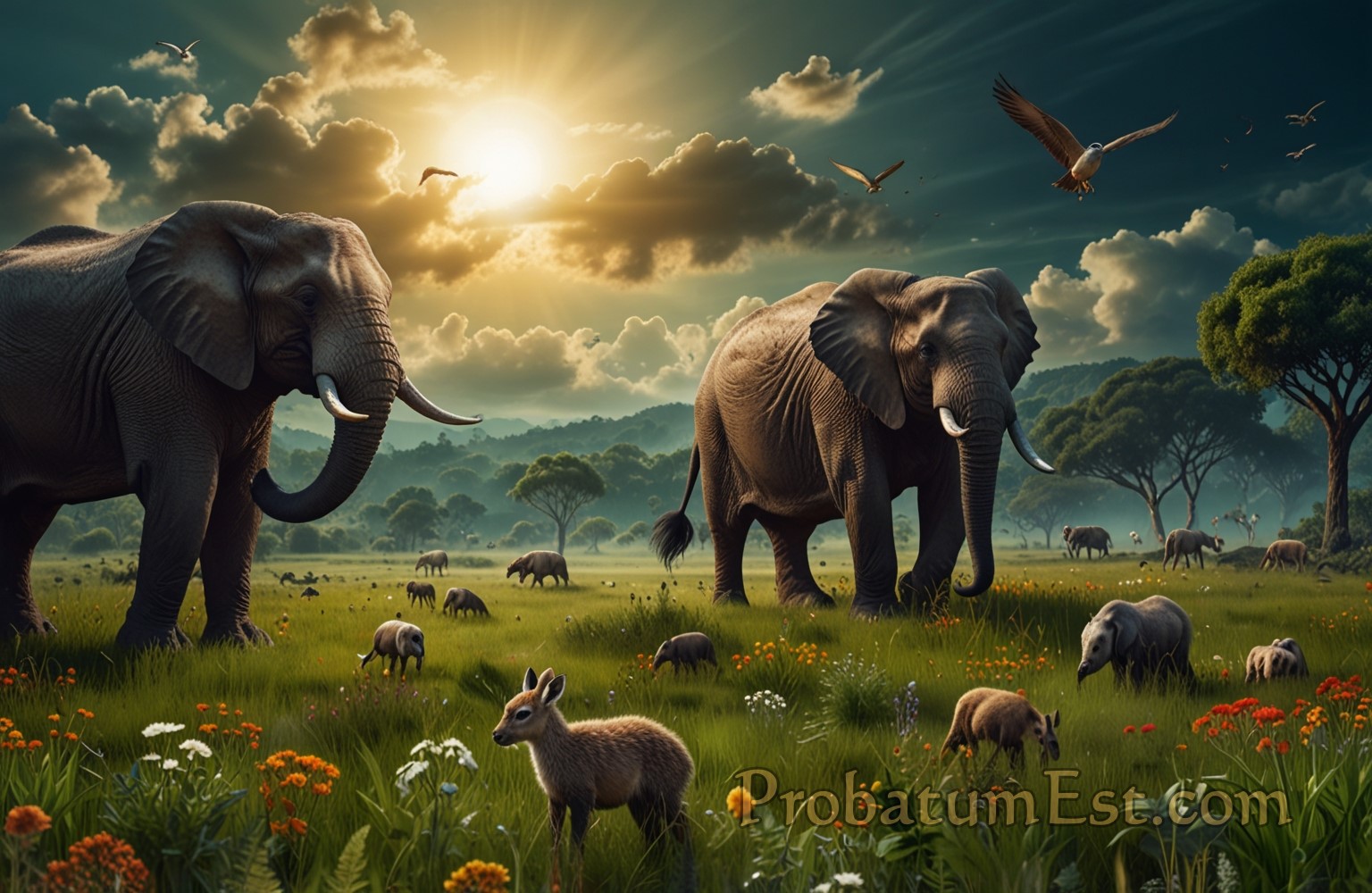
Life on Earth is a testament to the complexity, adaptability, and diversity of organic processes that have unfolded over billions of years. From single-celled organisms to the vast web of interconnected ecosystems, life on our planet is both a scientific marvel and a source of endless fascination. This article aims to explore life on Earth by examining its origins, diversity, evolutionary processes, ecological interactions, and the interconnectedness of all living things.
Origins of Life
- The Prebiotic World: The origins of life are often a subject of profound inquiry and debate. It is believed that life began about 3.8 billion years ago, during the Archean eon. Conditions on the early Earth were drastically different from those today, characterized by a volatile atmosphere with little oxygen and dominated by gases like methane, ammonia, and hydrogen.
- Chemical Building Blocks: Life likely arose from a primordial soup — a nutrient-rich mixture of organic molecules. Amino acids, nucleotides, and other fundamental components spontaneously formed in these primordial waters. Experiments like the Miller-Urey experiment have demonstrated that these organic molecules can arise naturally from simpler chemical reactions under the conditions that were present on early Earth.
- The First Living Organisms: The transition from non-living chemistry to biological entities marked the dawn of life. The first life forms were likely simple, single-celled organisms such as prokaryotes. These organisms initially thrived in anaerobic environments, utilizing chemical reactions to derive energy.
Evolution and Diversity
- Darwin’s Legacy: The journey from single-celled life forms to the diverse array of species seen today is chronicled by the theory of evolution. Charles Darwin’s groundbreaking work, “On the Origin of Species,” introduced the concept of natural selection as a driving force of evolution. Natural selection acts on genetic variations within populations, favoring traits that enhance survival and reproduction.
- The Tree of Life: Earth’s biodiversity is often depicted as a sprawling tree of life, branching out from a common ancestor. Major additions to the tree include the development of eukaryotic cells, which possess complex structures such as nuclei, and the subsequent rise of multicellular organisms.
- Radiation of Life Forms: Throughout history, life has undergone several radiation events where rapid diversification occurred. The Cambrian Explosion, around 541 million years ago, saw the rapid emergence of most major animal phyla. Such periods were crucial in shaping the biological diversity present today.
Ecological Interactions
- Biomes and Ecosystems: Earth’s climates and geographical features give rise to biomes — large ecological zones such as forests, deserts, and oceans. Each biome supports unique ecosystems, communities of interacting organisms and their physical environments. Ecosystem dynamics are governed by biotic (living) and abiotic (non-living) factors, including climate, nutrient availability, and species interactions.
- Food Webs and Nutrient Cycles: At the heart of every ecosystem are food webs, complex networks of energy and nutrient exchange. Producers, such as plants and phytoplankton, convert sunlight into energy through photosynthesis. Consumers, from herbivores to apex predators, transfer energy through the ecosystem. Decomposers, like fungi and bacteria, play crucial roles in nutrient cycling by breaking down dead matter.
- Symbiosis and Competition: Species interactions extend beyond predator-prey relationships. Symbiotic relationships, such as mutualism and commensalism, promote cooperation between species, leading to mutual benefits or one-sided advantages without harm. Conversely, competition for resources drives natural selection and species adaptations.
Adaptability and Resilience
- Adaptation to Change: Life has consistently demonstrated adaptability to Earth’s changing environments, whether through gradual evolutionary processes or more abrupt changes like mass extinctions. Organisms adapt to shifts in climate, geography, and available resources, resulting in the emergence of new traits and species over time.
- Resilience of Life: Despite five major mass extinction events, life on Earth has shown remarkable resilience. After each extinction, life has rebounded, not only surviving but often thriving in new forms. This resilience is fueled by mechanisms such as genetic variation, reproductive strategies, and ecological plasticity.
Interconnectedness of Life
- Biosphere as a System: The biosphere, comprised of all ecosystems, is a global ecological system integrating all living beings and their relationships. Earth’s biosphere acts as a self-regulating entity where biotic and abiotic components influence each other through a myriad of processes.
- Human Impact and Conservation: Humans, a relatively recent addition to the tapestry of life, have become a dominant force influencing the biosphere. Anthropogenic activities impact climate, habitats, and biodiversity. Conservation efforts seek to preserve the delicate balance of life and protect endangered species from extinction.
- Future of Life on Earth: The future of life on Earth is intrinsically tied to how we address environmental challenges. Advancements in technology and growing ecological awareness provide opportunities to mitigate human impact and sustain biodiversity for future generations.
Conclusion
Life on Earth is a complex and dynamic phenomenon, constantly evolving and adapting through numerous interactions and processes. From the origins of simple cells to the thriving complexity of today’s ecosystems, life continues to captivate our curiosity. Understanding the intricacies of life not only enriches our knowledge but also emphasizes the responsibility we hold in preserving the balance and continuity of life on this unique and vibrant planet.


Leave a Reply