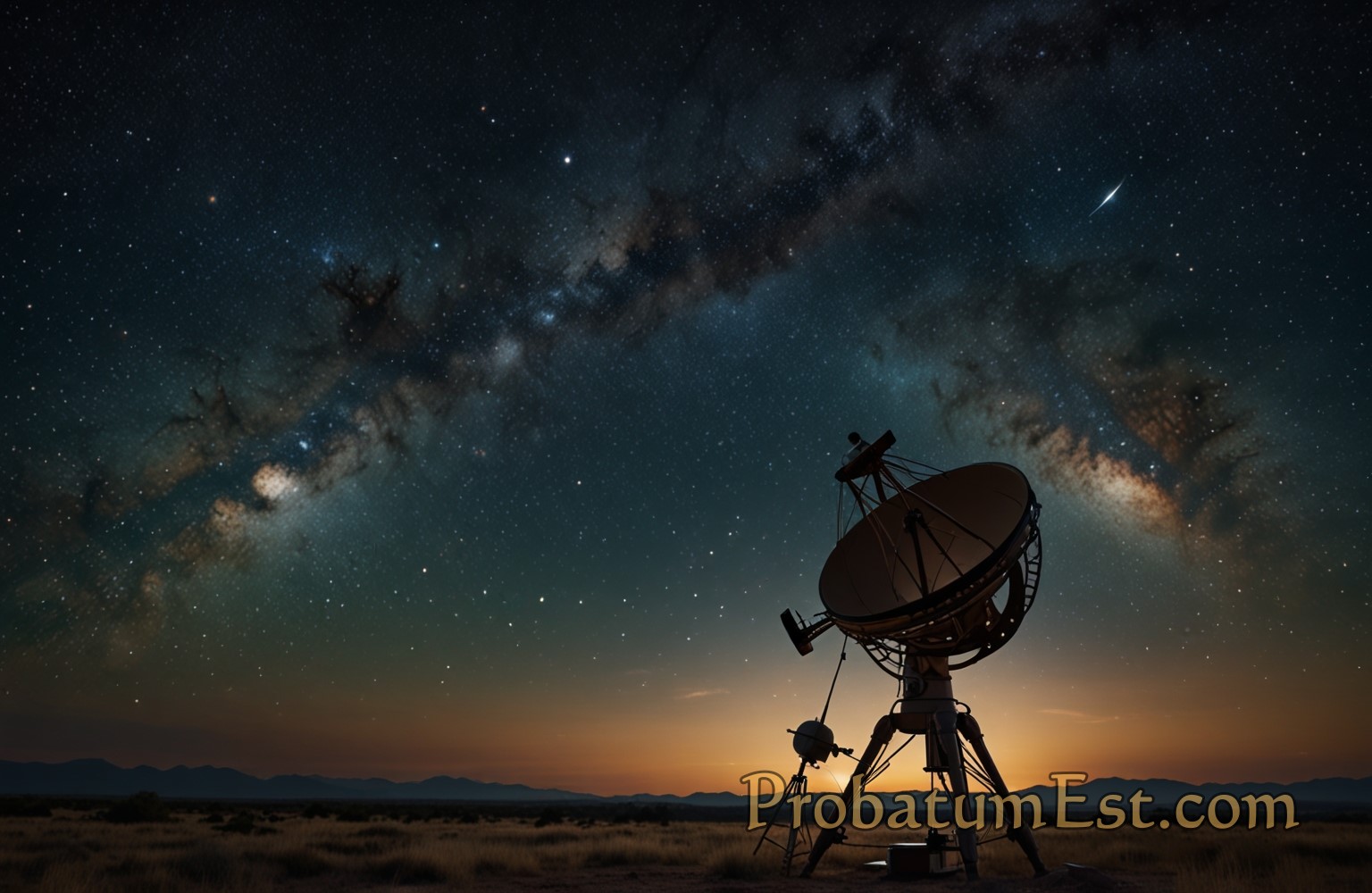
Cosmology, the scientific study of the large-scale properties of the universe as a whole, delves deep into understanding how the universe began, evolved, and its eventual fate. It addresses fundamental questions about the universe’s origin, structure, dynamics, and ultimate fate. As one of the oldest sciences, cosmology has always existed at the intersection of science, philosophy, and religion. Over centuries, our understanding has evolved from mythological narratives to evidence-based scientific principles, driven by observations and theoretical developments.
Historical Perspectives
Ancient Cosmologies
- Aristotelian and Ptolemaic Views: In ancient Greece, Aristotle conceived a geocentric universe with Earth at its center. This was later formalized by Ptolemy, whose model dominated for centuries.
- Indian and Chinese Cosmology: Ancient Indian texts like the Vedas and the Chinese concept of yin and yang also offered unique cosmological ideas, suggesting cyclical universes and interconnected energies.
- Middle Eastern Contributions: Islamic scholars preserved and expanded on Greek works, developing detailed astronomical tables and observations that contributed to the later European Renaissance in cosmology.
Shift to a Heliocentric Model
The Renaissance era brought pivotal changes in cosmology:
- Copernican Revolution: Nicolaus Copernicus proposed a heliocentric model, placing the Sun at the center rather than the Earth. This set the stage for modern cosmology.
- Galileo and Kepler: Observations by Galileo using a telescope and Kepler’s laws of planetary motion provided strong support for the heliocentric model and laid foundational principles for celestial mechanics.
- Newtonian Mechanics: Sir Isaac Newton’s laws of motion and universal gravitation furthered the understanding of planetary orbits and gravity’s role in cosmological phenomena.
Modern Cosmology
The Expanding Universe
- Einstein’s General Relativity: In 1915, Albert Einstein’s theory of general relativity provided a new way to understand gravity, revolutionizing our view of the universe’s structure.
- Hubble’s Observations: In the 1920s, Edwin Hubble discovered the redshift in distant galaxies, providing evidence that the universe is expanding. This led to the development of the Big Bang theory.
The Big Bang Theory
The current leading explanation of the universe’s origin and evolution is the Big Bang theory. It posits that the universe began approximately 13.8 billion years ago from an incredibly hot and dense state and has been expanding ever since.
- Cosmic Microwave Background Radiation (CMB): The discovery of CMB in 1965 by Arno Penzias and Robert Wilson provided crucial evidence for the Big Bang, capturing the leftover radiation from the initial explosion.
- Nucleosynthesis: Predictions about the abundance of light elements like hydrogen, helium, and lithium in the early universe match observational data, supporting the Big Bang model.
- Inflation Theory: Proposed by Alan Guth in the 1980s, this theory suggests a rapid expansion of the universe shortly after the Big Bang, resolving several cosmological dilemmas like the horizon and flatness problems.
The Cosmological Constant and Dark Energy
A perplexing discovery in the late 20th century was that the expansion of the universe is accelerating. This led to the introduction of dark energy, an unknown form of energy permeating space. The cosmological constant, initially introduced by Einstein and later discarded, was revived to explain this phenomenon.
Dark Matter
Dark matter is another mysterious component of the cosmological puzzle. Unlike dark energy, it doesn’t accelerate the universe’s expansion but contributes additional gravitational force, necessary for the formation of galaxies and large-scale structures in the cosmos.
Current Challenges and Open Questions
- Nature of Dark Matter and Dark Energy: Despite their significant contributions to the universe’s mass-energy content, their exact nature remains elusive.
- The Universe’s Fate: Whether the universe will continue expanding forever, eventually collapse back on itself, or reach a stable size remains an open question.
- The Multiverse Hypothesis: Some theories suggest that our universe may be just one of many — a part of a multiverse—though this remains speculative without direct evidence.
Modern Techniques and Tools
Observational Cosmology
Modern cosmology relies heavily on observations made by advanced telescopes, both ground-based and space-borne, such as the Hubble Space Telescope and the upcoming James Webb Space Telescope.
Computational Cosmology
Simulations and models run on supercomputers have become indispensable in testing cosmological theories and understanding complex processes like galaxy formation and the cosmic web’s evolution.
Experimental Cosmology
Particle physics experiments, like those conducted at CERN, seek to replicate the high-energy conditions of the early universe to understand fundamental particles and forces better.
Philosophical and Theological Implications
Cosmology also intertwines with philosophical and theological questions about existence, purpose, and the cosmos’s nature. It incites debate on topics like determinism, the nature of time, and the possibility of a creator or higher intelligence.
Conclusion
Cosmology remains a dynamic field, constantly evolving with new discoveries and technologies. It boldly addresses humanity’s most profound questions and inspires a sense of wonder and curiosity about our place in the universe. As we continue to explore the cosmos, cosmology not only enhances our scientific knowledge but also enriches our cultural and philosophical understandings of existence itself.




Leave a Reply