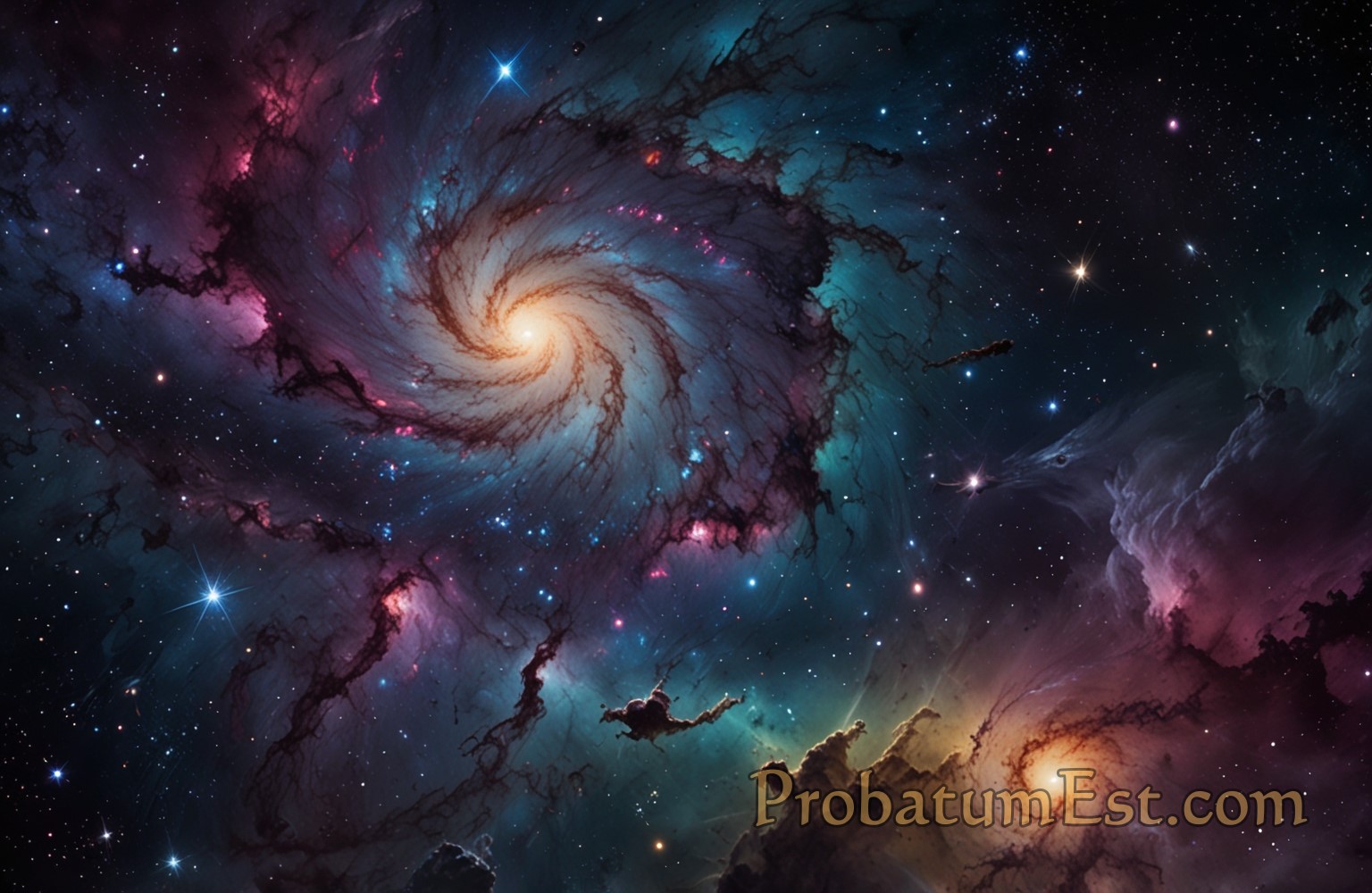
Galaxies, sprawling systems of stars, gas, dust, and dark matter, form the fundamental building blocks of the Universe. They are not only grand in scale, with many spanning thousands to hundreds of thousands of light-years, but they are also critical to understanding the overall structure of the cosmos and the processes that drive cosmic evolution. This comprehensive exploration delves into the classification, formation, components, and significant examples of galaxies, highlighting their intriguing and complex natures.
1. Classification of Galaxies
Galaxies are classified primarily based on their appearance in visible light. The most common system in use today is the Hubble Sequence, developed by astronomer Edwin Hubble in the 1920s.
1.1 Elliptical Galaxies (E)
These galaxies range from nearly spherical (E0) to elongated ellipses (E7). They typically contain older, red stars and very little dust or cold gas, which means they have low star formation rates. Elliptical galaxies are believed to form through the merging of smaller galaxies.
1.2 Spiral Galaxies (S)
Spiral galaxies feature flat, rotating disks of stars and dust, with central bulges at their cores, and often possess multiple spiral arms. Our own Milky Way is an example of a barred spiral galaxy, recognizable by a bar-shaped structure of stars that stretches out from the central bulge. Spiral arms are sites of ongoing star formation, containing a mix of young, blue stars, and older stellar populations.
1.3 Irregular Galaxies (Irr)
These galaxies lack the regular symmetrical shapes of elliptical or spiral galaxies and are often rich in gas and dust, hosting abundant star formation activities. They can result from galactic collisions or be smaller galaxies affected by gravitational interactions with larger bodies.
2. Formation and Evolution of Galaxies
The prevailing theory about the formation of galaxies involves the growth of small perturbations in the density of matter in the early Universe, primarily composed of dark matter. These perturbations grew under gravity, pulling in gas that could cool and condense to form stars—thus birthing a galaxy.
2.1 Galaxy Mergers
Galaxies grow both by forming new stars and by merging with other galaxies. Mergers can dramatically affect a galaxy’s structure and star formation rate, often leading to a brief but intense period of new star formation followed by quenching.
2.2 Active Galactic Nuclei (AGN)
Some galaxies host supermassive black holes at their centres, which, when accreting matter, can emit intense radiation that can be observed across great distances. Such galaxies are termed active galaxies and include quasars and blazars depending on the viewing angle.
3. Components of Galaxies
3.1 Stars
Galaxies contain a wide array of stars with varying masses and stages of evolution, from young hot blue stars in their spiral arms to the older red stars that predominate in their bulges and elliptical galaxies.
3.2 Gas and Dust
The interstellar medium in galaxies comprises gas (hydrogen, helium, and other elements) and dust, which plays a critical role in the life cycle of star formation and the spectral appearance of galaxies.
3.3 Dark Matter
While not directly observable, dark matter is inferred to exist through its gravitational effects. It forms a much larger part of the total mass of a galaxy than the stars and visible material and is crucial in holding galaxies together and explaining their rotation curves.
4. Examples of Notable Galaxies
4.1 The Milky Way
Our galaxy, a barred spiral, home to our Solar System, and approximately 100-400 billion stars, with a supermassive black hole called Sagittarius A* at its center.
4.2 Andromeda Galaxy
Located about 2.5 million light-years from Earth, Andromeda is the closest spiral galaxy to the Milky Way and is expected to collide with our galaxy in about 4.5 billion years.
4.3 Messier 87 (M87)
Famous for its supermassive black hole which was the first to be imaged by the Event Horizon Telescope, shedding light on the nature of black holes and their roles in galaxy dynamics.
5. The Role of Galaxies in the Universe
Galaxies are not only the birthplaces of stars and planets but also the crucibles in which chemical elements are forged by nuclear fusion in stars and spread through supernovae explosions. They trace the large-scale structure of the Universe, congregating in groups, clusters, and superclusters, connected by strings and sheets in a vast cosmic web, underlain by dark matter. Understanding galaxies allows astronomers to piece together the history of the Universe, from the Big Bang to the present day.
In summary, galaxies are as diverse as they are dynamic. Each type exemplifies unique aspects of cosmic phenomenology and evolution, acting as a lens through which the workings of the Universe can be observed and theorized. Future observations and theoretical advances will continue to unveil the mysteries of these celestial structures, offering deeper insights into the fabric of our Universe.



Leave a Reply