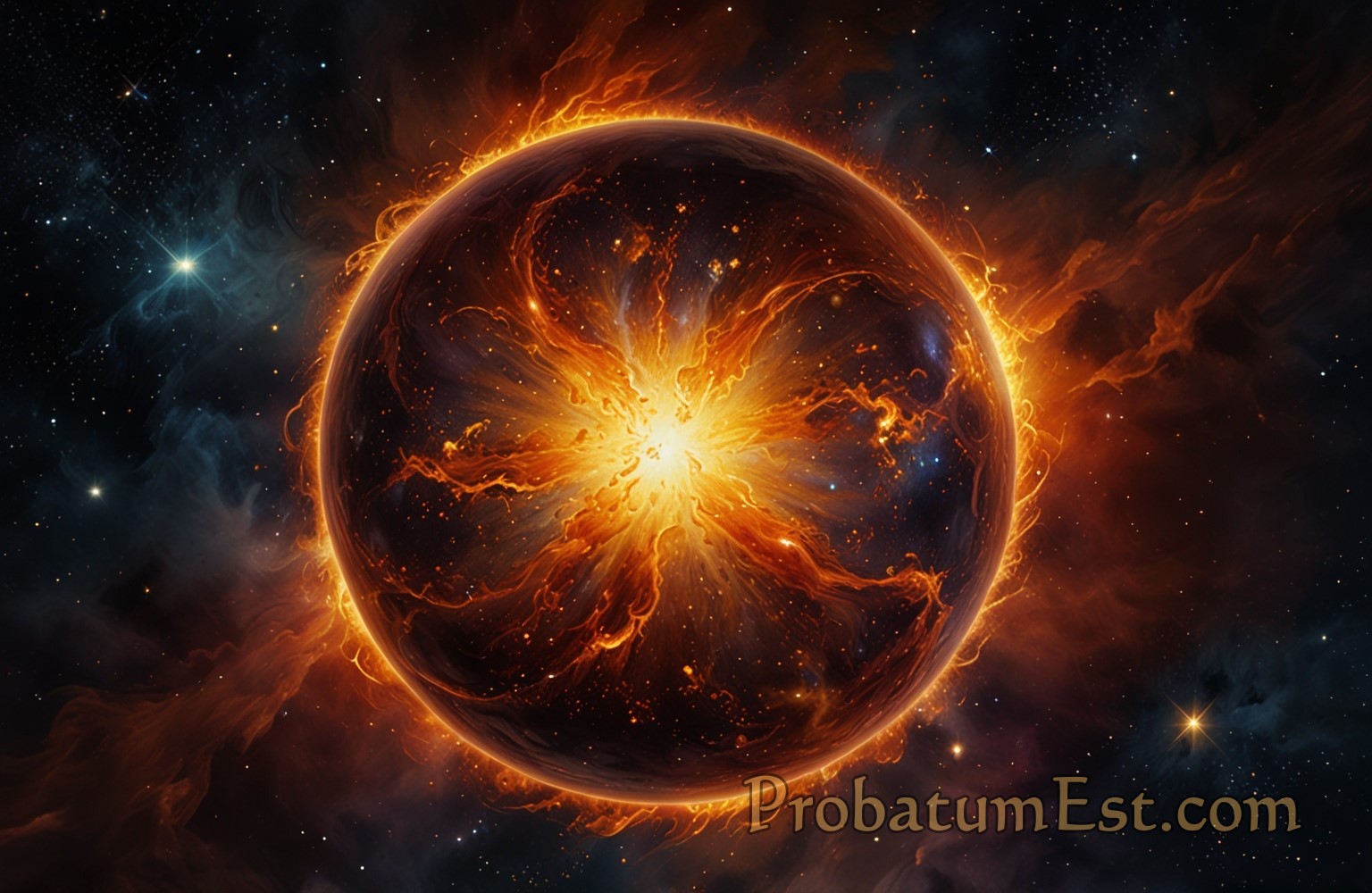
Stars are fundamental celestial bodies that have fascinated humans for millennia, serving as beacons in the night sky, guiding exploration and sparking scientific inquiry. From an astronomical perspective, stars are more than just twinkling points of light; they are complex, dynamic systems that play a critical role in the cosmos. This article delves into the nature of stars, exploring their formation, composition, life cycle, classification, and significance in the universe.
The Formation of Stars
Stars are born within vast molecular clouds composed primarily of hydrogen gas, mixed with dust and other elements. These regions are often referred to as stellar nurseries. The process begins when gravitational forces cause the cloud to collapse under its own weight. As the cloud collapses, it fragments into clumps, each of which can become a protostar.
During this phase, gravitational energy is converted into heat, raising the temperature of the core. Once the core reaches sufficient temperature and pressure, nuclear fusion ignites, converting hydrogen into helium. This marks the birth of a star, shifting it from a protostar to a main-sequence star— the process takes millions of years.
Composition of Stars
Stars are predominantly composed of hydrogen and helium, which account for roughly 98% of their mass. The remaining 2% consists of heavier elements like carbon, nitrogen, oxygen, and small amounts of metals. These elements are synthesized in stellar interiors via nuclear fusion reactions, creating the building blocks for planets and life.
The spectral analysis reveals the presence of these elements, known as ‘metals‘ in astronomical terms, helping to understand a star’s chemical composition. The distribution of these elements heavily depends on a star’s type and age, as well as the conditions of the interstellar medium from which it formed.
Life Cycle of Stars
The life cycle of a star can be broadly divided into several stages:
- Main Sequence: The most extended phase, where a star fuses hydrogen into helium in its core. A star spends the majority of its life in this stable state, with its duration determined by its mass.
- Red Giant/Supergiant Phase: Once hydrogen is exhausted, the core contracts while the outer layers expand and cool, causing the star to enter the red giant or supergiant phase.
- Helium Fusion: In this phase, helium nuclei fuse into carbon and oxygen in more massive nuclei, releasing energy. This process can continue to synthesize heavier elements in massive stars.
- End of Life: Depending on its mass, a star’s fate varies:
- Low-Mass Stars: They shed their outer layers, creating planetary nebulae, with the core cooling to form a white dwarf.
- Massive Stars: They may explode as supernovae, leaving behind neutron stars or black holes while dispersing vital elements into space.
Classification of Stars
Stars are classified based on their spectra, brightness, and temperature, using the Morgan-Keenan (MK) system:
- Spectral Types: Stars are categorized into types O, B, A, F, G, K, and M—ranging from hot, blue stars (O type) to cool, red stars (M type). This sequence reflects decreasing temperature and increasing numbers of absorption lines from metals.
- Luminosity Class: Indicates a star’s size and luminosity, ranging from supergiants (class I) to main-sequence stars (class V).
- Hertzsprung-Russell Diagram: A pivotal tool in stellar astronomy, plotting stars in a graph according to luminosity and spectral type, illustrating the relationships between different types of stars and their stages of evolution.
Stars’ Impact on the Universe
Stars are central to the dynamics of galaxies and the universe at large:
- Element Formation: Heavier elements necessary for planet formation and life are forged in the cores of stars and distributed via supernova events.
- Energy and Light: Stars emit light and energy, influencing their local environment and providing the conditions necessary for life, exemplified by our Sun.
- Galactic Evolution: Stars influence the structure and evolution of galaxies by converting gas into stars and enriching the interstellar medium with elements.
Conclusion
Stars are powerful engines that drive cosmic evolution, from the nascent stages of a dense molecular cloud to their spectacular ends as supernovae or stable cooling dwarfs. Their light tells the history of the universe, holding clues about the origins of galaxies, planets, and potentially life itself. Understanding stars involves multidisciplinary astronomical studies, unlocking just a fraction of their mysteries while uncovering new facets of the universe. As our technology and knowledge advance, so too does our appreciation and understanding of these mesmerizing celestial bodies.



Leave a Reply