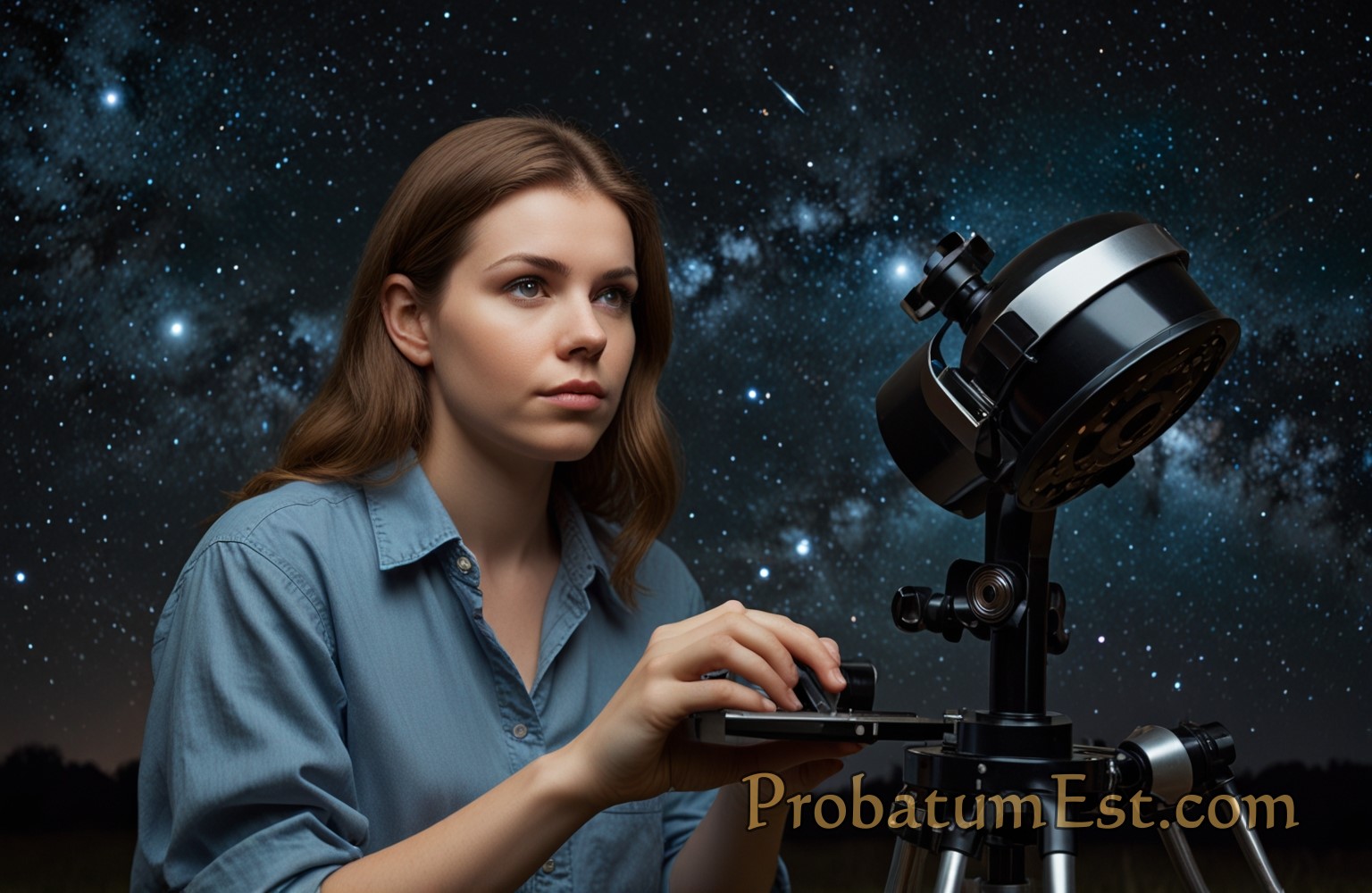
Astronomy, one of the oldest sciences, is the study of celestial phenomena, the universe’s structure, and the laws that govern its behaviors. For anyone passionate about the cosmos, taking formal or informal courses in astronomy can be both enlightening and profound. Here’s a detailed overview of what topics and skills one can expect to learn in the field of astronomy.
1. Fundamental Concepts of Astronomy
At its core, astronomy involves understanding basic celestial phenomena and the mechanics governing bodies in space. This includes learning about:
- Celestial Mechanics: This includes Newtonian mechanics which is crucial for understanding orbits, eclipses, tides, and other gravitational phenomena. Kepler’s laws of planetary motion also fall under this category.
- Phases and Positions: You study how the positions of the sun, moon, and planets affect phenomena observed from Earth, such as phases, seasons, and eclipses.
- Light and Telescopes: Basic principles of optics and how telescopes gather and magnify light to observe distant objects are key topics. Different types of telescopes — refracting, reflecting, and modern innovations like radio and space telescopes — are important areas.
2. Planetary Science
Studying planets, both in our Solar System and exoplanets, is a foundational aspect of astronomy. This includes:
- Solar System Astronomy: Understanding the characteristics and conditions of planets, moons, asteroids, and comets within our own solar system can lead to insights about planetary systems around other stars.
- Exoplanet Discovery and Analysis: With the use of techniques like the transit method and radial velocity, astronomy teaches how planets are discovered and studied in distant solar systems.
3. Stellar Astronomy
Stars are fundamental components of the universe. In stellar astronomy, you learn about:
- Life Cycle of Stars: From their formation in nebulae to the end stages like white dwarfs, supernovae, neutron stars, or black holes, the life stages of stars are crucial components of your learning.
- Star Properties: This encompasses understanding a star’s composition, temperature, mass, and size, and how these factors influence each other as studied through spectroscopy and other techniques.
4. Galaxies and Cosmology
Moving beyond individual stars and planets, astronomy also focuses on galaxies and the larger structure of the universe:
- Galaxy Formation and Evolution: Learning about the classification of galaxies, their composition, dynamics, interaction, and the role of dark matter and dark energy in their evolution.
- Cosmology: This branches further into the study of the universe as a whole, including theories about its origin, evolution, the Big Bang, cosmic microwave background, and the future fate of the universe.
5. Practical Observational Skills
- Techniques in Astrophotography: Capturing celestial events and bodies using specialized equipment and techniques.
- Data Analysis: Learning to process and interpret data collected via telescopes and other instruments. This includes understanding how to use software designed for astronomical data analysis.
6. Research and Analytical Skills
- Statistical Methods: You learn about statistical techniques to analyze the vast amounts of data collected, to support or refute theories and models.
- Critical Thinking and Problem Solving: Astronomy challenges students to apply abstract theory to tangible problems, honing critical analytical skills.
7. Theoretical Astrophysics
For those delving deeper, theoretical aspects involve complex mathematics and physics including:
- Relativity: General and special relativity play a crucial role in understanding high-energy cosmic phenomena and features of large-scale structure like black holes.
- Quantum Mechanics: Understanding the behavior of particles at atomic and subatomic levels, which is crucial especially in high-energy phenomena like those occurring in neutron stars or during stellar deaths.
8. Interdisciplinary Connections
Finally, astronomy is closely linked with other scientific disciplines like:
- Geochemistry: Studying meteorites and lunar rocks to understand more about the solar system’s formation.
- Astrobiology: The study of potential life – past or present – beyond Earth, which combines elements of molecular biology, environmental science, and planetary geology.
Conclusion
Studying astronomy offers a comprehensive understanding of not just Earth, or our solar system, but the entire cosmos. It encompasses learning about celestial mechanics, star and galaxy formation, observational astronomy techniques, and beyond. It also instills critical scientific literacy and analytical skills, paving the way for careers in research, education, and various types of scientific, technical, and analytical roles. Whether pursued as a hobby or a professional career, astronomy remains one of the most expansive and intriguing fields of study available.




Leave a Reply