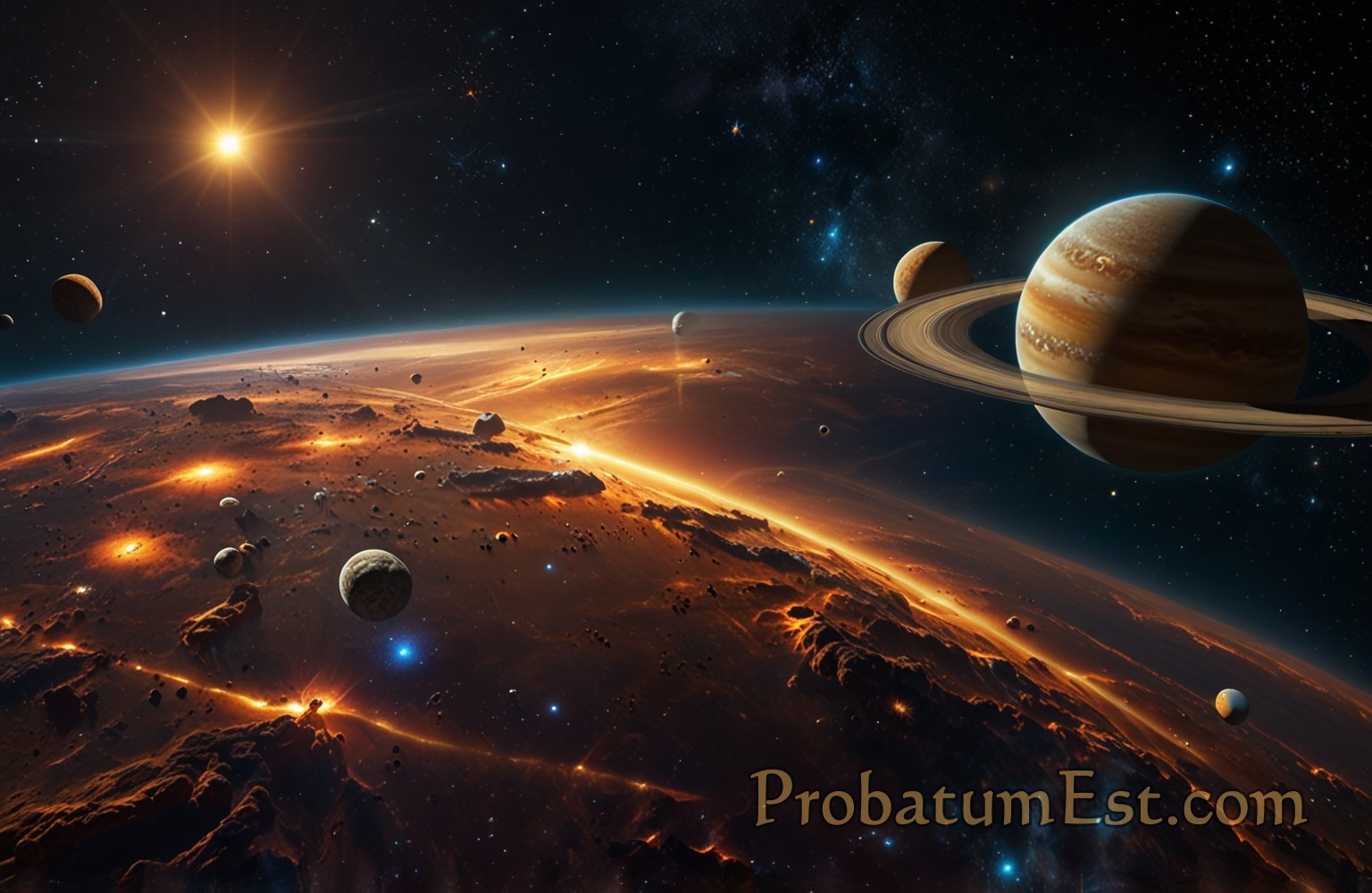
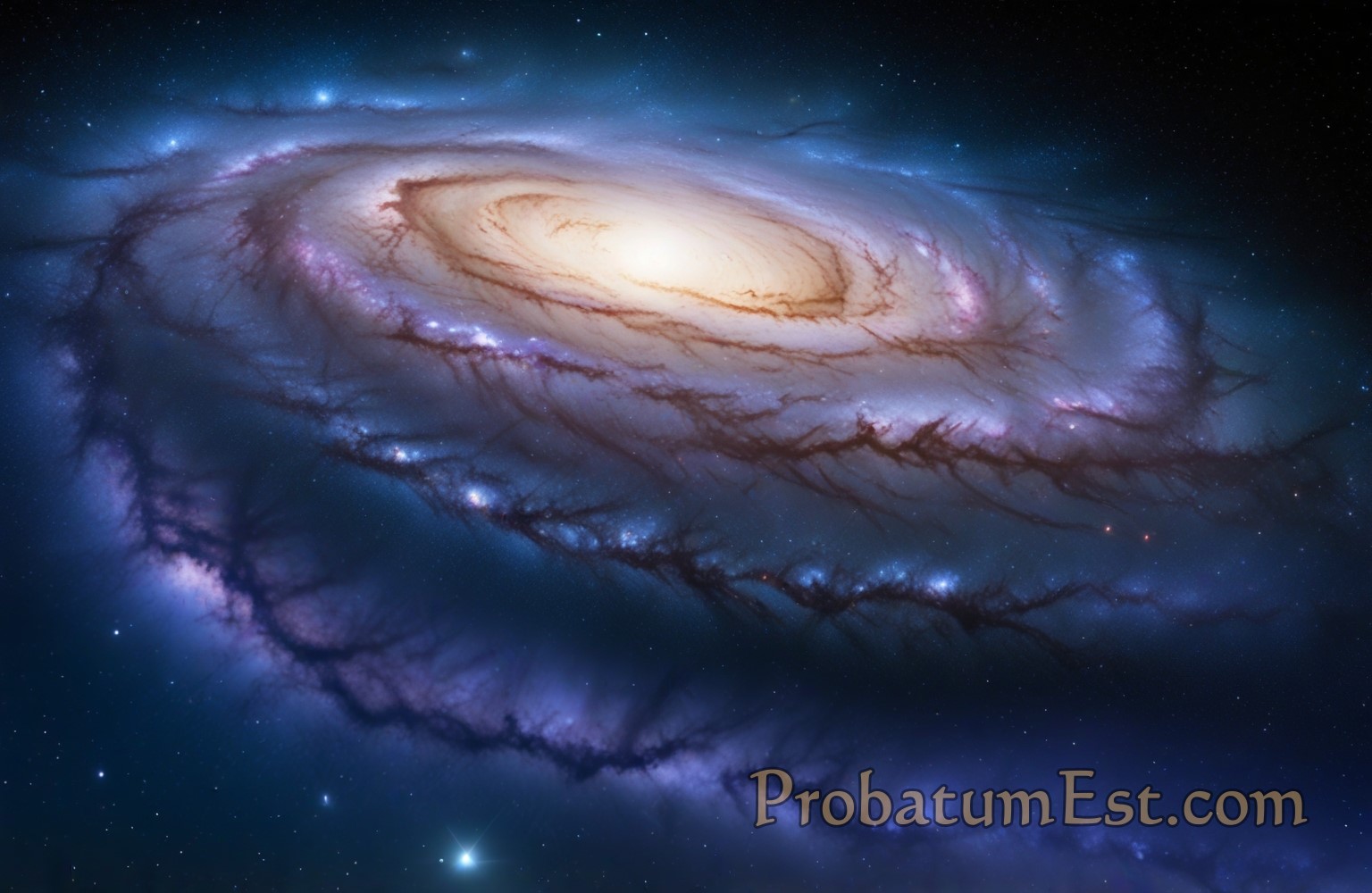
The solar system is a fascinating cosmic structure that has captivated human imagination for millennia. Situated in one of the Milky Way’s spiral arms, it is home to our planet Earth, providing a grand stage for the dance of celestial bodies. The solar system consists of the Sun, eight major planets, their moons, dwarf planets, comets, asteroids, and the mysterious Kuiper Belt and Oort Cloud. This article delves deeply into the formation, structure, and composition of the solar system, exploring its celestial components and their gravitational interactions.
Formation of the Solar System
Nebular Hypothesis
The widely accepted theory regarding the formation of the solar system is the Nebular Hypothesis. Approximately 4.6 billion years ago, the solar system formed from the gravitational collapse of a giant molecular cloud. This event triggered a chain reaction of star formation, culminating in the birth of our Sun.
As the cloud collapsed, it began to spin, forming a rotating disk of gas and dust. The central region coalesced to form the Sun, while particles in the surrounding disk collided and stuck together, gradually building up into planetesimals. Over time, these planetesimals accreted further material, evolving into the planets we observe today.
The Role of the Sun
The Sun, a G-type main-sequence star, serves as the cornerstone of the solar system. Its immense gravitational pull orchestrates the orbits of all celestial bodies within the system. The Sun’s radiative energy fuels processes on the planets and provides warmth and light essential for life on Earth.
Major Components of the Solar System
The Inner (Terrestrial) Planets
- Mercury
– As the closest planet to the Sun, Mercury is a small, rocky body with a cratered surface similar to Earth’s Moon. It lacks a significant atmosphere, resulting in extreme temperature fluctuations.
- Venus
– Venus, often referred to as Earth’s sister planet, possesses a dense, toxic atmosphere primarily composed of carbon dioxide, with clouds of sulfuric acid. It experiences a runaway greenhouse effect, making it the hottest planet in the solar system.
- Earth
– Earth is the only known planet to support life, boasting a diverse range of environments, a liquid water surface, and a balanced climate. Its atmosphere is rich in nitrogen and oxygen, which are crucial for sustaining life.
- Mars
– The Red Planet, Mars, features the largest volcano and canyon in the solar system. Though its atmosphere is thin, composed mostly of carbon dioxide, it has captivated interest as a potential location for future human colonization due to evidence of past water flow.
The Outer (Gas Giant) Planets
- Jupiter
– The largest planet, Jupiter, is a gas giant with a thick atmosphere containing hydrogen and helium. It boasts a powerful magnetic field, dozens of moons, and the famous Great Red Spot, a giant storm persisting for centuries.
- Saturn
– Known for its spectacular ring system, Saturn is another gas giant predominantly composed of hydrogen and helium. It has numerous moons, with Titan being larger than the planet Mercury and possessing a substantial, opaque atmosphere.
- Uranus
– Uranus is an ice giant with a blue-green hue due to methane in its atmosphere. Its unique rotation axis is tilted sideways, practically rolling along its orbit. The planet has a faint ring system and many moons.
- Neptune
– Similar to Uranus, Neptune is an ice giant with a deep blue color, fierce winds, and storms. Its dynamic atmosphere and the presence of methane give it its distinct coloration. Neptune also has a ring system and 14 known moons, including the geologically active Triton.
Other Celestial Bodies
- Dwarf Planets
– Beyond the eight main planets, the solar system hosts several dwarf planets, such as Pluto, Eris, Haumea, Makemake, and Ceres. Dwarf planets are characterized by their orbits, which do not clear their neighboring regions of other objects.
- Asteroids and the Asteroid Belt
– Located between Mars and Jupiter, the asteroid belt comprises rocky remnants from the solar system’s formation. Ceres, the largest object in the belt, is classified as a dwarf planet.
- Comets
– Comets, icy bodies originating from the Kuiper Belt or Oort Cloud, develop tails when they approach the Sun. These tails are produced by the sublimation of volatile substances.
- The Kuiper Belt and Oort Cloud
– The Kuiper Belt extends beyond Neptune’s orbit, containing icy bodies and dwarf planets. In contrast, the distant Oort Cloud, a spherical shell surrounding the solar system, is the theorized source of long-period comets.
The Gravitational Dance
Orbital Mechanics
The planets, moons, and other objects follow elliptical orbits governed by the gravitational forces of the Sun and other massive bodies. This intricate interplay determines the dynamics of the solar system.
Resonances and Stability
Gravitational resonances, particularly involving Jupiter, play a crucial role in maintaining the stability of asteroid orbits and influencing the evolution of planetary systems. The delicate balance of gravitational forces protects the solar system from chaotic disruption.
Conclusion
The solar system is a complex, dynamic entity that has inspired countless generations of astronomers and thinkers. From the fiery heart of the Sun to the icy fringes of the Oort Cloud, it presents a captivating cosmic ballet. Understanding the solar system is key to unraveling not only the mysteries of our own planet but also the processes governing countless other star systems across the universe. As we continue to explore and study our solar neighborhood, we may yet discover new worlds and insights into the workings of the cosmos.
Leave a Reply