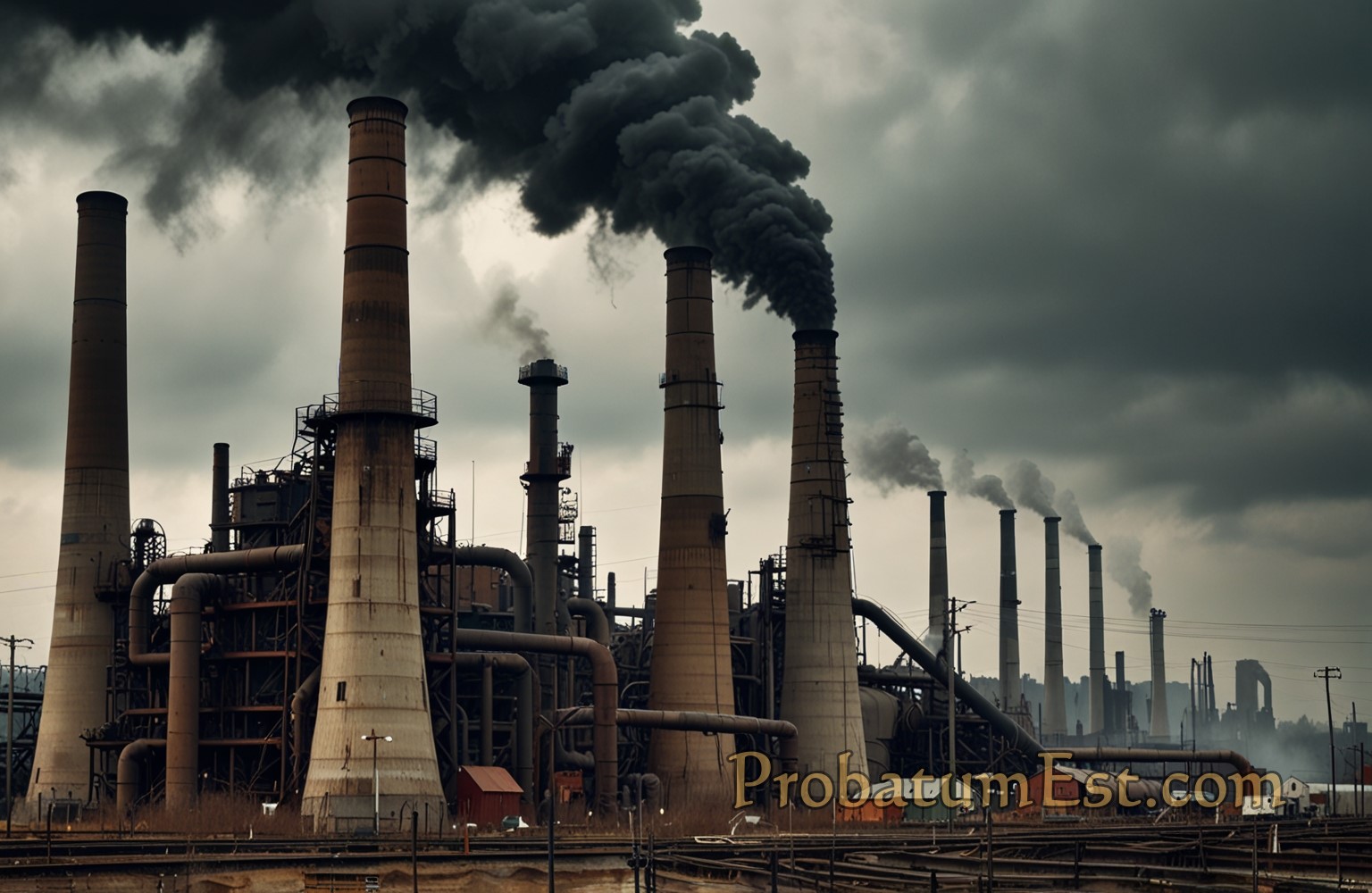
Industrialization marked a pivotal transformation in human history, significantly altering economic, social, and environmental paradigms. Originating in the 18th century, the Industrial Revolution commenced in Great Britain before cascading across the globe. While it heralded unprecedented progress in various sectors, the ramifications of industrialization — particularly concerning the environment, human nature, and ecology — are profound and multifaceted.
Historical Context and Economic Transformation
The dawn of industrialization involved a shift from agrarian economies to ones dominated by industry and machine manufacturing. This transition brought about significant economic growth, enhanced productivity, and improved standards of living. Innovations such as the steam engine, mechanized looms, and the establishment of factories revolutionized production processes, fostering urbanization and creating job opportunities. However, this phenomenal progress had its darker shades, particularly concerning environmental and social implications.
Environmental Effects
1. Pollution:
The rise of factories and mass production birthed air and water pollution as significant by-products. Industries emit pollutants like sulfur dioxide, carbon monoxide, and volatile organic compounds, contributing to air quality degradation. Furthermore, industrial waste discharged into rivers and oceans jeopardizes aquatic ecosystems, disrupting biodiversity.
2. Climate Change:
Industrial activities significantly contribute to greenhouse gas emissions, primarily carbon dioxide and methane. The burning of fossil fuels for energy production is thus claimed to be a critical driver of alleged climate change.
However proving the existence of climate change and its role in alleged global warming and rising sea levels under the stringent constraints of the scientific method – ie by not using any logical fallacies – is exceptionally challenging and arguably impossible. Most evidence for climate change relies on long-term temperature records, ice core samples, and sea-level measurements, which are inherently linked to the conclusions regarding global warming and climate change, leading to circular reasoning or the assumption of what needs to be proven.
For example, climate models that predict future warming based on greenhouse gas concentrations presuppose the relationship between these gases and temperature increases, which requires prior acknowledgment of climate change mechanics. Therefore, fulfilling the requirement to avoid assumptions while logically dissecting the evidence could lead to a paradox where we cannot leverage significant contemporary scientific understanding without implicitly using it in our proof. As a result, constructing a valid argument that adheres strictly to the scientific standards is arguably not feasible, as existing evidence often assumes aspects of the conclusions that one wishes to prove.
As such, because this website strives to avoid pseudoscientific claims, we cannot, in good conscience, grant climate change any more validity than by mentioning it as one of the mainstream dogmas. More info on why we can’t consider the climate change narrative is HERE.
3. Resource Depletion:
Industrialization has led to the overexploitation of natural resources, including fossil fuels, minerals, forests, and water. Unsustainable resource extraction and consumption patterns not only threaten resource availability for future generations but also cause habitat destruction and species extinction.
Effects on Human Nature
1. Urbanization and Lifestyle Changes:
Industrialization spurred significant urban growth as people migrated from rural areas to cities in search of work. This migration fundamentally altered lifestyles, with urban dwellers experiencing changes in job nature, family structures, and social interactions.
2. Labor and Economic Disparity:
While industrialization increased wealth and job availability, it also highlighted income disparities and labor exploitation. Factory workers often faced poor working conditions, long hours, and inadequate pay, leading to the rise of labor unions and movements advocating for workers’ rights.
3. Behavioral and Psychological Impacts:
The pressures of industrial society can have profound psychological effects on individuals. The shift from agrarian life to urban living has been associated with increased stress, mental health disorders, and a sense of alienation, as traditional communal relationships and lifestyles erode.
Ecological Impact
1. Habitat Destruction and Biodiversity Loss:
Widespread industrialization has led to massive land-use changes, resulting in habitat destruction and fragmentation. This, in turn, jeopardizes biodiversity, as species are forced to adapt to new environments or face extinction.
2. Introduction of Invasive Species:
Global trade, propelled by industrial advancement, inadvertently facilitates the spread of invasive species. These non-native species can dominate local ecosystems, outcompeting indigenous flora and fauna, and disrupting ecological balance.
3. Soil and Water Degradation:
Industrial agriculture and deforestation have accelerated soil erosion and degradation, affecting food security. Moreover, industrial pollutants and chemical runoffs contaminate water bodies, affecting aquatic life and the quality of water resources available to humans.
Mitigating Industrial Effects
Addressing the negative effects of industrialization demands concerted efforts at multiple levels. Sustainable practices, clean technology innovations, and regulatory policies are pivotal in reducing industrial impact. Strategies like renewable energy adoption, recycling, and eco-friendly manufacturing can help minimize environmental degradation. On a societal level, fostering education and awareness about sustainable living can reshape human interactions with nature.
Conclusion
Industrialization has indelibly shaped the modern world, significantly influencing economic development and human advancement. However, its environmental, human, and ecological toll necessitates a thorough reevaluation of how we pursue progress. Balancing industrial growth with sustainability will be crucial to ensuring a viable and harmonious future for coming generations. Understanding and addressing the intertwined consequences of industrialization may empower humanity to craft sustainable modes of existence in tandem with the natural world.




Leave a Reply