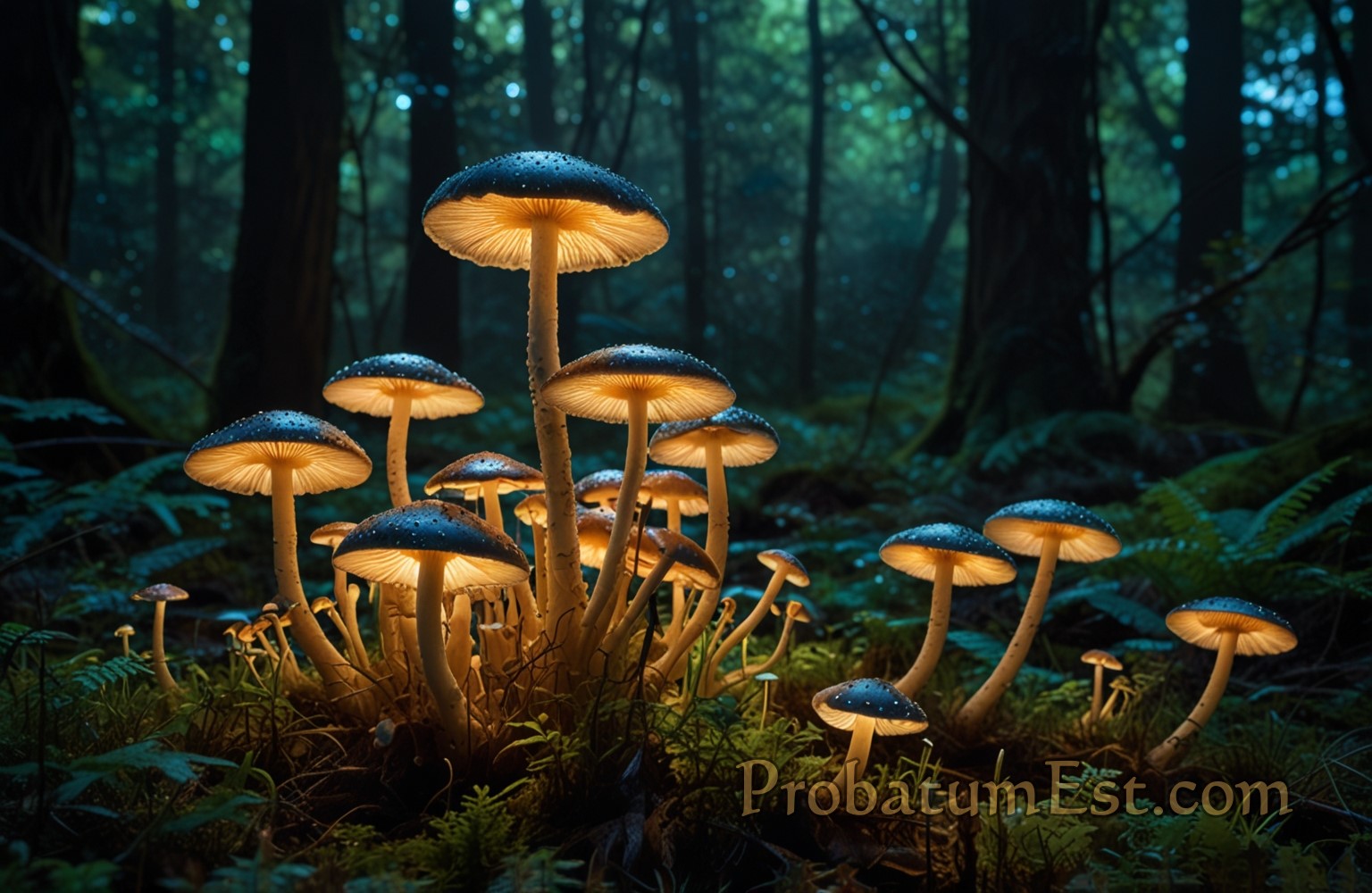
Fungi form a vast and fascinating group of organisms that occupy nearly every habitat on Earth. Long recognized primarily as molds and mushrooms, fungi include an enormous range of forms, from microscopic single-celled yeasts to complex networks of filaments that span large areas of soil or rotting logs. Below is a comprehensive examination of fungi from a biological standpoint, exploring their distinctive features, life cycles, ecological interactions, and significance to humans.
1. Overview of Fungi
1.1 Definition and General Characteristics
Fungi are eukaryotic organisms, meaning their cells contain membrane-bound organelles such as a nucleus and mitochondria. They are distinct from plants, animals, and bacteria. One of their defining features is the composition of their cell walls, which contain chitin (a strong, flexible polysaccharide), rather than cellulose, which is common in plant cell walls. Fungi are also heterotrophic, which means they obtain nutrients from organic matter.
1.2 Basic Body Forms
- Yeasts: These fungi are typically unicellular and reproduce mainly by budding or fission. Examples include Saccharomyces cerevisiae, widely used in baking and brewing.
- Molds: Usually filamentous, molds grow as networks of thread-like structures called hyphae. Masses of hyphae form a mycelium, which can be visible as a fuzzy growth on foods or decomposing material.
- Mushrooms and Other Fruiting Bodies: In many fungi, hyphae can organize into more complex structures called fruiting bodies, such as mushrooms, puffballs, and bracket fungi, which produce and disperse spores.
2. Structure and Function
2.1 Hyphal Structure
Hyphae are cylindrical, thread-like cells that branch repeatedly. The interior of hyphae can be compartmentalized by cross-walls called septa, which usually have pores allowing cytoplasmic movement. Some fungi lack these septa and have coenocytic (multinucleate) hyphae instead. This network of hyphae is collectively called the mycelium. It can permeate a wide range of substrates, from soil to decaying wood.
2.2 Cell Walls
A hallmark of fungal cells is the presence of chitin in the cell walls. Chitin provides both strength and flexibility, allowing fungi to penetrate or envelop their substrates efficiently. This characteristic also provides rigidity to protect the cell from external forces.
2.3 Nutrient Acquisition
Fungi absorb nutrients from their environment through external digestion. They release enzymes into the surrounding substrate, breaking it down into simpler compounds that can be taken up through their cell surfaces. This method of feeding is known as absorptive heterotrophy. Because of this mode of nutrition, fungi often play critical roles in decomposing organic matter.
3. Classification
Fungal classification has undergone significant refinement over the years due to advances in molecular biology. The most commonly recognized groups (sometimes called phyla) include:
3.1 Chytridiomycota (Chytrids)
These are considered some of the most ancient forms of fungi. Many chytrids are aquatic or live in moist soils, and they often produce motile spores equipped with flagella.
3.2 Zygomycota
Traditionally known for producing zygosporangia (thick-walled spores formed by the fusion of specialized hyphae), Zygomycota includes molds commonly found on foods, like Rhizopus stolonifer (black bread mold).
3.3 Glomeromycota
These fungi form mutualistic associations with the roots of most plant species. Known as arbuscular mycorrhizae, the fungi help plants absorb water and nutrients more effectively in exchange for sugars.
3.4 Ascomycota (Sac Fungi)
The largest fungal group, Ascomycota includes yeasts, powdery mildews, morels, and many others. They produce spores in sac-like structures called asci. Various culinary and commercially important fungi belong to this group.
3.5 Basidiomycota (Club Fungi)
Best known for mushrooms, puffballs, and bracket fungi, Basidiomycota produce spores on club-shaped structures called basidia. This group also includes plant pathogens like rusts and smuts.
4. Reproductive Strategies
4.1 Asexual Reproduction
Many fungi propagate asexually in ways that enable rapid increase in local environments:
- Spores (Conidia): Fungi can produce asexual spores, known as conidia, on specialized hyphae called conidiophores. These spores can be easily dispersed by wind or water.
- Budding: Typical of yeasts, a daughter cell emerges from the parent cell, matures, and eventually separates.
- Fragmentation: A piece of mycelium can break off and develop into a full organism under suitable conditions.
4.2 Sexual Reproduction
Even though some fungi primarily reproduce asexually, many can also undergo sexual reproduction:
- Plasmogamy: The cytoplasm of two compatible fungal cells fuses, but their nuclei remain distinct in a stage collectively referred to as a heterokaryon.
- Karyogamy: The two nuclei eventually fuse into one, creating a diploid nucleus.
- Meiosis: The diploid nucleus then undergoes meiosis, returning to the haploid state and often producing genetically diverse spores.
This dual asexual and sexual capability allows fungi to adapt to various environmental conditions by generating potentially advantageous genetic variations.
5. Ecological Roles and Importance
5.1 Decomposers
Fungi excel at breaking down complex organic materials, including lignin and cellulose. As decomposers, they recycle nutrients back into ecosystems. Their enzymatic abilities make them especially important in decaying wood and other tough plant materials.
5.2 Symbioses with Other Organisms
- Mycorrhizae: Fungi form vital relationships with plant roots, enhancing mineral and water absorption. Plants, in turn, supply fungi with sugars.
- Lichens: These are symbiotic partnerships between fungi (commonly Ascomycota) and photosynthetic partners (such as algae or cyanobacteria). Lichens can colonize harsh environments like bare rock surfaces.
5.3 Pathogens
Some fungi parasitize plants, animals, and, occasionally, humans. They can cause diseases like athlete’s foot and ringworm in humans, as well as devastating crop diseases in agriculture.
5.4 Industrial and Medicinal Uses
- Food Industry: Yeast (a type of fungus) is indispensable in baking, brewing, and winemaking processes. Many traditional fermented foods rely on fungal activity.
- Pharmaceuticals: Various antibiotics, including penicillin, are derived from fungal metabolites. Fungi also produce immunosuppressants such as cyclosporine, critical for organ transplant patients.
6. Molecular and Cellular Biology
6.1 Genetics
Fungi have been instrumental model organisms for genetic studies. For instance, the budding yeast Saccharomyces cerevisiae was the first eukaryote to have its entire genome sequenced. This provided a framework for understanding eukaryotic gene function and regulation.
6.2 Metabolism
Fungi have highly diverse metabolic pathways allowing them to utilize a wide array of substrates. Some species can digest components found in plastics or synthetic materials, highlighting their metabolic versatility.
6.3 Secondary Metabolites
Many fungi produce compounds beyond those required for basic survival. These secondary metabolites can serve as toxins, fragrances, or pigments and sometimes have potent biological activities. Researchers avidly investigate these metabolites for possible pharmaceutical applications.
7. Practical and Experimental Applications
7.1 Bioremediation
Certain fungi can degrade harmful pollutants in soil and water, offering potential for cleaning up contaminated environments. Through a process known as mycoremediation, specific fungal species decompose toxic substances into less harmful byproducts.
7.2 Agriculture
Fungi play both beneficial and harmful roles in agriculture. While some species cause devastating crop losses, others— especially mycorrhizal fungi — are used as biofertilizers, helping improve soil fertility and plant yield.
7.3 Biotechnology
Yeasts and molds have long been harnessed for industrial purposes, from enzyme production to large-scale fermentation processes. Researchers continue to refine techniques to exploit fungi for producing chemicals, enzymes, and biofuels.
8. Preservation, Cultivation, and Collection
Fungal diversity includes many species that are challenging to culture under laboratory conditions, as they have precise environment and substrate requirements. Nonetheless, advancements in tissue culture and sterile technique have enabled researchers and commercial growers to cultivate valuable mushrooms such as shiitake, oyster, and button mushrooms.
Field collection of wild fungi continues to be an important activity both for scientific study and for culinary use. Awareness of proper identification techniques is critical, as many mushrooms have toxic lookalikes.
9. Consclusion
Fungi are essential, versatile organisms that embody a vast realm of their own alongside plants and animals. From solitary single-celled yeasts to massive interconnected mycelial networks, they exhibit extraordinary biological adaptability, fueling vital processes like decomposition and providing key symbiotic benefits in many ecosystems. Their ability to produce an array of useful compounds has had indispensable influences on medicine, agriculture, and industry. While there is still much to learn about fungi, ongoing research continues to uncover their complexities and further highlight the profound contributions they make to life on Earth.


Leave a Reply