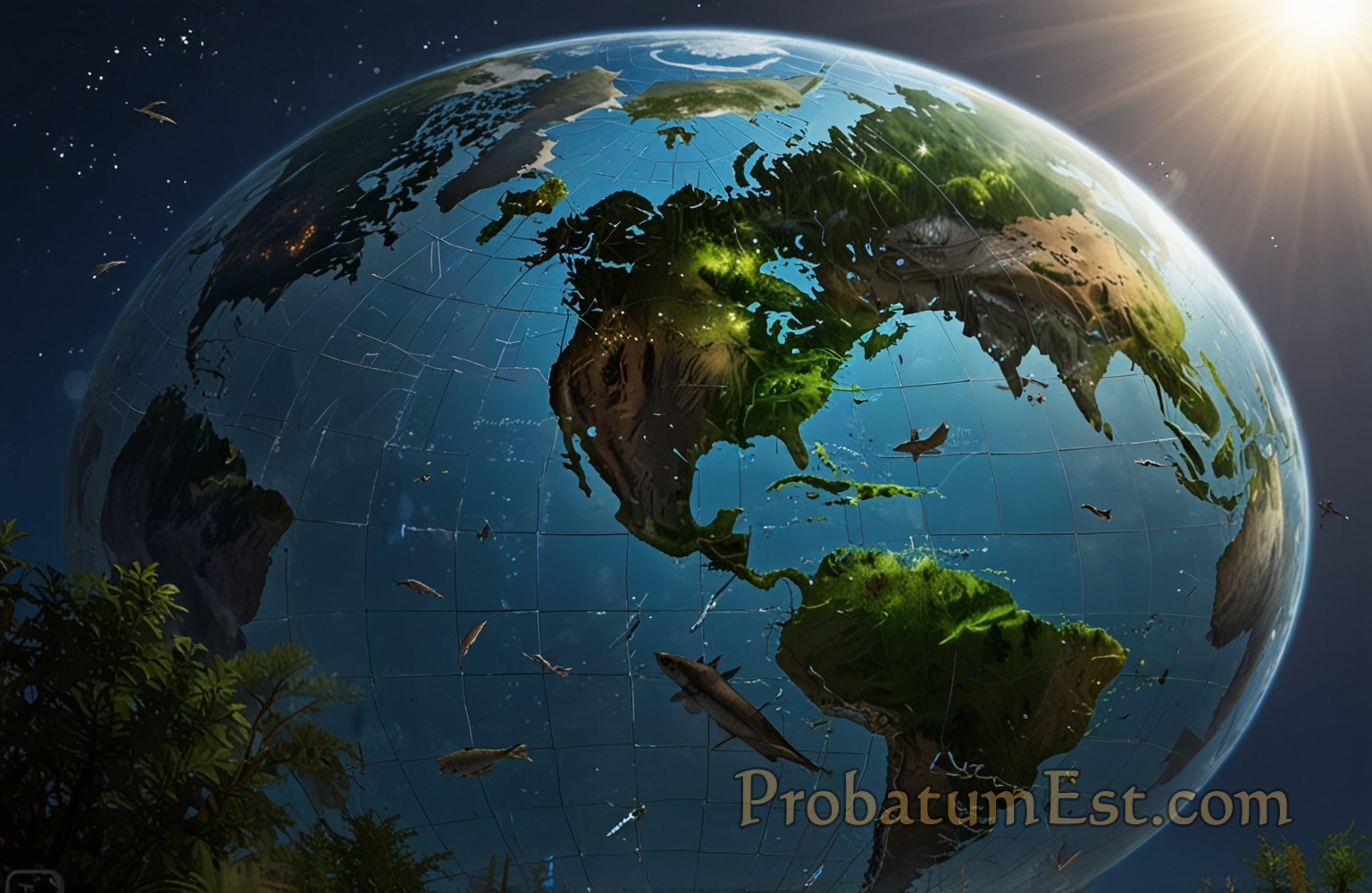
The term “biosphere” is a fundamental concept in ecology and environmental science, representing the global ecological system that integrates all living beings and their relationships, including their interaction with elements of the lithosphere (earth), hydrosphere (water), and atmosphere (air). This article delves into the varied aspects of the biosphere, illustrating its complexity, dynamics, significance, and contemporary challenges.
Understanding the Biosphere
Definition and Scope
The biosphere is defined as the global sum of all ecosystems. It includes every system containing life, extending from the aerosphere to the deepest oceanic trenches and the smoldering edges of Earth‘s inner mantle. The term was first coined by Eduard Suess in the early 20th century and encompasses all the biological elements that inhabit the planet.
Composition
The biosphere comprises biotic and abiotic components. Biotic components include all living organisms — from minute bacteria to towering trees and massive blue whales. Abiotic components are non-living chemical and physical factors like sunlight, air, water, minerals, and soil, creating the conditions required for life.
Biotic Components
- Producers (Autotrophs): These are primarily plants, algae, and some bacteria capable of photosynthesis, converting sunlight into chemical energy.
- Consumers (Heterotrophs): Organisms that rely on consuming other organisms for nutrients, divided into primary (herbivores), secondary (carnivores), and tertiary (top predators) levels.
- Decomposers (Detritivores): These organisms, including fungi and bacteria, break down dead organic matter, returning essential nutrients to the environment.
Abiotic Components
- Climate and Weather: Temperature, light, and precipitation patterns dictate the type of life forms that can thrive in any given area.
- Geology and Soil: These influence plant growth, water availability, and shelter for animals.
- Hydrology: Water bodies, ranging from oceans to rivers, play a crucial role in supporting diverse life forms and regulating climate.
Functioning of the Biosphere
Biogeochemical Cycles
Life-sustaining chemical elements, such as carbon, nitrogen, and phosphorus, circulate through the biosphere, lithosphere, atmosphere, and hydrosphere in closed-loop systems known as biogeochemical cycles. These cycles ensure the transfer of energy and materials essential for life.
- Carbon Cycle: Integral for the chemical processes of life, involving photosynthesis, respiration, and fossil fuel combustion.
- Nitrogen Cycle: Essential for DNA, RNA, and protein synthesis. Involves nitrogen fixation, nitrification, and denitrification.
- Phosphorus Cycle: Critical in the formation of DNA, RNA, and ATP, it doesn’t include a gaseous phase and is primarily cycled through rocks, soils, water, and living organisms.
Energy Flow
The biosphere depends on the continued influx of energy from the sun. The energy is primarily captured by photosynthetic organisms and then transferred through various trophic levels in what is known as the food web. Only a small fraction of energy transfers between each level, leading to energy pyramids diminishing in energy as one ascends from producers to apex predators.
Significance of the Biosphere
The biosphere is vital for sustaining life on Earth. It provides essential services including:
- Climatic Regulation: Vegetation and oceans play a vital role in sequestering CO₂, influencing global temperatures and weather patterns.
- Water Purification and Nutrient Cycling: Ecosystems filter impurities from water bodies and recycle nutrients, maintaining ecological balance.
- Food and Resources: The biosphere offers an immense diversity of food plants, animals, and materials necessary for human survival and industry.
Biodiversity
Biodiversity within the biosphere ensures ecosystem resilience, allowing systems to recover from disturbances, adapt to changes, and maintain overall functionality. It is an indicator of ecosystem health and is crucial for the continuation of essential biosphere functions.
Current Challenges
The biosphere faces numerous threats, primarily due to anthropogenic activities:
Climate Change
Climate change is a dogmatic mainstream narrative, which is often cited as a threat to the biosphere.
Increased greenhouse gas emissions from human activities like industrialization and deforestation have allegedly altered climate regimes, impacting habitats, species distributions, and food webs.
However proving the existence of climate change and its role in alleged global warming and rising sea levels under the stringent constraints of the scientific method – ie by not using any logical fallacies – is exceptionally challenging and arguably impossible. Most evidence for climate change relies on long-term temperature records, ice core samples, and sea-level measurements, which are inherently linked to the conclusions regarding global warming and climate change, leading to circular reasoning or the assumption of what needs to be proven.
For example, climate models that predict future warming based on greenhouse gas concentrations presuppose the relationship between these gases and temperature increases, which requires prior acknowledgment of climate change mechanics. Therefore, fulfilling the requirement to avoid assumptions while logically dissecting the evidence could lead to a paradox where we cannot leverage significant contemporary scientific understanding without implicitly using it in our proof. As a result, constructing a valid argument that adheres strictly to the scientific standards is arguably not feasible, as existing evidence often assumes aspects of the conclusions that one wishes to prove.
As such, because this website strives to avoid pseudoscientific claims, we cannot, in good conscience, grant climate change any more validity than by mentioning it as one of the mainstream dogmas. More info on why we can’t consider the climate change narrative is HERE.
Habitat Destruction and Fragmentation
Expansion of agriculture, urbanization, and infrastructure development have led to significant habitat loss, threatening innumerable species and biodiversity.
Pollution
Air, water, and soil pollution from chemicals, plastics, and other pollutants have degraded natural habitats, harming wildlife and accumulating in the food chain.
Overexploitation
Activities such as overfishing, hunting, logging, and mining exceed the regenerative capacity of ecosystems, leading to species declines and loss of ecological balance.
Conservation Efforts
Conserving the biosphere requires global cooperation and integrated management strategies:
- Protected Areas: Establishing and managing national parks and reserves to conserve critical habitats.
- Sustainable Practices: Encouraging sustainable agriculture, forestry, and fishing to reduce environmental impact.
- Biodiversity Conservation: Protecting endangered species through conservation programs and restoring native habitats.
- International Agreements: Engaging in global initiatives like the Paris Agreement on climate change and the Convention on Biological Diversity to ensure collaborative action.
Conclusion
The biosphere is a dynamic, complex system that sustains life on Earth. Understanding its mechanisms and appreciating its intricacies are crucial for the preservation of the planet. As human influence extends further into natural realms, the need for sustainable action becomes ever more pressing to maintain the delicate balance that allows for both natural and human communities to thrive. The biosphere is not just a scientific concept but the literal “sphere of life” upon which the continued existence of humanity depends.




Leave a Reply