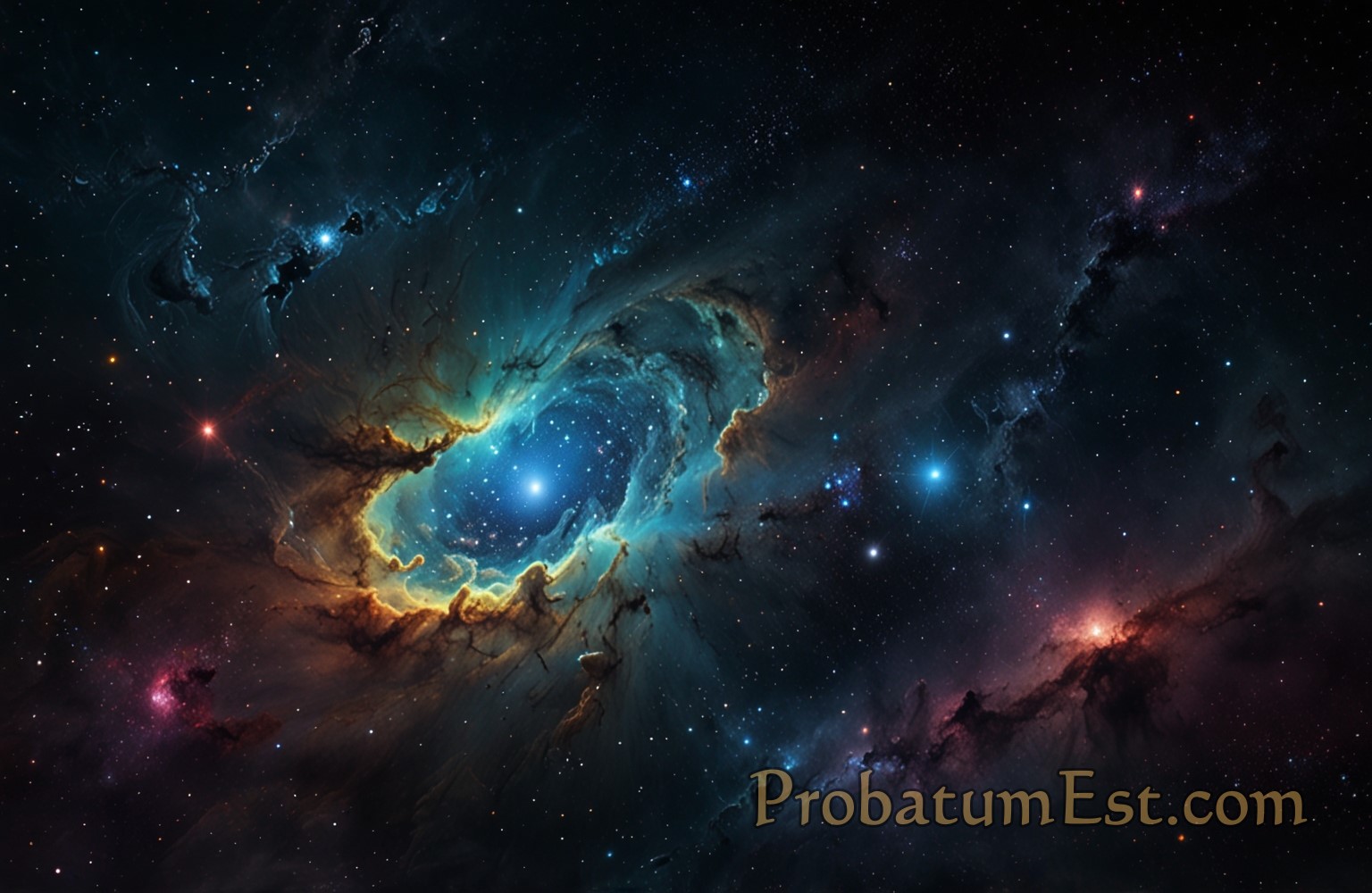
The universe, an all-encompassing entity, is a vast and awe-inspiring expanse that holds everything in existence. It stretches beyond the limits of human perception and comprehension, sprawling with galaxies, stars, planets, and myriad other cosmic phenomena. This article aims to delve into the multitude of aspects that constitute the universe, reflecting on its origins, structure, components, and the laws that govern it.
Origins of the Universe
The Big Bang Theory
The prevailing scientific theory regarding the universe’s inception is the Big Bang Theory, positing that it began approximately 13.8 billion years ago as an infinitely dense and hot singularity. This explosive expansion set the stage for the universe as we know it, marking the origin of time, space, and matter. As it expanded, the universe cooled, allowing for the formation of subatomic particles and, eventually, atoms.
Cosmic Inflation
A fraction of a second after the Big Bang, the universe underwent a brief yet exponential growth spurt known as cosmic inflation. This rapid expansion smoothed and flattened the universe, explaining its large-scale uniformity.
Structure of the Universe
Observable Universe
The observable universe is limited to the region we can see due to the finite speed of light and the universe’s age. It encompasses billions of galaxies arrayed in vast clusters, filaments, and voids, structured like a complex cosmic web.
Beyond the Observable
Beyond the observable universe, the cosmos may extend infinitely or curve back upon itself, though this remains a matter of scientific inquiry and debate. The concept of the multiverse proposes multiple universes existing simultaneously, each with its physical laws and constants.
Components of the Universe
Galaxies
Galaxies are the fundamental building blocks of the universe, vast assemblages of stars, gas, dust, and dark matter bound by gravity. They vary in shape and size, from spirals like our Milky Way to elliptical and irregular forms.
Stars and Planets
Stars are luminous spheres of plasma that generate energy through nuclear fusion, serving as the primary source of light and heat in the universe. Planets orbit stars, with a diverse range of compositions and environments — some potentially hospitable to life.
Dark Matter and Dark Energy
Dark matter, an invisible and enigmatic substance, constitutes about 27% of the universe’s mass-energy content. It interacts with ordinary matter primarily through gravity, influencing the formation and behavior of galaxies. Dark energy, making up about 68% of the universe, is even more mysterious, driving its accelerated expansion.
Physical Laws and Forces
Fundamental Forces
Four fundamental forces govern the interactions within the universe: gravity, electromagnetism, the weak nuclear force, and the strong nuclear force. These forces underpin the behavior of matter from the smallest subatomic particles to the largest galaxy clusters.
General Relativity and Quantum Mechanics
Einstein’s theory of general relativity explains gravity as the curvature of spacetime caused by mass and energy, offering insights into cosmological phenomena like black holes and gravitational waves. Quantum mechanics, conversely, describes the probabilistic nature of matter and energy at microscopic scales.
The Future of the Universe
Expansion and Fate
The universe’s fate hinges on its rate of expansion and the influence of dark energy. If expansion continues indefinitely, it could lead to a “Big Freeze,” where stars burn out, and galaxies drift apart. Alternatively, a reversal of expansion could culminate in a “Big Crunch,” a scenario where the universe collapses back into a singularity.
Search for Extraterrestrial Life
The search for life beyond Earth remains a defining scientific endeavor. Exoplanets in the habitable zones of their stars offer potential habitats for life, while missions to Mars and icy moons like Europa and Enceladus seek signs of life within our solar system.
Conclusion
The universe is a testament to the grandiosity and intricacy of nature, a vast cosmos filled with wonders and mysteries yet to be fully uncovered. As we continue to explore and understand this expansive backdrop of our existence, the quest for knowledge propels us forward, ever seeking to unravel the secrets of the universe. This endeavor not only exponentially grows our scientific understanding but also deepens the philosophical contemplation of our place within this magnificent cosmic tapestry.


Leave a Reply