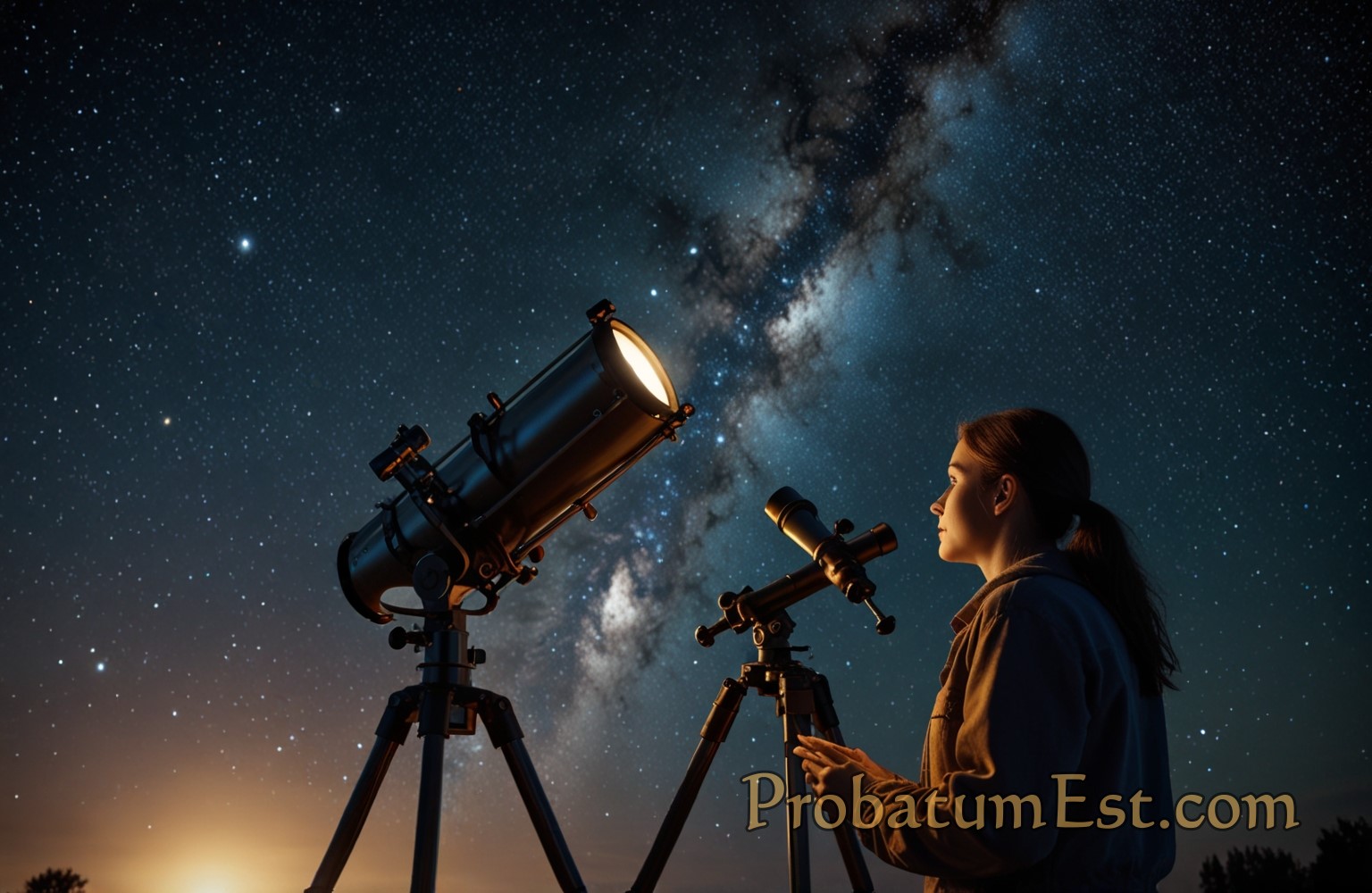
Astronomy, often regarded as one of the oldest and most fascinating fields of study, deals with the exploration of celestial bodies and the vast universe that houses them. At the heart of this intriguing domain is the astronomer – a dedicated scientist committed to unraveling the mysteries of the cosmos. This article explores the life, work, and importance of astronomers, providing an in-depth understanding of their role in our comprehension of the universe.
Who is an Astronomer?
An astronomer is a scientist who studies celestial objects and phenomena, encompassing everything from planets, stars, galaxies, to the cosmic microwave background radiation and black holes. Astronomers leverage physics, mathematics, and chemistry to comprehend the formation, evolution, and behavior of these cosmic entities. The profession is a harmonious blend of observational skill, theoretical research, and data analysis, requiring a robust foundation in scientific knowledge and a keen curiosity about the unknown.
Education and Specialization
To embark on a career as an astronomer, a prospective scientist typically requires an advanced degree in astronomy or a related field such as physics. While undergraduate studies lay the groundwork with core scientific principles, graduate programs — often culminating in a Ph.D. — allow for specialization in areas such as theoretical astrophysics, observational astronomy, or cosmology.
Astronomers often specialize in fields like:
- Planetary Astronomy: Focuses on studying planets, both within and beyond our solar system.
- Stellar Astronomy: Investigates the life cycles and characteristics of stars.
- Galactic Astronomy: Deals with the structure and components of galaxies.
- Cosmology: Examines the universe as a whole, including its origins, evolution, and large-scale structure.
- Astrobiology: Explores the potential for life elsewhere in the universe.
What Do Astronomers Do?
Astronomers engage in a wide variety of tasks, broadly falling into observational, theoretical, and computational categories.
1. Observation and Data Collection:
- Using telescopes and other astronomical instruments, astronomers observe celestial phenomena, often in collaboration with international space agencies and observatories.
- Observations may occur at observatories in remote locations or via space telescopes like the Hubble or James Webb Space Telescope.
2. Data Analysis:
- Astronomers analyze collected data, discerning patterns and making sense of cosmic events.
- This often involves sophisticated software and algorithms to process vast datasets, whether from ground-based observations or space missions.
3. Theoretical Work:
- Theoretical astronomers develop models and simulations to predict celestial phenomena, using complex mathematical frameworks.
- They test and refine theories about the universe, such as the behavior of dark matter and dark energy or the conditions of the early universe.
4. Research and Publication:
- Conducting original research and publishing findings in scientific journals is a cornerstone of an astronomer’s work, contributing to the collective knowledge of the scientific community.
- They often collaborate across disciplines and institutions, sharing insights and seeking peer review to validate their findings.
5. Education and Outreach:
- Many astronomers also dedicate time to teaching and mentoring students, working within academic institutions.
- They engage in public outreach, aiming to spark interest in the sciences and increase awareness and understanding of astronomical phenomena.
Tools and Technologies
Astronomers rely on a suite of advanced tools:
- Telescopes: From optical to radio telescopes, these are crucial for observation.
- Spectrographs: Used to analyze the spectrum of light from stars and galaxies, aiding in understanding composition, velocity, and distance.
- Computational Software: For analyzing data and creating simulations of cosmic events.
- Satellites and Spacecraft: Collect data from regions of space inaccessible from Earth.
Challenges Facing Astronomers
Astronomers face intrinsic challenges in their quest for knowledge:
- Technological Limitations: The constant need for advanced technology to look deeper and more clearly into space.
- Funding: Scientific research often depends on substantial funding, which can be uncertain and competitive.
- Data Overload: With advancements in technology, managing and interpreting large datasets becomes increasingly complex.
- Interdisciplinary Collaboration: Requires effective communication across various scientific fields.
The Future of Astronomy
With the advent of cutting-edge technology and the growth of international collaborations, astronomy stands at the brink of profound discoveries. Fields like gravitational wave astronomy and exoplanet exploration promise to reshape our understanding of the universe. Furthermore, initiatives such as space telescopes and deep-space missions are poised to unveil previously unseen realms of the cosmos, continuing to challenge and expand our understanding of the universe.
Conclusion
Astronomy, through the tireless work of astronomers, remains a potent source of wonder and discovery. Though daunting, the quest to chart the cosmos offers insights not only into the universe’s vastness but into the very nature of existence itself. Astronomers play a crucial role in this endeavor, their work illuminating the path toward greater cosmic understanding and inspiring the generations that follow to gaze upward with curiosity and ambition.

Leave a Reply