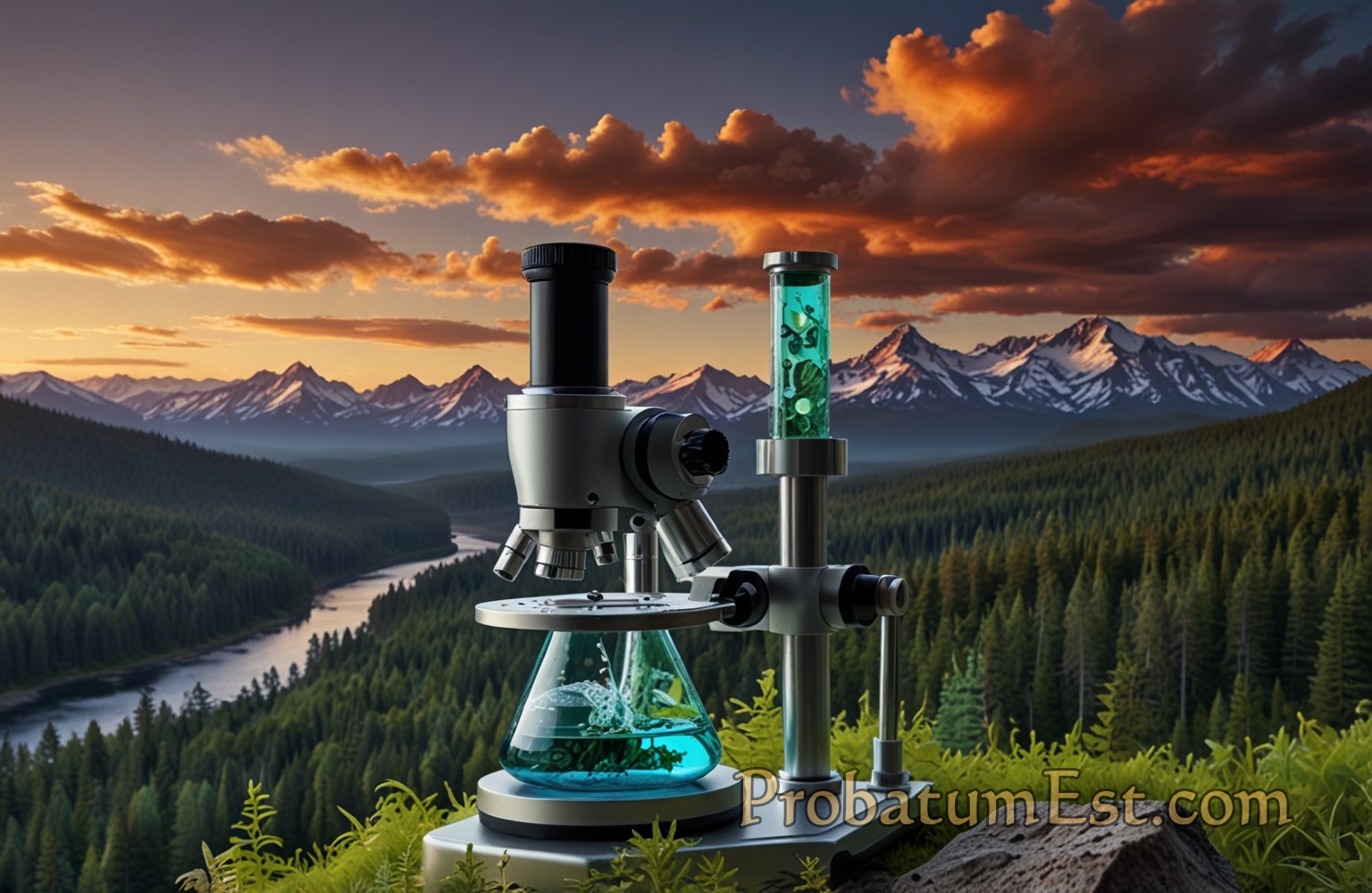
Natural Science is a rich and diverse field of study that has significantly shaped our understanding of the universe and our place within it. It encompasses a variety of disciplines that explore the laws and principles governing the natural world. From observing the intricacies of atomic particles to examining the complexities of entire ecosystems, natural science aims to explain the phenomena of the natural world through observation, experimentation, and analysis. In this comprehensive article, we will delve into the foundations, branches, methodologies, and implications of natural science.
Foundations of Natural Science
Natural science is rooted in the fundamental quest for knowledge about the universe. Historically, it merges the ancient pursuit of understanding the earth and cosmos with the rigorous methodologies that define modern science. The tradition can be traced back to early civilizations like the Greeks, Egyptians, and Chinese, who developed early systems of categorizing and explaining natural phenomena.
The Scientific Revolution of the 16th and 17th centuries marked a significant turning point, where figures like Copernicus, Galileo, and Newton developed the methods and principles that form the scientific method — a systematic approach to inquiry that relies on observation, experimentation, and the formulation of testable hypotheses.
Major Branches of Natural Science
Natural science is broadly categorized into several distinct but interrelated branches:
1. Physics
Physics is often considered the foundational science because it analyzes phenomena fundamental to the natural universe, such as energy, force, and matter. From subatomic particles to cosmological scales, physics seeks to uncover the fundamental laws that govern the natural world.
- Classical Mechanics: Focuses on macroscopic motions and interactions—key contributors include Newton and Galileo.
- Quantum Mechanics: Explores the peculiar behaviors of matter and energy at atomic and subatomic levels.
- Relativity: Introduced by Einstein, it describes the behavior of objects in extreme conditions, focusing on gravity’s role in the structure of space-time.
2. Chemistry
Chemistry is dedicated to understanding substances, their properties, their composition, and how they interact. It serves as the bridge between physics and biology.
- Organic Chemistry: Studies carbon-containing compounds, pivotal for pharmaceuticals and synthetic materials.
- Inorganic Chemistry: Deals with inorganic compounds, understanding metals, minerals, and organometallics.
- Biochemistry: Examines chemical processes within and related to living organisms.
3. Biology
Biology examines life and living organisms, including their structure, function, growth, evolution, and taxonomy.
- Zoology: Focuses on animals, their biology, and behavior.
- Botany: Concerned with plant life.
- Microbiology: Studies microorganisms, including bacteria, fungi.
- Genetics: Explores heredity and variations in organisms.
4. Earth Sciences
Earth sciences investigate the Earth and its components, including:
- Geology: Studies the solid Earth, its materials, structures, and processes.
- Meteorology: The study of atmospheric phenomena and weather processes.
- Oceanography: Focuses on the physical and biological properties and phenomena of the ocean.
- Environmental Science: Integrates physical, biological, and information sciences to study and solve environmental problems.
5. Astronomy
Astronomy is the study of celestial objects and the universe as a whole. It examines stars, planets, comets, galaxies, and the cosmic microwave background.
Methodologies of Natural Science
Natural scientists employ a range of methodologies to explore the questions they set out to answer. The scientific method, which involves systematic observation, measurement, experimentation, and the formulation, testing, and modification of hypotheses, is at the core of these methodologies.
- Observation and Description: Fundamental steps that involve noting and recording an observed phenomenon.
- Formulation of Hypotheses: Scientists develop testable, falsifiable hypotheses to explain their observations.
- Experimentation and Testing: Controlled experiments are conducted to test these hypotheses, employing statistical methods to analyze results.
- Theory Development: When hypotheses are repeatedly confirmed, they may contribute to the development of a scientific theory.
- Peer Review and Publication: Crucially, findings must be scrutinized by peers and published for validation and wider dissemination.
Implications and Applications
The implications of research in natural science are profound and far-reaching. They not only enhance our understanding of the universe but also drive technological innovation and inform public policy.
- Technological Advances: Discoveries in physics and chemistry have fueled technology revolutions, creating modern conveniences from smartphones to pharmaceuticals.
- Environmental Conservation: Earth sciences play a pivotal role in addressing resource management and biodiversity conservation.
- Medical Advancements: Biology and biochemistry underpin medical breakthroughs, leading to advanced treatments and improved healthcare.
- Space Exploration: Astronomy ignites the quest for knowledge beyond our planet, driving exploration missions and satellite technologies.
The Future of Natural Science
As we look to the future, natural science continues to evolve with technological advances enhancing our ability to conduct research. Artificial intelligence, big data, and new computing techniques are opening avenues for unprecedented exploration and discovery.
Interdisciplinary approaches are becoming more prevalent, breaking down the silos between the branches and enabling holistic insights. Ethical considerations and the societal impact of scientific research are increasingly part of the scientific dialogue, ensuring that advancements benefit humanity and the planet.
In conclusion, natural science is an ever-evolving field that continually enriches our understanding of the world and drives technological and societal progress. By exploring its diverse disciplines and methodologies, we not only uncover the mechanics of everyday life but also tackle the grand challenges of our time.




Leave a Reply